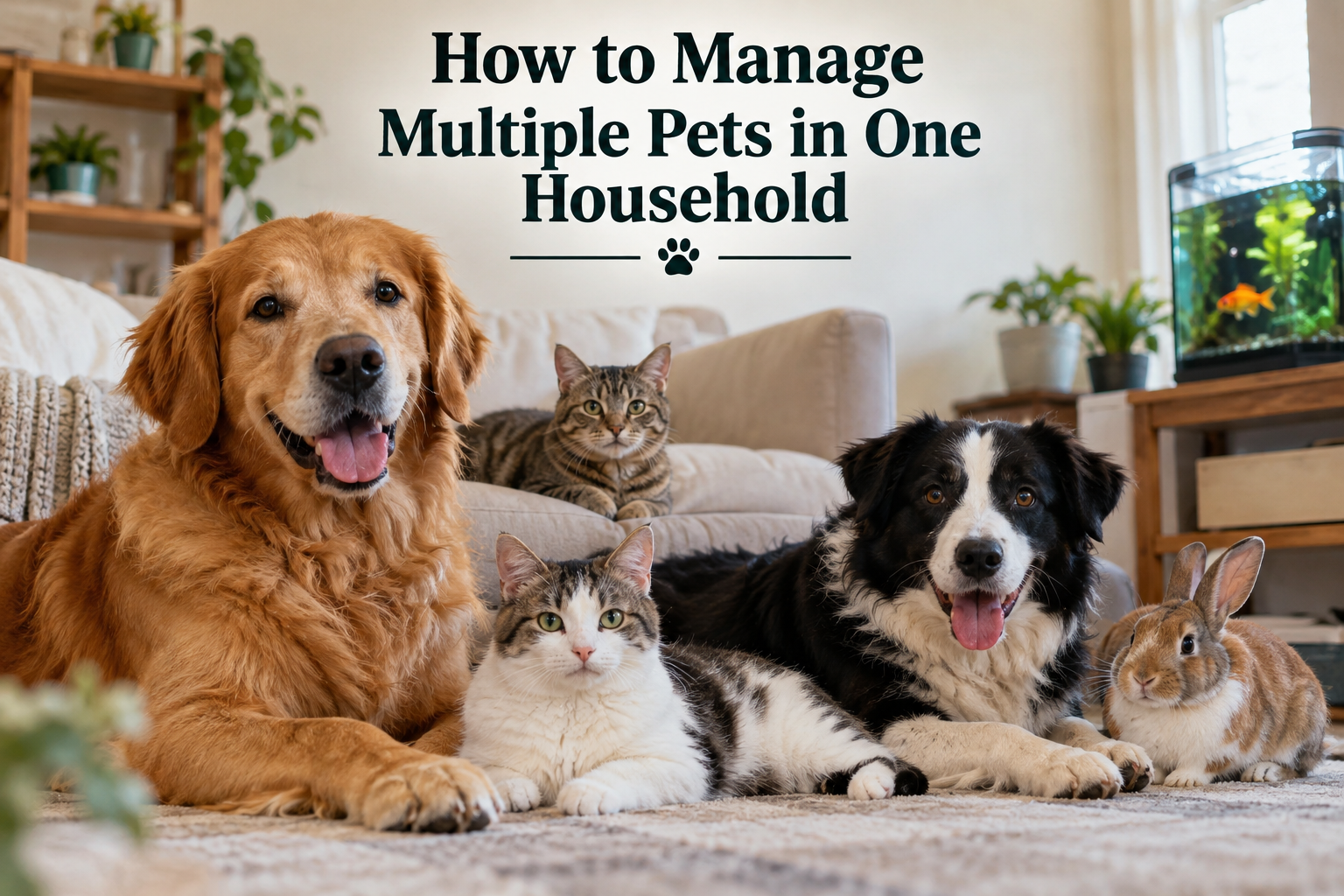
Living with more than one pet can make a home feel lively, loving, and full of personality. Dogs may follow you from room to room, cats may claim their favorite sleeping spots, and smaller pets may bring their own unique routines into the household. However, managing multiple pets successfully requires more than simply providing enough food and space. Each animal has individual needs, habits, boundaries, and emotions that deserve attention.
Learning how to manage multiple pets in one household can help prevent stress, competition, behavioral problems, and unnecessary conflict. A peaceful home is possible when pets receive proper introductions, personal space, regular routines, exercise, and individual attention.
Whether you have two dogs, several cats, or a combination of different pets, the goal should be to create an environment where every animal feels safe and valued.
Understand the Personality of Each Pet
One of the most important parts of managing multiple pets is understanding that every animal has a different personality.
Some pets are naturally social and enjoy being around other animals. Others prefer quiet spaces and may become uncomfortable when another pet constantly approaches them.
Spend time observing how each pet behaves.
A confident dog may enjoy sharing toys and resting near another dog. A shy cat may prefer to watch household activity from a high shelf. An older pet may need more peace than a young and energetic animal.
Understanding these differences allows you to create a routine that works for everyone instead of expecting every pet to behave in the same way.
Pay attention to body language as well. Changes in posture, facial expression, tail movement, appetite, sleeping patterns, or social behavior may reveal whether a pet feels comfortable or stressed.
Introduce New Pets Slowly
A common mistake owners make is placing a new pet directly with existing animals and expecting them to become friends immediately.
Successful introductions usually take time.
When bringing a new animal home, allow the new pet to settle into a separate area first. This gives the animal time to become familiar with new smells, sounds, and surroundings without facing immediate social pressure.
Pets can gradually become familiar with each other’s scent before meeting closely.
Dogs may first meet in a controlled environment while both animals remain calm. Cats often benefit from spending time in separate rooms before being allowed to see each other.
The first meetings should remain short and positive.
Never force pets to stay close together if one animal appears frightened, tense, or uncomfortable. A slow introduction may take several days or even weeks, but patience can help build a healthier relationship.
Give Every Pet Its Own Space
Even animals that enjoy each other’s company need personal space.
Every pet should have an area where it can rest without being disturbed. This may include a comfortable bed, crate, cat tree, quiet room, or favorite sleeping corner.
Cats especially appreciate vertical spaces where they can observe the room without being approached constantly.
Dogs may benefit from having separate beds placed in calm areas of the house.
Personal spaces become particularly important when pets have different energy levels. An older dog may want to sleep while a young puppy wants to play. Without a quiet place to escape, the older pet may become irritated.
Giving animals the ability to move away from each other can reduce tension naturally.
Create a Consistent Daily Routine
Pets often feel more secure when daily activities happen at predictable times.
Try to maintain regular schedules for feeding, walks, play sessions, bathroom breaks, and bedtime.
Consistency becomes even more valuable in a home with several pets because it reduces uncertainty.
For example, dogs may learn that morning walks happen after breakfast. Cats may expect an evening play session before their final meal.
A predictable household routine can help pets remain calm because they know what to expect.
Of course, every day will not be exactly the same. The goal is simply to create enough structure that animals feel comfortable and secure.
Feed Pets Separately When Necessary
Food can become a major source of competition in a multiple pet household.
Even pets that normally live peacefully together may behave differently around food.
Separate feeding areas can prevent one pet from stealing another animal’s meal and reduce anxiety during feeding time.
Dogs can eat from bowls placed in different areas of the room or in separate rooms. Cats may prefer bowls placed where dogs cannot easily reach them.
Separate feeding is especially important when animals require different diets.
A puppy, adult dog, senior cat, or pet with special nutritional requirements may need completely different food.
Always monitor feeding when necessary and remove empty bowls after meals if food guarding becomes a concern.
Fresh drinking water should remain available in several convenient locations, particularly in larger homes.
Provide Enough Resources
Competition does not happen only around food.
Pets may also compete for beds, toys, litter boxes, attention, resting areas, or access to favorite locations.
Providing enough resources can reduce this competition.
A home with several cats should have multiple litter boxes placed in suitable areas. Cats often prefer having options instead of being forced to share a single box.
Similarly, provide enough sleeping areas and toys for dogs so one animal cannot control everything.
Water bowls should also be available in more than one location.
The easier it is for pets to access basic resources, the less likely they are to feel threatened by another animal.
Give Every Pet Individual Attention
When people bring additional pets into the home, they sometimes begin doing everything as a group.
Group activities can be enjoyable, but each pet still needs individual attention.
Spend a little private time with every animal each day.
You might take one dog on a short walk alone, brush your cat quietly in another room, practice simple training exercises with one pet, or simply sit together for a few minutes.
Individual attention strengthens the relationship between you and each animal.
It can also help you notice small changes in behavior or health that might be harder to detect when all pets are together.
Pets should never feel that another animal has completely replaced their relationship with you.
Manage Playtime Carefully
Play is important for physical and mental health, but not every pet has the same play style.
Young dogs may enjoy energetic chasing and wrestling. Older animals may prefer gentle interaction. Cats may enjoy stalking toys instead of directly playing with another pet.
Watch group play closely.
Healthy play usually involves relaxed body language and frequent pauses. Animals may take turns chasing or approaching each other.
Problems can occur when one pet repeatedly tries to escape while another continues following. Excessive barking, hiding, growling, stiff body posture, or aggressive behavior may indicate that play has become uncomfortable.
If excitement becomes too intense, calmly separate the pets and allow them to relax.
Exercise Pets According to Their Individual Needs
A peaceful household often starts with animals receiving enough physical activity.
Pets with unused energy may become restless, destructive, or overly interested in bothering other animals.
Dogs usually benefit from regular walks, games, and training activities.
Cats can stay active through climbing structures, interactive toys, chasing games, and short play sessions throughout the day.
Exercise requirements vary depending on age, breed, health, and personality.
A senior pet may require gentle movement, while a young animal may need much more activity.
Meeting individual exercise needs can make group living easier because pets are more likely to relax when their physical needs have been satisfied.
Use Positive Training Methods
Training becomes especially useful when several pets share the same household.
Dogs can learn basic behaviors such as sit, stay, come, leave it, and wait.
These skills can make everyday situations much easier to manage.
For example, teaching dogs to wait calmly before receiving food may reduce excitement around feeding time.
Reward calm and appropriate behavior using praise, treats, play, or affection.
Avoid using fear or harsh punishment. Punishment may increase anxiety and can cause pets to associate negative experiences with another animal.
Positive training helps pets understand what you want while building trust.
Do Not Force Pets to Share Everything
People sometimes expect pets to share beds, toys, food bowls, and personal spaces simply because they live together.
Animals do not always enjoy sharing.
A favorite toy or resting spot may have special value to one pet.
Whenever possible, provide alternatives rather than forcing sharing.
If a dog becomes protective of a particular toy, supervise access carefully and provide several similar toys.
If one cat prefers sleeping alone, allow it to have a private resting location.
Respecting these boundaries can prevent unnecessary disagreements.
Watch for Signs of Stress
Even when pets are not openly fighting, tension may exist.
Stress can appear in subtle ways.
A pet may begin hiding more frequently, eating less, sleeping in unusual places, avoiding another animal, vocalizing more often, or becoming unusually clingy.
Cats experiencing stress may change their litter box habits.
Dogs may become restless, destructive, or unusually reactive.
These changes should not simply be dismissed as bad behavior.
Try to identify what changed in the household.
Perhaps a new pet is blocking access to food. Maybe one animal is repeatedly interrupting another while resting.
Finding and addressing the cause early can prevent larger problems.
Keep Health Care Organized
Managing veterinary care for several animals requires good organization.
Keep a simple record for each pet that includes vaccination dates, medications, veterinary visits, weight changes, and any health concerns.
Regular grooming also provides an opportunity to check the skin, ears, coat, nails, teeth, and overall body condition.
Parasite prevention is especially important in homes where several pets live together because fleas or other parasites can spread quickly between animals.
If one pet becomes ill, ask your veterinarian whether temporary separation or additional hygiene measures are necessary.
Keep the Home Clean
More pets naturally create more cleaning responsibilities.
Regular cleaning improves comfort for both animals and people.
Wash pet bedding regularly, clean food and water bowls, remove pet hair, maintain litter boxes, and keep sleeping areas fresh.
Vacuuming frequently can help control loose hair and dirt.
Pet toys should also be checked and cleaned regularly. Damaged toys should be removed if small pieces could be swallowed.
A clean environment is particularly important when several animals share indoor spaces.
Avoid Showing Obvious Favoritism
It is natural to have a slightly different relationship with every pet, but try not to constantly exclude one animal while giving attention to another.
Pets can notice patterns.
When appropriate, include each animal in positive household activities.
This does not mean every pet needs exactly equal treatment. Their needs may be different.
Instead, focus on giving each pet appropriate care, affection, exercise, and attention based on its individual requirements.
Fairness in a multiple pet household means meeting needs, not necessarily treating every animal exactly the same.
Know When Pets Need Temporary Separation
Sometimes animals simply need time apart.
Temporary separation can be useful during feeding, recovery from illness, visits from guests, stressful events, or periods of excessive excitement.
Separation should not always be viewed as punishment.
A quiet room can actually help an overwhelmed pet relax.
If serious aggression develops between animals, keeping them separated while seeking professional advice may be the safest approach.
Repeated fights should never be ignored because injuries can occur quickly.
A veterinarian or qualified animal behavior professional can help determine why conflict is happening and recommend an appropriate management plan.
Be Patient as Relationships Develop
Not every group of pets becomes best friends.
Some animals may sleep together and play every day. Others may simply learn to live peacefully in the same home without much direct interaction.
Both situations can be successful.
The most important goal is not to force friendship. It is to create a home where every animal feels safe.
Relationships between pets often change gradually.
A nervous cat may eventually become comfortable sleeping in the same room as a dog. Two dogs that initially seem uncertain may develop a strong bond after learning each other’s habits.
Give these relationships time to develop naturally.
Final Thoughts
Learning how to manage multiple pets in one household is mainly about understanding individual needs while creating a safe and predictable environment for everyone.
Successful multiple pet households usually have clear routines, enough resources, separate resting areas, controlled feeding, regular exercise, positive training, and plenty of individual attention.
Owners should also remember that every pet has its own personality. One animal may enjoy constant companionship while another prefers more independence.
When these differences are respected, pets have a much better chance of living together comfortably.
Managing several animals may require extra organization and patience, but the rewards can be wonderful. A home filled with healthy and secure pets can provide years of companionship, entertainment, and affection.
The key is to observe your animals carefully, respond to their needs, and create an environment where no pet has to compete for basic comfort or safety. With thoughtful management, multiple pets can share one household peacefully and become an important part of a happy family.