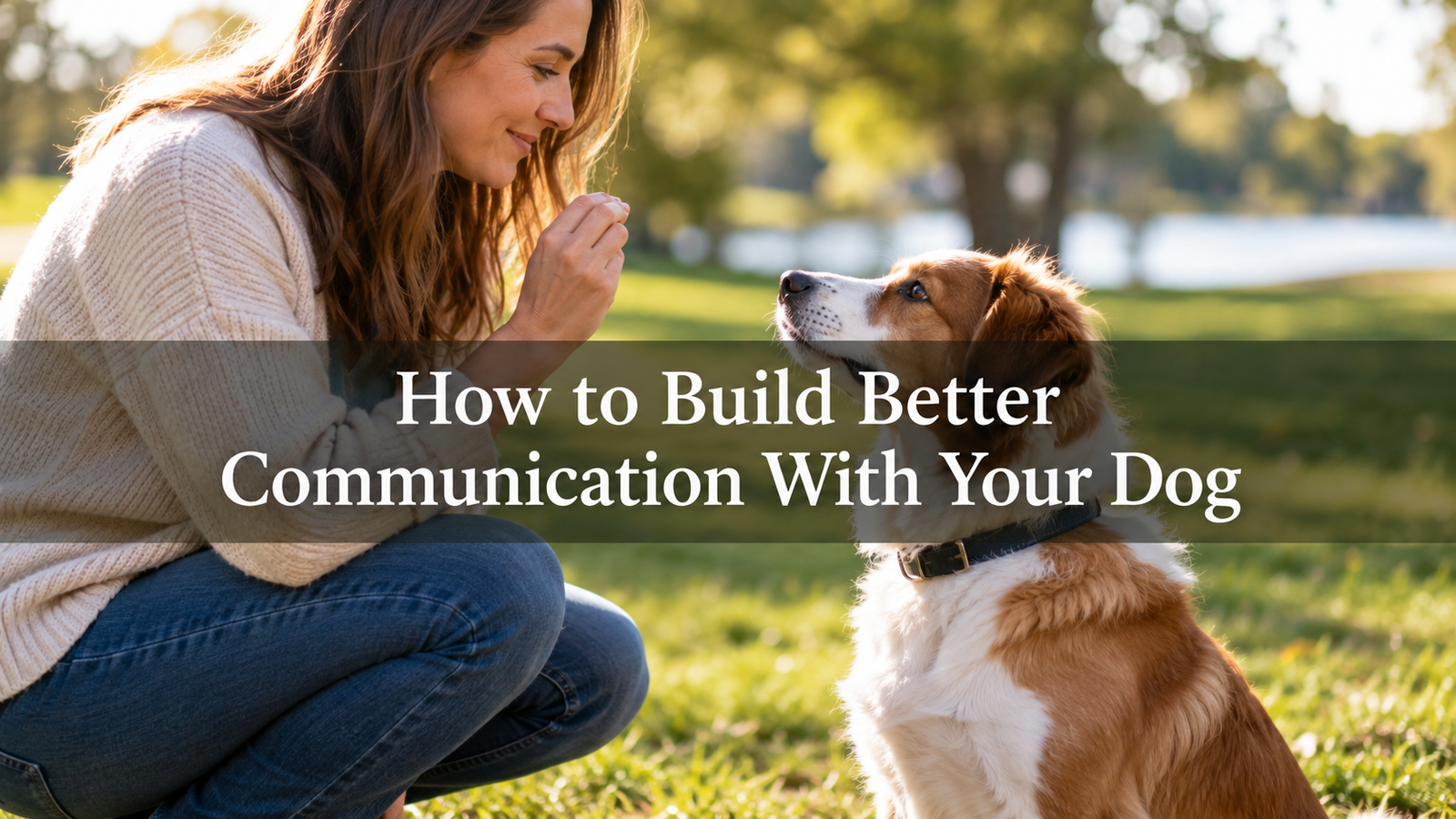

Training a dog can feel easy one day and surprisingly difficult the next. You may ask your dog to sit at home and get an immediate response, but the same dog may completely ignore you in the park. At first, this behavior can look like stubbornness or disobedience. After learning more about dog behavior and training principles, I found that dogs usually have a reason for ignoring commands. In most cases, the problem is not that the dog wants to challenge the owner. The real issue is often related to distraction, confusion, motivation, fear, excitement, or the way the command has been taught.
Understanding why dogs ignore commands is important because successful dog training depends on communication. Dogs do not understand human language naturally. They learn words such as sit, stay, come, and leave it by connecting those sounds with actions and consequences. When that connection is weak or unclear, the dog may not respond consistently. Instead of becoming frustrated, it is better to find the reason behind the behavior and improve the training method.
One of the most common reasons dogs ignore commands is distraction. A dog may listen perfectly inside a quiet room because nothing interesting is happening around it. When you move the training outside, everything changes. There may be other dogs, people, birds, vehicles, new smells, food, or unfamiliar sounds. To a dog, these things can be far more interesting than a command that has only been practiced at home.
This is why dog training should be introduced gradually in different environments. Start in a quiet place where your dog can concentrate. Once the command becomes reliable, practice it in another room, then in the yard, and later in places with more distractions. Do not expect your dog to perform perfectly in a busy park simply because the command worked in your living room. Dogs need time to understand that the same command applies everywhere.
Another reason dogs ignore commands is that the command may not have been taught clearly enough. Owners sometimes believe that a dog understands a word after only a few successful repetitions. In reality, learning takes practice. A dog may respond correctly because it notices your body movement rather than because it understands the spoken command.
For example, when teaching sit, you may raise your hand while saying the word. The dog could start depending on the hand movement instead of the word itself. Later, if you say sit without making the same movement, the dog may appear to ignore you. This does not necessarily mean the dog is refusing. It may simply be unsure of what you want.
Clear communication is one of the most important dog training tips. Use the same word for each behavior and make sure everyone in the family uses the same commands. If one person says come, another says come here, and someone else says get over here, the dog may become confused. Short and consistent commands are usually easier for dogs to learn.
Repeating commands too many times can also create a problem. Imagine telling your dog, “Sit, sit, sit, sit,” before it finally sits. The dog may learn that the first command does not matter. It begins to believe that it only needs to respond after hearing the word several times.
A better approach is to say the command once in a calm and clear voice. Give your dog a moment to respond. If it does not understand, make the situation easier and guide the dog toward the correct behavior. Reward the response when it happens. Over time, the dog learns that the first command is meaningful.
Lack of motivation is another major reason dogs stop listening. Dogs repeat behaviors that bring positive results. Food treats are commonly used in training because most dogs find them rewarding, but food is not the only option. Some dogs prefer toys, praise, affection, or a short game with their owner.
The reward must be valuable enough for the situation. A normal piece of dry dog food might work well inside the house. At the park, however, your dog may be surrounded by exciting smells and activities. In that environment, the reward may need to be more appealing. Small pieces of a favorite dog safe treat can help your dog choose you over distractions.
This does not mean that you must give food forever. Treats are especially useful while teaching a new behavior or strengthening a weak command. Once the dog becomes reliable, rewards can become less predictable. Sometimes you can offer a treat, sometimes praise, and sometimes a favorite activity. This keeps training interesting without making the dog completely dependent on food.
Timing also affects dog obedience. A reward should come immediately after the correct behavior. Dogs learn through association, so waiting too long can make the lesson unclear. If your dog comes when called but spends several seconds walking around before receiving a treat, it may not fully understand which behavior earned the reward.
The same principle applies to correction. Harsh punishment is rarely the best way to fix a dog that ignores commands. Shouting, hitting, or using fear can damage trust and may create new behavioral problems. A frightened dog might obey temporarily, but it is not necessarily learning in a healthy way.
Positive reinforcement dog training is usually more effective because it teaches the dog what to do instead of only punishing unwanted behavior. When the dog makes the correct choice, reward it. When it makes a mistake, adjust the situation and try again. Training should help your dog feel confident and willing to cooperate.
Sometimes a dog ignores commands because training sessions are too long. Dogs can lose concentration, especially puppies and energetic breeds. Practicing for thirty minutes without a break may lead to boredom and frustration.
Short training sessions often produce better results. Five or ten focused minutes can be more useful than a long session where the dog stops paying attention. You can practice several times throughout the day. A few minutes before meals, during walks, or while playing can turn normal daily activities into useful training opportunities.
Your own behavior also matters. Dogs are very good at noticing tone of voice, posture, movement, and emotion. If you sound angry or impatient, your dog may become nervous or avoid you. If your voice is calm and your instructions are consistent, training becomes easier to understand.

This is particularly important when teaching the come command. Many owners accidentally weaken recall by calling the dog and then doing something the dog dislikes. For example, they call the dog at the park and immediately end playtime. The dog eventually learns that coming to the owner means the fun is over.
You can improve recall by making coming to you rewarding. Call your dog during enjoyable moments, reward it, and sometimes allow it to continue playing. Practice in safe areas with a long training line if necessary. Never punish a dog after it finally comes to you, even if you are frustrated because it took too long. Punishment can make the dog less willing to come next time.
Age can also influence how well a dog follows commands. Puppies have short attention spans and are still learning about the world. Adolescent dogs may suddenly seem less responsive because they are becoming more independent and easily distracted. Older dogs can experience changes in hearing, vision, mobility, or mental sharpness.
Training expectations should match the dog’s age and ability. A young puppy should not be expected to maintain a long stay around heavy distractions. Senior dogs may need slower training and easier physical exercises. Patience becomes important at every stage of a dog’s life.
Fear and stress can also cause a dog to ignore commands. A nervous dog may be too focused on its surroundings to process what you are saying. Loud noises, unfamiliar people, other animals, or a previous negative experience can make learning difficult.
Watch your dog’s body language. Signs such as a tucked tail, shaking, hiding, repeated lip licking, trying to escape, or refusing treats can suggest that the dog is uncomfortable. In this situation, increasing pressure usually makes the problem worse. Move to a calmer environment and help the dog feel safe before expecting obedience.
Exercise is another factor that owners sometimes overlook. A dog with too much unused energy may find it difficult to concentrate. Some dogs need regular walks, games, sniffing activities, and mental stimulation before they can focus effectively during training.
Mental exercise can be just as valuable as physical activity. Puzzle toys, scent games, basic obedience exercises, and learning new tricks can keep a dog’s brain active. A dog that receives enough physical and mental stimulation is often easier to train because its needs are being met.
However, excessive tiredness can create the opposite problem. A dog that is exhausted may also ignore commands. Finding the right balance between activity, rest, play, and training helps improve attention.
Another mistake is expecting immediate perfection. Reliable dog obedience takes time. A dog may understand a command in one situation but still need practice in many others. Trainers often refer to this as generalization. Dogs have to learn that sit means sit in the kitchen, garden, street, veterinary clinic, and park.
Gradually increase difficulty. First change the location. Then increase distance. After that, introduce distractions. Avoid making all of these changes at the same time. If your dog begins failing repeatedly, the training has probably become too difficult. Return to an easier level and build confidence again.
It is also important to consider possible health problems. If a dog that normally responds well suddenly starts ignoring commands, there may be a physical reason. Hearing loss, pain, illness, vision problems, or other medical conditions can affect behavior. A dog experiencing discomfort may be less willing to sit, lie down, jump, or walk.
Sudden behavioral changes should not automatically be treated as a training problem. If the change is unusual or continues without an obvious explanation, speaking with a veterinarian is a sensible step.
Building a strong relationship with your dog can make every part of training easier. Dogs are more likely to pay attention to people they trust and enjoy being around. Spend time playing, walking, training, and interacting positively with your dog. Training should become part of your relationship rather than something that only happens when the dog makes a mistake.
The key to fixing a dog that ignores commands is consistency. Use clear words, reward good behavior, practice in different environments, control distractions, and keep training enjoyable. Avoid repeating commands endlessly or expecting your dog to understand something that has not been practiced enough.
Every dog learns at a different pace. Breed, age, personality, past experiences, environment, and motivation can all affect training. What works immediately for one dog may require several weeks of practice with another. Comparing your dog with someone else’s pet can create unnecessary frustration.
When a dog ignores a command, it helps to ask a simple question: does my dog truly understand what I am asking in this situation? That question changes the way we approach training. Instead of seeing the dog as stubborn, we begin looking for problems in communication, motivation, environment, or learning.
Successful dog training is not based on controlling a dog through force. It is based on teaching clearly and rewarding the behaviors we want to see again. With patience, repetition, positive reinforcement, and realistic expectations, most dogs can become much more responsive.
If your dog currently ignores commands, start with simple exercises in a quiet environment. Reward every correct response and slowly make the exercises more challenging. Keep sessions short, stay consistent, and give your dog time to learn. Small improvements may not seem impressive at first, but repeated every day, they create reliable habits.
A dog that listens well is not simply a naturally obedient dog. In many cases, it is a dog that has received clear training, enough practice, suitable rewards, and consistent guidance. Once you understand why dogs ignore commands and how to fix it, training becomes less frustrating and much more enjoyable for both you and your dog.