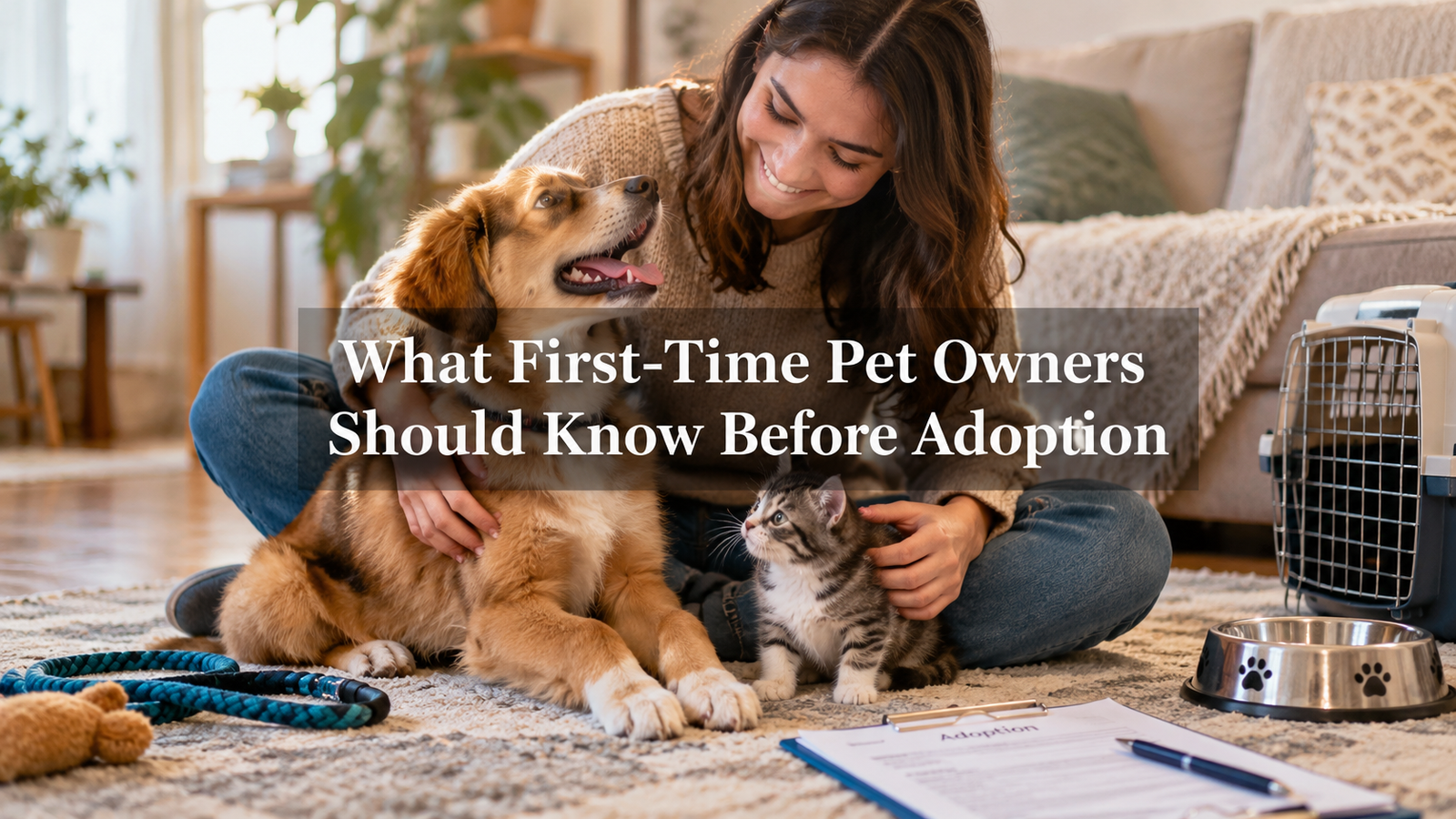
Bringing a pet into your home can be one of the most rewarding experiences in life. A dog greeting you at the door or a cat quietly resting beside you can bring warmth and companionship into an ordinary day. However, pet adoption is much more than choosing a cute animal and taking it home. It is a responsibility that may continue for many years.
For first time pet owners, excitement can sometimes make it easy to overlook the practical side of adoption. Pets need food, healthcare, attention, training, exercise, patience, and a safe place to live. Their needs also change as they grow older.
Before adopting a pet, it is important to understand what daily life with an animal actually involves. Taking time to prepare can make the transition easier for both you and your new companion.
Understand That Pet Adoption Is a Long Term Commitment
One of the most important things first time pet owners should know before adoption is that pets are not temporary companions.
Depending on the animal and breed, a pet may remain part of your family for many years. Dogs often live for more than a decade, while many cats can live well into their teenage years. During that time, your lifestyle may change several times.
You may move to another house, change jobs, get married, have children, or experience financial changes. Your pet will still depend on you.
Before adopting, think about whether you are prepared to provide consistent care through these changes. Responsible pet ownership means planning beyond the excitement of the first few weeks.
Choose a Pet That Matches Your Lifestyle
Every pet has different needs. Even animals of the same species can have completely different personalities and energy levels.
An active dog may require long walks and frequent outdoor activities. A calmer adult cat may be happier in a quieter home with comfortable sleeping areas and daily play.
Consider your work schedule, living space, activity level, family situation, and the amount of time you can realistically spend with an animal.
A pet should fit naturally into your lifestyle rather than forcing you to completely change a routine you cannot maintain.
For example, someone who spends most of the day away from home may struggle with a young puppy that needs frequent toilet breaks, training, feeding, and attention.
Matching the animal to your lifestyle can help prevent frustration later.
Research the Pet Before Adoption
Research is one of the best things you can do before becoming a pet owner.
Learn about the animal’s typical behavior, exercise needs, grooming requirements, feeding habits, health concerns, and expected lifespan.
If you are adopting a particular dog or cat breed, learn about common characteristics associated with that breed. Breed alone does not determine personality, but it can provide helpful information about possible energy levels, coat care, body size, and certain health risks.
Mixed breed animals also deserve careful consideration. Ask the shelter or rescue organization what they know about the animal’s history, behavior, health, and personality.
The more information you collect beforehand, the easier it becomes to make a responsible decision.
Calculate the Cost of Pet Ownership
The adoption fee is only one small part of the cost of owning a pet.
Food is an ongoing expense, but there are many other costs that first time pet owners may not immediately consider.
Veterinary visits, vaccinations, parasite prevention, grooming supplies, beds, collars, identification tags, carriers, litter, toys, training equipment, and other essentials can gradually add up.
Unexpected medical expenses are another possibility.
A pet may suddenly become sick or injured and require veterinary treatment. Having savings available for emergency care can reduce financial stress when difficult situations arise.
Before adopting, create a realistic monthly pet budget. Responsible ownership becomes easier when you understand the financial commitment from the beginning.
Prepare Your Home Before Bringing the Pet Home
A new environment can feel confusing or stressful to an animal.
Preparing your home before adoption can help your new pet feel secure.
Start by creating a comfortable area where the animal can rest without being disturbed. Provide a suitable bed, fresh water, food bowls, and any necessary toilet supplies.
Remove objects that could be dangerous. Electrical cords, cleaning products, medicines, small objects, toxic plants, and certain foods should be kept safely out of reach.
Dogs may chew unfamiliar items, while cats may climb onto shelves or explore narrow spaces.
Try to see your home from the animal’s perspective. A few simple safety changes can prevent many common household accidents.
Understand the Importance of Veterinary Care
Regular veterinary care is an essential part of keeping a pet healthy.
After adoption, arrange an initial veterinary examination if one has not already been completed. A veterinarian can assess your pet’s general health and discuss vaccination schedules, parasite control, nutrition, dental care, and other preventive measures.
Do not wait until your pet becomes visibly ill before thinking about veterinary care.
Animals can sometimes hide discomfort or illness. Routine health examinations may help identify changes before they become more serious.
Keep vaccination and medical records organized so they are easy to access when needed.
Learn About Proper Nutrition
Good nutrition plays an important role in your pet’s overall wellbeing.
Pets need food that matches their species, age, size, activity level, and health needs. Puppies and kittens generally have different nutritional requirements from adult animals.
Avoid selecting food simply because the packaging looks attractive or because another pet owner recommends it.
A veterinarian can help you determine what type of diet is appropriate for your pet.
Portion control also matters. Giving too much food can gradually lead to unnecessary weight gain, which may affect mobility and overall health.
Fresh drinking water should always be available.
Treats can be useful for training and bonding, but they should not replace balanced meals.
Be Prepared for Training
A newly adopted pet does not automatically understand the rules of your household.
Dogs may need help learning toilet habits, leash walking, basic commands, and appropriate behavior around people. Cats may need guidance about scratching areas, litter boxes, or boundaries within the home.
Training requires patience.
Punishing an animal for behavior it does not understand often creates fear rather than teaching the desired response.
Instead, reward behaviors that you want to encourage. Food rewards, praise, toys, and positive attention can help pets understand what is expected.
Short and consistent training sessions are usually easier for animals to understand than long or stressful sessions.
Expect an Adjustment Period
Many first time pet owners expect immediate affection after adoption. Sometimes that happens, but not always.
A new pet has entered an unfamiliar environment filled with new people, sounds, smells, and routines.
Some animals explore confidently within minutes. Others may hide, avoid interaction, eat less, or appear nervous for several days.
Allow the animal time to adjust.
Avoid forcing attention when the pet wants space. Provide food, water, comfortable resting areas, and gentle opportunities for interaction.
Trust often develops through consistent daily experiences.
As your pet begins to understand that your home is safe, its natural personality may gradually become more visible.
Create a Consistent Daily Routine
Animals often feel more secure when daily life is predictable.
Try to maintain regular times for meals, walks, play, toilet breaks, and rest.
A consistent routine helps your pet understand what happens throughout the day. It can also make training easier.
For example, taking a dog outside at similar times each day can support toilet training. Scheduled play sessions can give indoor cats healthy ways to release energy.
Your routine does not need to follow the exact same minute every day, but general consistency can help a new pet settle into the household.
Provide Enough Physical Activity
Exercise is important for both physical and mental wellbeing.
However, the amount of exercise required depends on the animal.
Young and energetic dogs may enjoy walks, games, training activities, and outdoor exploration. Older dogs may prefer shorter and gentler activities.
Cats also benefit from daily movement. Toys that encourage chasing, climbing structures, scratching posts, and interactive play can help indoor cats remain active.
Exercise should be suitable for the pet’s age, health, and physical condition.
A tired pet is not always a healthy pet, so avoid assuming that more exercise is automatically better.
Mental Stimulation Matters Too
Pets need opportunities to use their minds as well as their bodies.
Bored animals sometimes develop unwanted behaviors because they have limited ways to use their natural instincts.
Simple activities can provide valuable mental stimulation.
Food puzzles can encourage problem solving. Training sessions challenge dogs to focus and learn. Cats may enjoy searching for toys or treats around a safe room.
Even allowing a dog time to safely smell different areas during a walk can provide mental enrichment.
Changing toys occasionally can also make familiar activities feel interesting again.
Think About Grooming Requirements
Different pets have different grooming needs.
Some dogs need frequent brushing or professional coat care, while others require much less maintenance. Long haired cats may need regular brushing to reduce tangles and loose hair.
Nail care, ear care, dental hygiene, and occasional bathing may also become part of your routine.
Introduce grooming gradually and calmly.
A young pet that learns to accept gentle handling of its paws, ears, and mouth may be easier to care for later.
Grooming is also an opportunity to notice changes such as unusual lumps, skin irritation, hair loss, or tenderness.
Consider Everyone in the Household
Pet adoption should be a household decision.
Before bringing an animal home, make sure everyone understands the responsibilities involved.
Discuss who will feed the pet, clean its living area, provide exercise, arrange veterinary appointments, and handle training.
If children live in the home, teach them how to interact respectfully with animals.
Children should understand that pets need personal space and should not be disturbed while sleeping, eating, or trying to move away.
Adults should supervise interactions between young children and pets.
Clear responsibilities can prevent misunderstandings after adoption.
Think About Other Pets You Already Have
If you already have animals at home, introducing a new pet requires planning.
Do not assume they will immediately become friends.
Introductions should usually happen gradually. Allow each animal time to become familiar with the other’s smell and presence before expecting close interaction.
Make sure each pet has access to its own important resources, including food, water, resting areas, and toilet spaces where appropriate.
Watch body language carefully during early interactions.
If either animal appears frightened or highly stressed, slow the process down.
Successful relationships between pets often develop through patience rather than forced contact.
Ask Questions Before Adopting
A good shelter or rescue organization can provide valuable information about an animal.
Ask questions about the pet’s health, personality, activity level, previous home, behavior around people, and interactions with other animals.
If the animal has known medical or behavioral needs, make sure you understand what care may be required.
No pet will be perfect, and many animals simply need patience and a stable environment.
The goal is not to find a flawless pet. It is to understand the animal well enough to decide whether you can provide the right home.
Do Not Adopt Only Because of Appearance
It is natural to notice an animal because of its appearance. A puppy with beautiful eyes or a cat with an unusual coat may immediately attract attention.
However, appearance should not be the main reason for adoption.
Personality and lifestyle compatibility are much more important in daily life.
Spend some time observing the pet when possible. Ask how it behaves in different situations and consider whether its energy level and temperament suit your household.
Choosing based on compatibility can lead to a stronger and more comfortable relationship.
Be Patient With Mistakes
New pets will make mistakes.
A puppy may have an accident indoors. A cat may scratch something you did not expect. A nervous rescue animal may take time to feel comfortable around visitors.
These situations do not mean you made the wrong decision.
Learning takes time.
Instead of expecting perfection, focus on gradual progress. Consistency, positive reinforcement, and patience can solve many common challenges.
If a serious behavioral issue develops, consider getting guidance from a qualified veterinarian or animal behavior professional.
Make Time for Your Pet Every Day
Food and shelter are essential, but pets also need meaningful interaction.
Your daily relationship is built through simple activities such as walking, training, playing, grooming, or quietly sitting together.
Pets learn to trust people through repeated positive experiences.
You do not need to entertain your animal every minute of the day. Pets also need time to rest and relax.
The goal is to create a healthy balance between companionship, activity, independence, and sleep.
Final Thoughts
Understanding what first time pet owners should know before adoption can prevent many common problems and create a healthier relationship between people and animals.
Pet adoption should never be an impulsive decision based only on excitement. It requires planning, patience, financial preparation, daily care, and a willingness to remain responsible for the animal throughout its life.
Research the type of pet you are considering. Think carefully about your schedule and budget. Prepare your home, arrange proper healthcare, provide suitable nutrition, and create time for training and companionship.
Most importantly, remember that your new pet will need time to understand you just as you will need time to understand it.
When adoption is approached with realistic expectations and genuine commitment, the experience can develop into a rewarding bond that lasts for many years.