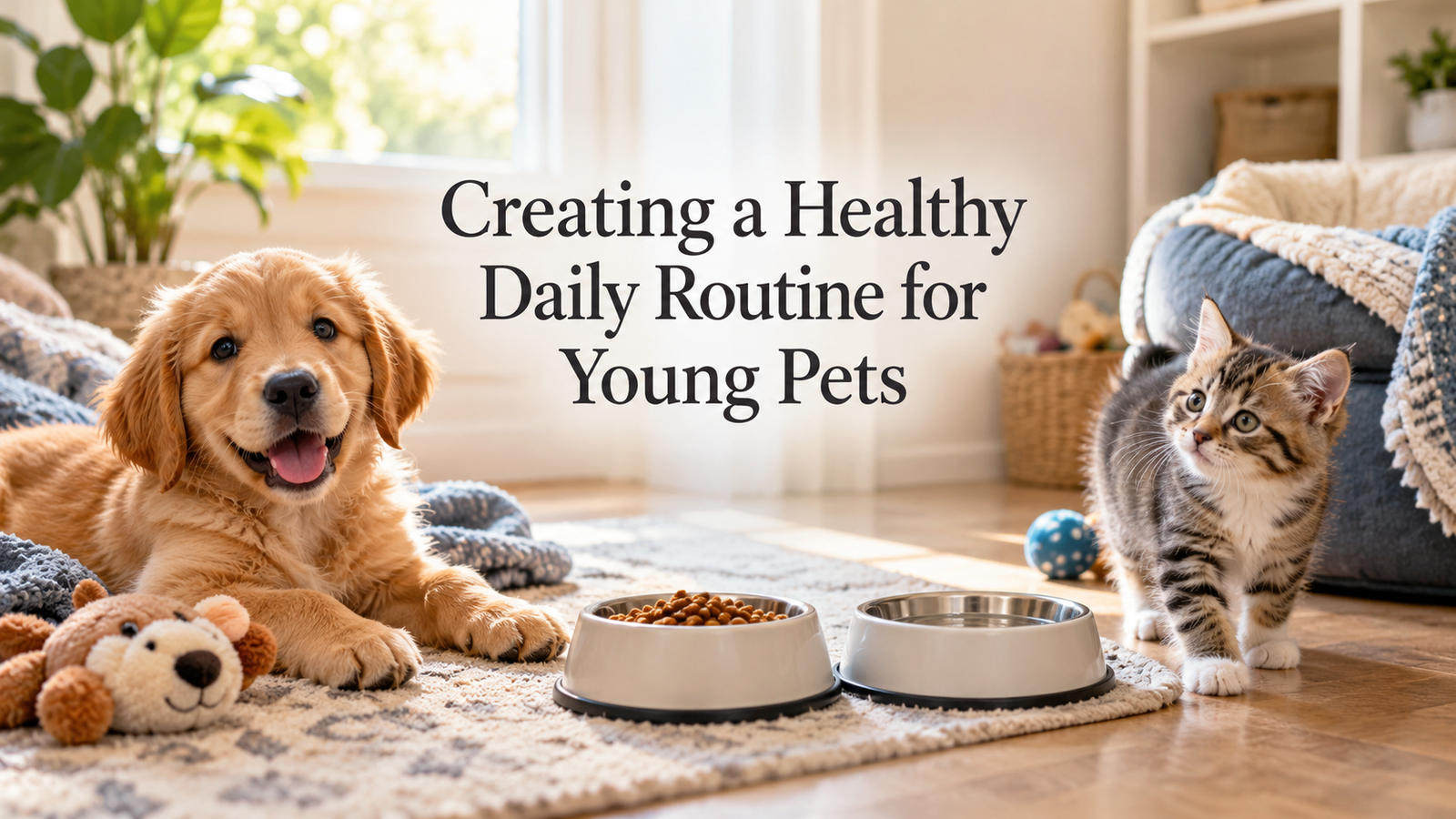
Bringing a young pet into your home is exciting, but it also comes with a great deal of responsibility. Puppies and kittens are curious, energetic, and constantly learning from the world around them. During these early months, the habits they develop can influence their health and behavior for years. One of the most useful things an owner can do is create a healthy daily routine for young pets.
A good routine is not about controlling every minute of the day. It is about giving a young pet a predictable pattern for eating, sleeping, playing, training, exercise, and relaxation. When pets know what usually happens next, they often feel more comfortable and confident in their surroundings.
I have learned that young animals respond especially well to consistency. They may not understand a clock, but they quickly recognize daily patterns. They notice when breakfast is served, when playtime begins, and when the household becomes quiet at night. A balanced routine can make the adjustment to a new home easier while supporting physical and emotional development.
Why a Daily Routine Is Important for Young Pets
Young pets are experiencing many things for the first time. A new home may contain unfamiliar people, sounds, smells, rooms, and objects. Without some structure, all of these experiences can become overwhelming.
A predictable daily routine gives a puppy or kitten a sense of stability. Regular feeding times help organize digestion and bathroom habits. Planned play sessions provide healthy ways to use energy. Training periods encourage learning, while quiet periods teach pets that they do not need constant entertainment.
Routine can also make life easier for the owner. When feeding, bathroom breaks, exercise, and bedtime happen at similar times, it becomes easier to notice changes in behavior. For example, if a puppy normally eats breakfast eagerly but suddenly refuses food, the difference is easy to recognize.
Creating a routine does not mean every day must be identical. Some flexibility is healthy. The goal is simply to provide enough consistency that your pet understands the general rhythm of daily life.
Start the Morning With a Calm Routine
Morning habits can influence how a young pet behaves throughout the day. Puppies often need to go outside soon after waking because they have limited bladder control. Taking them to their bathroom area before beginning other activities can help prevent accidents.
Kittens should also have easy access to a clean litter box when they wake up.
After bathroom needs are handled, breakfast can usually be offered. Serving food at roughly the same time each morning helps establish predictable eating habits.
The morning does not need to become an exciting rush of activity. A few minutes of gentle attention, feeding, bathroom time, and light play can provide a peaceful beginning to the day.
Young pets often have plenty of energy after sleeping, so a short play or exercise session after breakfast can be useful. However, very intense exercise immediately after a large meal should generally be avoided.
Create Consistent Feeding Times
Nutrition plays a major role in the growth of puppies and kittens. Young animals require food that provides the nutrients needed for developing muscles, bones, organs, and immune systems.
The amount and frequency of feeding depend on the animal’s age, size, species, and individual needs. A veterinarian can recommend an appropriate feeding schedule and portion size.
Once you have chosen a feeding schedule, try to remain consistent. Avoid leaving large amounts of food available simply because the pet asks for it throughout the day. Controlled meals can make it easier to monitor appetite and maintain a healthy body condition.
Fresh drinking water should normally remain available unless your veterinarian gives different instructions.
It is also helpful to keep the feeding area calm. Young pets should be allowed to eat without children, other animals, or household activity constantly disturbing them.
Include Regular Bathroom Breaks
Bathroom training becomes much easier when it is connected to a predictable routine.
Young puppies usually need more frequent bathroom opportunities than adult dogs. Useful times often include shortly after waking, after eating, after drinking, after energetic play, and before bedtime.
Taking a puppy to the same suitable bathroom area can help the animal understand what is expected.
If an accident happens indoors, punishment is rarely useful. Puppies are still learning. Clean the area properly and continue following the routine.
Kittens usually learn litter habits quickly when they have access to a clean and comfortable litter box. Place litter boxes in areas that are easy to reach but still provide some privacy.
Regular cleaning matters because many cats prefer clean toilet areas and may avoid a box that has become unpleasant.
Schedule Healthy Playtime
Play is not simply entertainment for young pets. It is an important part of physical and mental development.
Through play, puppies practice movements, explore their environment, learn social skills, and use natural behaviors. Kittens develop balance, coordination, stalking skills, and confidence through playful activity.
Rather than allowing unlimited excitement all day, include several shorter play sessions in your pet’s daily routine.
For puppies, suitable activities may include gentle games with toys, supervised exploration, and simple interactive exercises.
For kittens, wand toys, soft balls, safe climbing areas, and toys that encourage chasing can provide excellent stimulation.
Avoid encouraging rough play directly with your hands. This is particularly important with kittens because a small playful bite may seem harmless now but can become uncomfortable as the cat grows stronger.
Providing toys gives the animal an appropriate target for natural playful behavior.
Add Short Training Sessions
Training should become a normal part of daily life rather than something that happens only when a pet develops a problem.
Young animals often learn well when training sessions are short, simple, and positive.
A puppy can gradually learn basic behaviors such as sitting, coming when called, waiting briefly, walking calmly, and responding to its name.
Kittens can also learn useful behaviors. Cats can be taught to come when called, enter a carrier comfortably, tolerate gentle handling, and use scratching posts instead of furniture.
Training sessions do not need to last a long time. Several minutes of focused practice may be more effective than one long session.
Try to end training while your pet is still interested.
Positive reinforcement is especially useful. Food rewards, toys, praise, and gentle affection can help young pets understand when they have made a good choice.
The purpose of training should be communication, not fear.
Make Time for Socialization
Socialization is one of the most important parts of a healthy routine for young pets.
During early development, puppies and kittens are learning what is safe and normal. Positive exposure to different people, household sounds, surfaces, objects, handling experiences, and environments can help them become more adaptable adults.
However, socialization should never mean overwhelming an animal.
Introducing twenty unfamiliar experiences in one afternoon may create more stress than confidence. It is usually better to offer small, positive experiences gradually.
Allow your young pet to explore at a comfortable pace.
Puppies may benefit from seeing people wearing hats, hearing household appliances, experiencing different floor surfaces, and meeting suitable friendly animals when it is safe to do so.
Kittens can benefit from gentle handling of their paws, ears, mouth, and body. This can make future grooming and veterinary examinations easier.
Always consider your pet’s vaccination status and follow veterinary advice before exposing a young animal to places where infectious diseases may be present.
Protect Nap and Sleep Time
Young pets need more sleep than many new owners expect.
Puppies and kittens may suddenly become extremely active, bitey, noisy, or difficult to manage when they are actually tired. This behavior can sometimes be mistaken for disobedience.
Providing regular opportunities for uninterrupted rest is therefore essential.
Choose a comfortable sleeping area away from constant household traffic. Puppies may rest in a suitable bed, puppy safe area, or properly introduced crate. Kittens often enjoy warm, secure sleeping spaces where they can relax without being disturbed.
Children should be taught to leave sleeping pets alone.
Rest supports physical growth and brain development. Young animals process many of their new experiences while sleeping, so naps should be considered part of healthy development rather than wasted time.
Provide Mental Stimulation
Physical exercise alone is not enough for a developing pet. The brain also needs appropriate activity.
Simple enrichment can make daily life more interesting.
Food puzzle toys, safe objects to explore, scent based games, basic training, and supervised investigation of new environments can help keep a young pet mentally active.
You do not need to provide constant entertainment.
In fact, pets should gradually learn to spend short periods calmly without direct attention from their owners. Otherwise, they may begin expecting someone to entertain them every moment they are awake.
Balance is important. Offer opportunities for learning and exploration while also teaching your pet how to relax.
Introduce Grooming Into the Routine
Grooming becomes much easier when young pets learn about it early.
Spend a small amount of time regularly touching your pet’s paws, checking the ears, gently brushing the coat, and looking at the teeth.
Keep these sessions short and comfortable.
A puppy or kitten that learns that handling is normal may be easier to groom as an adult.
This can also help with veterinary care. Pets that are comfortable having their body examined may experience less stress during routine health checks.
Different breeds and coat types have different grooming requirements, so learn what is appropriate for your particular animal.
Include Safe Exercise
Exercise is important for growing pets, but more exercise is not always better.
Young animals are still physically developing. Exercise should therefore match their age, breed, size, health, and energy level.
For puppies, controlled play and age appropriate walks can provide healthy movement. Excessive running, jumping, or repetitive high impact exercise may not be suitable for every growing dog.
Kittens usually receive much of their exercise through active indoor play, climbing, chasing, and exploring.
Observe your pet carefully. If a young animal appears tired, allow it to rest rather than encouraging another long activity session.
Healthy exercise should leave a pet pleasantly relaxed, not completely exhausted.
Create a Peaceful Evening Routine
Evening is a useful time to reduce stimulation and prepare your young pet for sleep.
After an appropriate play or exercise session, allow the household atmosphere to become calmer.
Puppies can have a final bathroom break before bedtime. Kittens should have access to their litter box and sleeping area.
Try to keep late night feeding, loud play, and exciting activities to a reasonable level if you want your pet to settle more easily.
A consistent bedtime routine can gradually teach young pets that nighttime is for resting.
Some puppies may initially cry or become restless when separated at night. They are adjusting to sleeping without their mother and littermates, so patience is important.
Comfort and consistency usually work better than anger or punishment.
Keep the Routine Flexible
Although routine is valuable, young pets should also learn that small changes are normal.
If meals always happen at exactly the same minute or walks follow exactly the same route every day, some pets may become overly dependent on that pattern.
A healthy routine provides structure without becoming rigid.
Breakfast might usually happen within a similar morning period rather than at exactly 7:02 every day. Walks can occasionally use different safe routes. Play sessions can involve different toys.
This gentle variety teaches pets how to adapt while still giving them a predictable lifestyle.
Pay Attention to Your Pet’s Individual Needs
No daily routine works perfectly for every puppy or kitten.
Some pets are naturally energetic. Others are quieter. Some become hungry quickly, while others are slower eaters. Certain animals need more confidence building, while others need help learning how to calm down.
Observe your pet instead of following a schedule blindly.
Changes in appetite, bathroom habits, energy, sleep, or behavior may sometimes indicate a health concern. If something seems unusual or continues for more than a short period, discussing it with a veterinarian is sensible.
Regular veterinary care should also be part of responsible pet ownership. Vaccinations, parasite prevention, dental care, growth monitoring, and general health checks help young pets develop properly.
Common Routine Mistakes to Avoid
One common mistake is providing too much excitement and too little rest. Young pets need play, but they also need many hours of sleep.
Another mistake is changing rules from day to day. If jumping onto people is allowed today but punished tomorrow, a puppy may become confused.
Inconsistent feeding can also make bathroom routines harder to predict.
Owners should also avoid expecting adult behavior from very young animals. Puppies will have accidents. Kittens may scratch inappropriate objects. Young pets may forget commands when they become excited.
Learning takes time.
A healthy daily routine should guide behavior gradually rather than demanding perfection immediately.
Final Thoughts
Creating a healthy daily routine for young pets is one of the simplest ways to support good behavior, proper development, and emotional security. Regular meals, bathroom opportunities, play, training, socialization, grooming, exercise, and sleep give puppies and kittens the structure they need while adjusting to family life.
The most important qualities are consistency, patience, and observation.
Your routine does not need to be perfect. It only needs to meet your pet’s basic needs while giving the animal enough predictability to feel safe and enough variety to continue learning.
The habits created during these early months can influence your relationship for many years. By building a calm and balanced routine now, you are not simply organizing your pet’s day. You are helping a young animal grow into a healthier, happier, and more confident companion.