
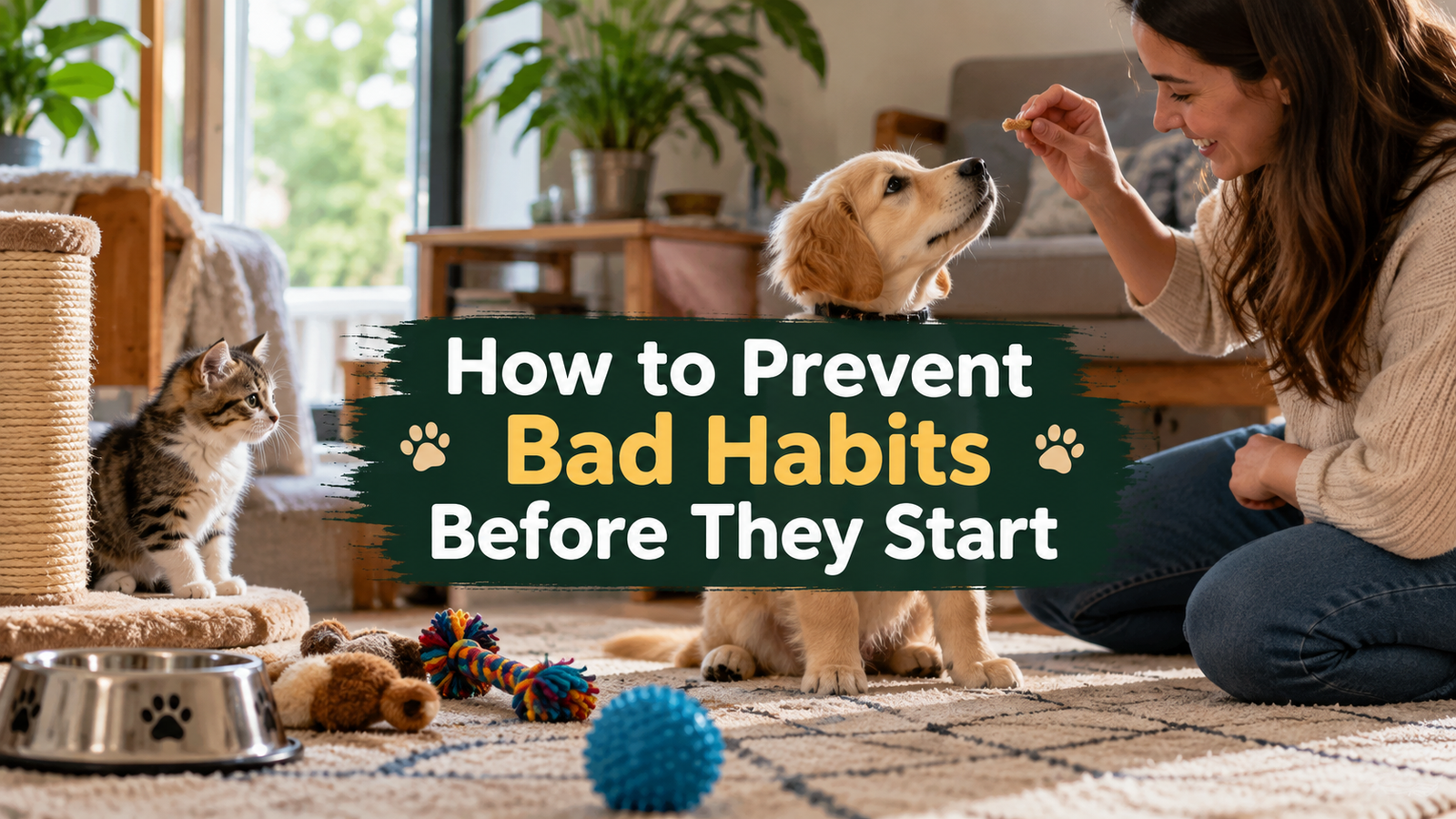
Bringing a young pet into your home is exciting, but it also comes with an important responsibility. Puppies and kittens begin learning from the moment they enter a new environment. They watch how people react, discover which places they can explore, and quickly learn which behaviors bring attention or rewards. This is why preventing bad habits before they start is often much easier than trying to correct unwanted behavior later.
Many pet owners wait until a behavior becomes a serious problem before dealing with it. A puppy may be allowed to jump on people because it seems cute when the puppy is small. A kitten may be allowed to climb on the dining table because it appears harmless at first. As the pet grows, these same behaviors may become frustrating. Preventing bad habits in pets requires consistency, patience, supervision, and a clear understanding of what your pet needs.
The goal is not to constantly control your pet. Instead, you should create an environment where good behavior becomes easier and more rewarding than unwanted behavior.
Start Teaching From the First Day
The first few days in a new home are extremely important. Your pet is learning about its surroundings and trying to understand what is expected.
Start introducing simple household rules immediately. Decide where your pet is allowed to sleep, eat, play, and use the bathroom. If certain furniture or rooms are not allowed, establish those boundaries from the beginning.
Changing rules later can confuse a young animal. For example, allowing a puppy to sleep on the sofa for several weeks and then suddenly expecting the puppy to stay off the sofa can make training more difficult.
Consistency helps pets understand what behavior is acceptable.
Everyone in the household should follow the same rules. If one person allows a behavior while another person discourages it, the pet may struggle to understand the expectations.
Create a Predictable Daily Routine
Young pets usually behave better when their daily lives follow a predictable routine.
Regular feeding times, bathroom breaks, exercise, play sessions, training, and sleep can help pets feel secure. A structured routine also reduces opportunities for unwanted behavior caused by boredom or confusion.
For example, a puppy that receives regular outdoor bathroom breaks is less likely to develop a habit of eliminating inside the house. A kitten that has several appropriate play sessions during the day may be less likely to chase feet or attack hands for entertainment.
You do not need to follow an exact schedule every minute. The important thing is to provide a general pattern your pet can understand.
A healthy routine teaches your pet what usually happens throughout the day.
Reward Good Behavior Whenever You See It
One of the most effective ways to prevent bad habits is to pay attention to good behavior.
Pet owners sometimes focus mainly on mistakes. They react when a dog barks, jumps, chews furniture, or steals something. However, they may completely ignore the animal when it is lying quietly, playing with an appropriate toy, or calmly sitting nearby.
Your pet needs to learn that good behavior also receives attention.
When your puppy sits calmly instead of jumping, praise the puppy. When your kitten scratches an appropriate scratching post, provide gentle praise or another suitable reward.
Food rewards can sometimes help with training, but they are not the only option. Praise, toys, affection, and access to enjoyable activities can also reinforce good behavior.
The more frequently appropriate behavior is rewarded, the more likely your pet is to repeat it.
Prevent Unwanted Chewing
Chewing is natural for puppies and can also occur in young cats. The goal should not be to completely stop natural chewing behavior. Instead, teach your pet what can be chewed.
Provide several safe and appropriate chew toys. Keep valuable objects, electrical cords, shoes, children’s toys, and household items out of reach whenever possible.
If you see your puppy chewing something inappropriate, calmly redirect the puppy toward an acceptable toy. Avoid turning the situation into a chase, since chasing may accidentally make stealing objects more exciting.
Young pets need supervision while they are learning household rules.
Managing the environment is one of the easiest ways to prevent chewing from becoming a serious habit.
Teach Appropriate Play
Many behavior problems begin during play.
A small puppy biting fingers may seem funny. A kitten attacking hands may appear playful and harmless. However, repeatedly encouraging this behavior can teach the animal that human hands are toys.
As the animal grows, the bites and scratches may become stronger.
Use appropriate toys during play instead of encouraging your pet to chase or bite your hands.
If play becomes too rough, calmly stop the interaction for a short period. This teaches your pet that gentle behavior allows play to continue while overly rough behavior makes the fun stop.
Good play habits developed early can make future interactions much safer and more enjoyable.
Prevent Jumping on People
Jumping is another behavior that is easier to prevent than correct.
Puppies often jump because they are excited and want attention. If people respond by touching, talking to, or pushing the puppy away, the puppy may still interpret the reaction as attention.
Teach your puppy that calm behavior receives greetings.
When the puppy approaches with all four paws on the floor, provide attention. If the puppy jumps, avoid giving the desired attention until the puppy becomes calmer.
Family members and visitors should follow the same rule whenever possible.
With consistent practice, the puppy learns that keeping its paws on the floor is a better way to receive human attention.
Provide Enough Physical Activity
Bored pets often create their own entertainment.
A young dog with too much unused energy may dig, bark, chew furniture, steal household items, or constantly demand attention. A bored cat may climb curtains, knock objects from shelves, scratch furniture, or chase people around the house.
Appropriate physical activity can reduce many of these behaviors.
Exercise should be suitable for your pet’s age, health, breed, and physical ability. Young animals need activity, but excessive exercise can also be inappropriate for growing bodies.
Short walks, safe play sessions, gentle exploration, and interactive games can help your pet use energy in a healthy way.
A satisfied pet is often much easier to manage at home.

Do Not Forget Mental Stimulation
Physical exercise is only one part of preventing bad habits in pets. Mental stimulation is equally important.
Young animals are naturally curious. They want to explore smells, sounds, textures, objects, and environments.
Training sessions can provide excellent mental exercise. Teaching simple behaviors such as sit, come, wait, leave it, or going to a designated place encourages your pet to think and communicate with you.
Puzzle toys and safe food dispensing toys can also provide mental stimulation.
Cats may enjoy climbing structures, hiding places, window views, scratching surfaces, and toys that imitate prey movement.
Mental enrichment gives pets productive ways to use their natural curiosity.
Teach Calm Behavior
Excitement is normal, especially in young pets, but animals should also learn how to relax.
You can encourage calmness by rewarding your pet when it naturally settles down. If your puppy lies quietly beside you, offer gentle praise. If your kitten relaxes peacefully in an appropriate resting area, allow the moment to remain calm.
Constant excitement can make it difficult for a pet to develop self control.
Not every interaction needs to involve energetic play. Quiet time teaches young animals that relaxing is also a normal part of daily life.
A pet that learns how to settle may be less likely to develop attention seeking habits later.
Avoid Accidentally Rewarding Bad Habits
Sometimes owners unintentionally encourage the exact behavior they want to stop.
Imagine a dog barking for attention. The owner says the dog’s name, looks at the dog, and repeatedly tells the dog to stop. From the dog’s perspective, barking successfully produced attention.
Another common example is giving food from the table. A dog may stare, whine, or place its paws near the table. If someone eventually offers food, the dog learns that begging can work.
Think carefully about what your pet receives immediately after a behavior.
If an unwanted behavior consistently produces attention, food, play, or access to something enjoyable, the behavior may become stronger.
Instead, reward an appropriate alternative behavior whenever possible.
Provide Proper Scratching Areas for Cats
Scratching is a normal feline behavior. Trying to eliminate scratching completely is unrealistic.
The better approach is to provide attractive scratching areas before your cat begins using furniture.
Place scratching posts or pads in locations your cat frequently visits. Some cats prefer vertical scratching surfaces, while others enjoy horizontal surfaces.
The scratching material should be stable and large enough for the cat to stretch comfortably.
Praise your cat when the correct scratching area is used.
Providing acceptable options allows natural behavior without causing unnecessary damage around the home.
Prevent Food Related Habits
Good feeding habits should also begin early.
Avoid allowing your pet to repeatedly steal food from tables, counters, or plates. Keep tempting food out of reach and supervise your pet around eating areas.
Feed meals in a consistent location whenever possible.
If you regularly give your dog food while you are eating, the dog may eventually expect food during every meal. This can encourage begging.
Clear feeding boundaries make mealtimes easier for everyone.
You can still give appropriate treats, but try to use them intentionally rather than responding to demanding behavior.
Introduce Handling Early
Young pets should gradually become comfortable with gentle handling.
Touch the paws, ears, legs, mouth, and body carefully during calm moments. Keep sessions short and positive.
This preparation can make grooming, nail trimming, veterinary examinations, and general care easier later.
Never force your pet through an interaction that causes intense fear. The goal is to build trust gradually.
A pet that learns early that gentle handling is normal may be less likely to resist routine care as an adult.
Socialize Your Pet Carefully
Proper socialization can prevent many fear related behavior problems.
Introduce your young pet to different people, normal household sounds, safe environments, surfaces, and suitable animals in a controlled way.
Socialization should not mean overwhelming the pet with everything at once.
Watch your pet’s body language. Allow enough distance and provide positive experiences. A frightened animal should not be forced closer to something that causes panic.
Positive early experiences can help young animals become more confident and adaptable.
Follow your veterinarian’s advice regarding safe socialization while vaccinations are still being completed.
Use Management Instead of Constant Correction
Preventing mistakes is often more effective than repeatedly correcting them.
Baby gates, pet safe rooms, playpens, crates when appropriately introduced, closed doors, storage containers, and secure cabinets can all help manage a young pet’s environment.
For example, if a puppy cannot reach your shoes, the puppy cannot practice chewing them.
If a kitten cannot enter a room filled with fragile objects without supervision, unwanted climbing and knocking behavior cannot become an established routine.
Every time your pet successfully practices an unwanted behavior, that behavior may become easier to repeat.
Good management reduces opportunities for these habits to develop.
Stay Patient and Consistent
Young pets will make mistakes. This is a normal part of learning.
Anger and harsh punishment usually do not teach animals what they should do instead. In some cases, punishment can create fear and damage trust.
When a mistake happens, consider why it happened.
Was your pet bored? Was the environment too tempting? Did the pet understand the rule? Was supervision missing? Did the unwanted behavior accidentally receive a reward?
Looking at the cause helps you prevent the same situation in the future.
Training requires repetition. Your pet may need many successful experiences before a behavior becomes reliable.
Final Thoughts
Learning how to prevent bad habits before they start can make life much easier for both pets and owners. The most effective approach is based on preparation rather than constant correction.
Create clear household rules, maintain a healthy routine, provide physical exercise and mental stimulation, supervise your pet, and reward the behaviors you want to see more often. Give puppies and kittens appropriate outlets for natural behaviors such as chewing, scratching, exploring, playing, and resting.
Most importantly, remember that young pets are learning every day. Their habits are shaped by their environment and by the responses they receive from the people around them.
By teaching good behavior from the beginning, you can reduce future problems while building trust and better communication with your pet. A little patience and consistency during the early stages can help your pet develop into a calmer, more confident, and well behaved companion.