
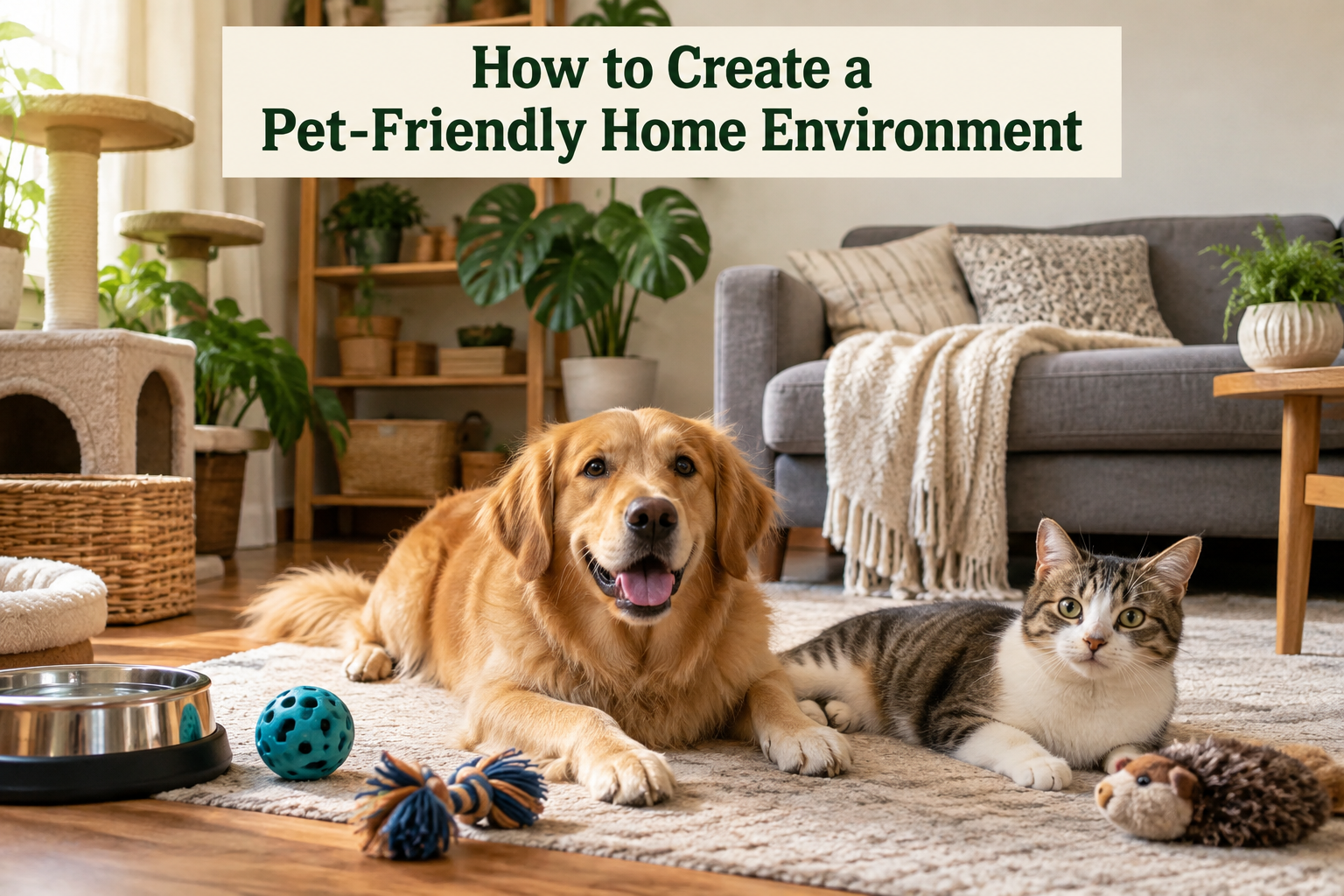
Bringing a pet into your home is more than simply providing food, water, and a place to sleep. Dogs, cats, and other companion animals depend on their surroundings for comfort, safety, exercise, and emotional security. A thoughtfully designed pet friendly home environment can make daily life easier for both pets and their owners. It can also help prevent accidents, reduce stress, and encourage healthy behavior.
When I started learning more about pet care, one thing became very clear to me. Pets experience our homes differently than we do. A loose electrical wire that seems harmless to us may look like a chew toy to a puppy. A high shelf may become a favorite resting place for a cat. Even strong household scents that we barely notice may feel overwhelming to an animal with a more sensitive sense of smell. Creating a safe home for pets therefore requires us to look at our surroundings from their point of view.
Start With a Safe Living Space
Safety should be the first priority when creating a pet friendly home environment. Pets are naturally curious, especially when they are young or recently introduced to a new home. They may sniff, chew, scratch, climb, or investigate objects that could cause harm.
Walk through every room and look for potential hazards. Electrical cords should be placed out of reach whenever possible. Small objects such as coins, batteries, rubber bands, buttons, and pieces of plastic should not be left where pets can swallow them.
Cleaning products, medicines, chemicals, and other potentially dangerous substances should be stored securely. Closed cabinets or high shelves can prevent curious pets from reaching them.
Trash bins also deserve attention. Dogs and cats may be attracted to the smell of leftover food. A covered or secure trash container can reduce the risk of pets eating spoiled food, sharp packaging, bones, or other unsafe materials.
Windows and balconies should also be checked. Secure screens are especially important for cats because they may jump toward birds or insects without understanding the danger of an open window.
Create a Comfortable Sleeping Area
Every pet needs a quiet place where it can rest without being disturbed. Good sleep plays an important role in physical health, emotional balance, and overall wellbeing.
Choose a location away from constant foot traffic and loud household activity. A soft bed, blanket, cushion, or suitable pet crate can create a comfortable resting area.
Some pets enjoy sleeping close to their owners, while others prefer a more private location. It is useful to observe your pet and see where it naturally chooses to rest.
Temperature matters as well. Avoid placing a pet bed directly beside heaters, air conditioners, or areas with strong drafts. The sleeping space should feel comfortable throughout the day and night.
For older pets, consider a supportive bed that is easy to enter. Senior dogs and cats may find very high beds difficult to use because their joints may not be as flexible as they once were.
Keep Food and Water Areas Clean
A pet friendly home should include a clean and consistent place for feeding. Keeping food and water bowls in the same general location can create a predictable routine.
Water should always be fresh and easy to reach. Wash water bowls regularly because dirt, food particles, and saliva can build up over time.
Food bowls also need frequent cleaning. Leaving old food in a bowl can attract insects and create unpleasant smells.
If you have more than one pet, separate feeding areas may be helpful. Some animals become nervous or protective when another pet approaches their food. Giving each pet enough personal space can make meals calmer.
Cats often prefer their food and water to be placed away from the litter box. A clean separation between eating and toilet areas usually creates a more pleasant environment.
Provide Space for Exercise and Play
Physical activity is essential for maintaining a healthy pet. A pet friendly home environment should offer opportunities for movement, play, and mental stimulation.
Dogs may benefit from a clear indoor area where they can safely play with toys. Regular outdoor walks are still important, but indoor play can be useful during bad weather or when owners have limited time.
Cats need opportunities to climb, scratch, chase, and explore. Cat trees, scratching posts, shelves, tunnels, and interactive toys can help satisfy these natural behaviors.
Rotating toys can make familiar objects feel interesting again. Instead of leaving every toy available all the time, keep a few out and change them regularly.
Play should be enjoyable and safe. Check toys for damage and remove anything that has broken into small pieces. A damaged toy can become a choking or swallowing hazard.
Protect Furniture Without Punishing Natural Behavior
Scratching, chewing, and digging are natural behaviors for many pets. Problems often occur when animals do not have suitable alternatives.
A cat that scratches furniture may simply need a scratching surface that feels more appealing. Place scratching posts near areas where the cat already likes to scratch. Different cats may prefer vertical or horizontal surfaces.
Puppies often chew while exploring their environment or during teething. Providing safe chew toys can help redirect this behavior away from furniture, shoes, and household objects.
Instead of constantly punishing unwanted behavior, try to understand what need the pet is trying to meet. A home that provides acceptable choices usually makes training much easier.
Choose Pet Safe Plants
Indoor plants can make a home look beautiful, but not every plant is suitable for a household with pets. Some plants can cause illness when chewed or swallowed.
Before bringing a plant into your home, check whether it is considered safe for the type of pet you own. Cats are particularly curious about leaves and flowers, while dogs may investigate fallen plant material.
If you already have plants that could be harmful, keep them completely out of reach or consider replacing them with safer options.
The same care should be taken with gardening products, fertilizers, and plant treatments. Store these products securely and follow safety instructions carefully.
Create a Proper Toilet Area
A clean toilet area contributes greatly to a comfortable pet friendly home.
For cats, litter boxes should be placed somewhere that feels private but remains easy to access. They should not be hidden in locations where a cat may feel trapped or frightened.
Regular cleaning is important because many cats dislike using a dirty litter box. Keeping the area clean also helps control odor inside the home.
Puppies and dogs that are being house trained need a consistent toilet routine. Taking them to the same appropriate area regularly can make training easier.
Accidents should be cleaned thoroughly. Pets have a strong sense of smell and may return to the same place if traces of odor remain.
Reduce Stressful Noise
Pets can be more sensitive to sound than people realize. Vacuum cleaners, loud televisions, construction sounds, fireworks, shouting, and household appliances may frighten some animals.
You cannot remove every sound from your home, but you can provide a quiet retreat. A pet should always have access to a comfortable location where it can move away from noise.
During loud events, closing windows and curtains may reduce outside sounds. Calm background noise may also help some pets feel more relaxed.
Pay attention to body language. Hiding, trembling, excessive panting, pacing, flattened ears, or repeated attempts to escape may indicate that your pet feels uncomfortable.
Maintain a Comfortable Temperature
Animals can be affected by extreme heat and cold just like people.
During warm weather, provide cool resting areas and constant access to fresh water. Never leave a pet in a hot enclosed space.
In colder months, make sure sleeping areas remain warm and dry. Smaller animals, senior pets, and pets with short coats may feel cold more easily.
Sunlight can also affect room temperature. Cats often enjoy resting in sunny areas, but they should always have the option to move to a cooler place.
Keep Dangerous Foods Out of Reach
Many foods that are normal for people are not appropriate for pets. A pet friendly kitchen should therefore be organized carefully.
Do not leave food unattended on low tables or counters where pets can easily reach it. Store ingredients and snacks securely.
It is also important for family members to understand that sharing human food is not always safe. Children should be taught not to give pets snacks without permission.
After cooking, clean dropped food and spills quickly. Curious pets may eat something from the floor before you realize it has fallen.
Give Pets Their Own Belongings
Pets benefit from having items they recognize as their own. These may include a bed, food bowls, toys, blankets, scratching equipment, and grooming supplies.
Familiar belongings can be especially comforting when a pet is adjusting to a new home. The scent of a favorite blanket or bed may help create a feeling of security.
Keep pet supplies organized in a specific place. This also makes daily care easier because food, grooming tools, leads, toys, and cleaning items are easier to find when needed.
Consider the Needs of Senior Pets
A pet friendly home should change as a pet gets older. Senior animals may need additional support to move comfortably.
Slippery floors can become difficult for older dogs, so rugs or non slip surfaces may provide better stability. Pet ramps or steps can help animals reach beds, sofas, or other areas without excessive jumping.
Food and water should remain easy to access. Avoid forcing an older pet to climb stairs repeatedly just to reach basic necessities.
A peaceful sleeping area becomes even more valuable as pets age because senior animals may spend more time resting.
Introduce Changes Slowly
Pets often feel safest when their environment is predictable. Sudden changes in furniture, feeding areas, litter boxes, or sleeping arrangements can sometimes cause stress.
When possible, introduce changes gradually. Give your pet time to explore new objects before expecting immediate acceptance.
If you bring home new furniture, a new pet bed, or a different type of litter box, allow your pet to investigate at its own pace.
Patience is especially important when adopting a new animal. Some pets feel comfortable within a few days, while others may need much longer before they fully relax.
Keep the Home Clean Without Making It Uncomfortable
Cleanliness is an important part of creating a healthy home for pets, but the goal should not be to remove every familiar scent.
Regular vacuuming can reduce loose hair, dust, and dirt. Pet bedding should be washed when necessary, and feeding areas should remain hygienic.
However, extremely strong fragrances may be uncomfortable for animals. Whenever possible, choose cleaning methods that are suitable for homes with pets and keep animals away from freshly treated areas until products are completely safe.
A clean home can reduce odors while supporting healthier skin, paws, and living conditions.
Spend Meaningful Time Together
A pet friendly home is not created only through furniture, toys, and safety equipment. Human interaction is equally important.
Pets need attention, companionship, and opportunities to build trust with the people around them. Regular play, grooming, training, gentle affection, and quiet time together can strengthen the bond between a pet and its owner.
Try to include your pet in a predictable daily routine. Feeding, exercise, play, and rest at fairly consistent times can help animals feel secure.
Every pet has a different personality. Some enjoy constant attention, while others prefer shorter interactions and more personal space. Learning to respect these differences is an important part of responsible pet ownership.
Final Thoughts
Learning how to create a pet friendly home environment is mainly about combining safety, comfort, cleanliness, stimulation, and understanding. A good home does not need expensive furniture or complicated equipment. Small thoughtful changes can make a major difference in how secure and comfortable a pet feels.
Start by removing hazards, securing dangerous products, providing clean food and water areas, and creating a peaceful place for rest. Add safe opportunities for exercise, play, scratching, chewing, and exploration. As your pet grows older or its needs change, adjust the home accordingly.
Most importantly, observe your pet. Animals often show us what makes them comfortable through their daily behavior. When we pay attention to these signals and create a home that respects their natural needs, we provide more than shelter. We create an environment where pets can feel safe, relaxed, active, and truly part of the family.


