Keeping pets physically healthy is important, but their mental wellbeing deserves the same attention. Dogs, cats, rabbits, birds, and many other companion animals need regular opportunities to think, explore, solve simple problems, and interact with their environment. When pets spend most of their time indoors, their world can sometimes become predictable. The same rooms, the same feeding routine, and the same activities may eventually lead to boredom.
Fortunately, keeping pets mentally stimulated indoors does not require expensive equipment or complicated training. Small changes in daily life can make a noticeable difference. From interactive play and food puzzles to scent games and simple training sessions, there are many ways to make indoor life more interesting for pets.
Mental stimulation helps pets stay curious, confident, relaxed, and engaged. It can also reduce behaviors that often develop from boredom, such as excessive barking, scratching furniture, chewing inappropriate objects, or constantly demanding attention.
Understand Why Mental Stimulation Matters
Animals naturally spend time searching for food, exploring their surroundings, communicating, playing, and responding to changes in their environment. Indoor pets may not always have enough opportunities to perform these natural behaviors.
Mental stimulation gives pets something meaningful to focus on. It encourages them to use their senses and problem solving abilities instead of simply waiting for their next meal or walk.
A mentally active pet is often more satisfied after an enjoyable activity. Even a short training session or puzzle can require significant concentration. This is why mental exercises can sometimes make a pet feel pleasantly tired without requiring intense physical activity.
Mental stimulation is especially useful during bad weather, recovery periods, busy workdays, or situations where outdoor activities are limited.
Use Interactive Toys Regularly
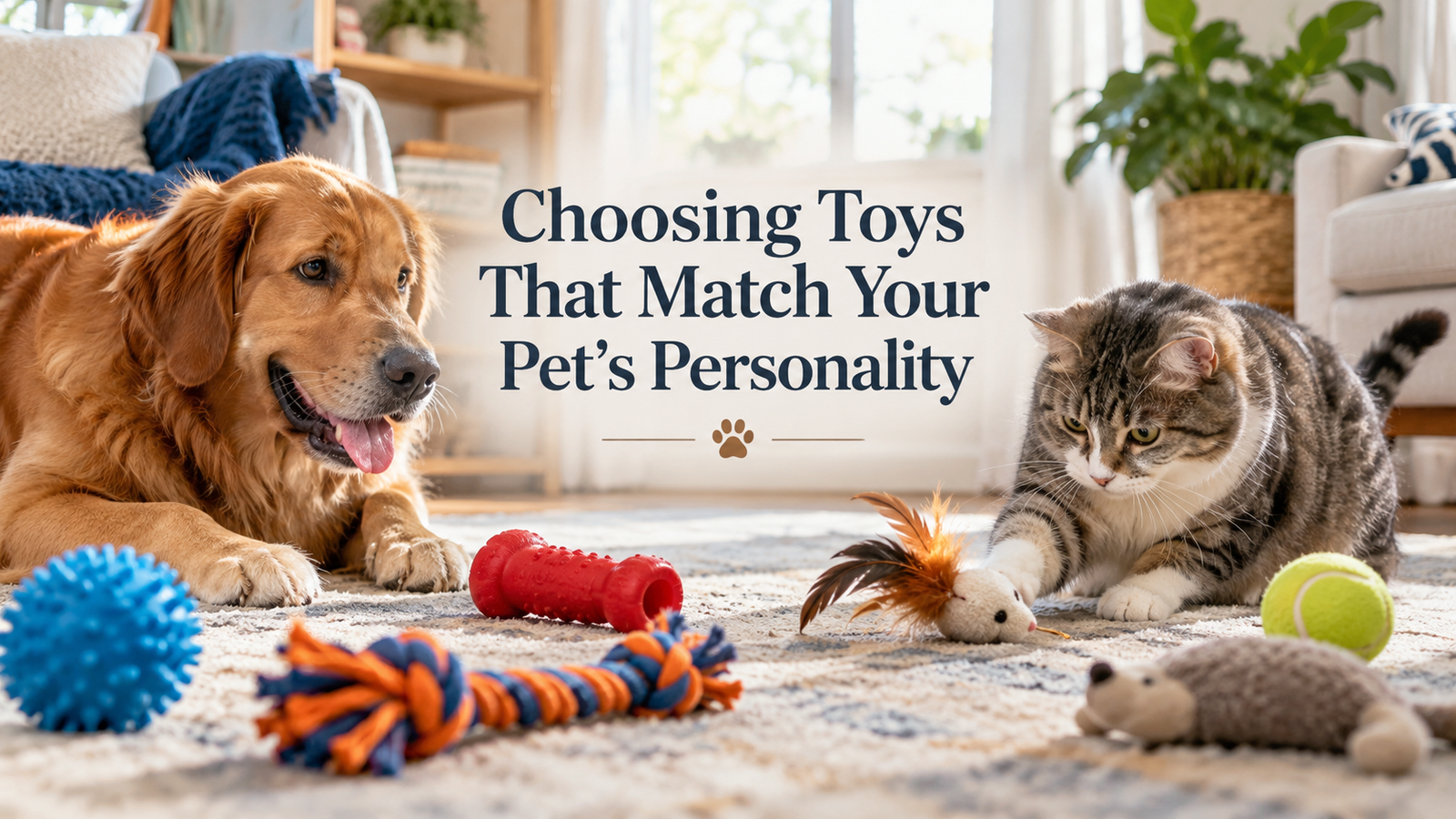
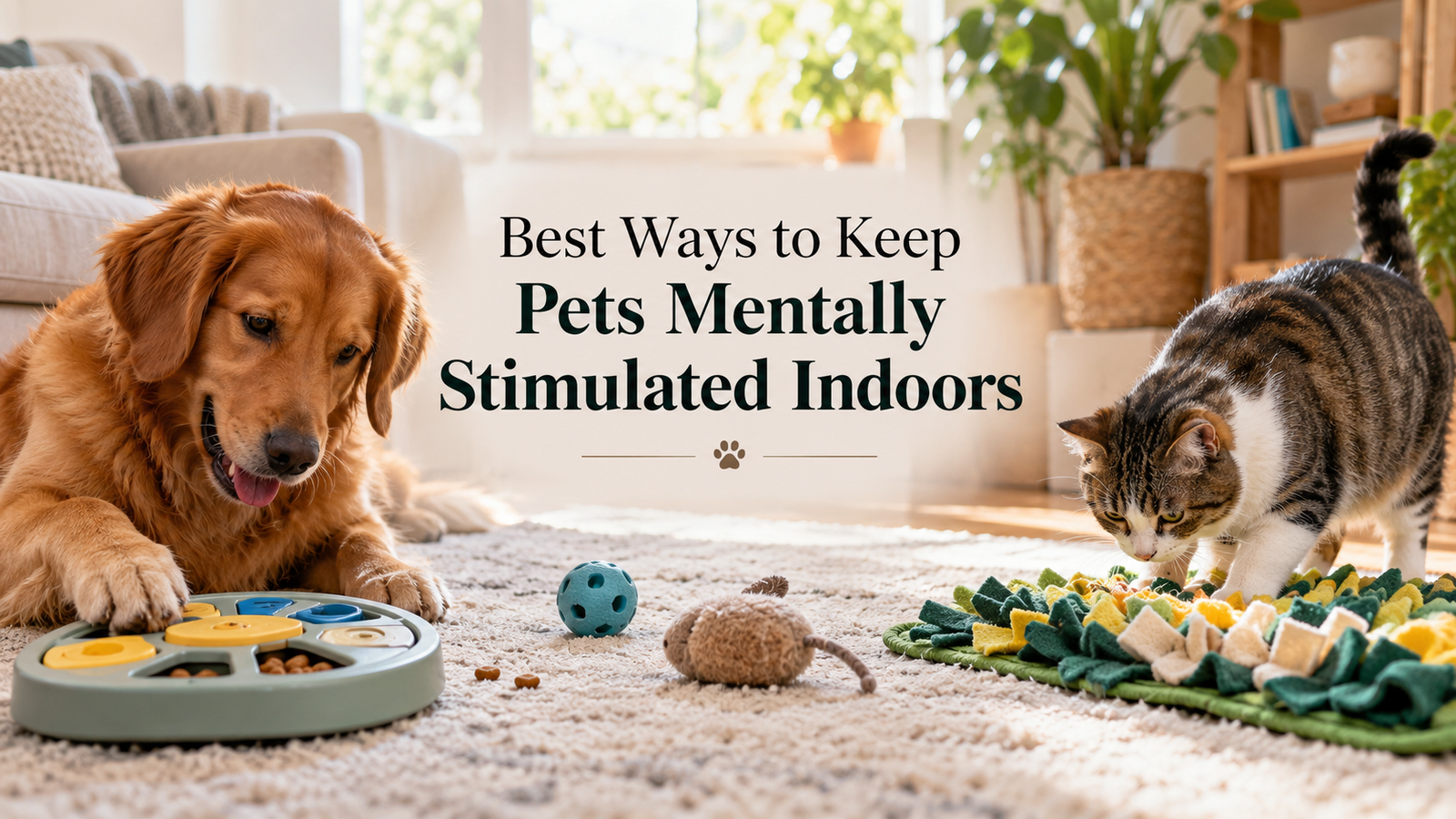
Interactive toys are one of the easiest ways to keep pets mentally stimulated indoors. These toys encourage pets to investigate, move objects, search for rewards, or figure out how something works.
For dogs, treat dispensing toys can provide entertainment while encouraging problem solving. Cats may enjoy rolling balls, moving toys, or objects that imitate the unpredictable movements of prey.
The key is variety. If every toy remains available all the time, pets may eventually lose interest. Instead, keep some toys stored away and rotate them every few days.
A toy that disappears for a week can suddenly seem exciting again when it returns.
Always choose toys that are appropriate for the pet’s size, age, chewing habits, and activity level. Regularly inspect toys and replace damaged ones to prevent accidental swallowing or injuries.
Turn Mealtime Into a Mental Activity
Food does not always have to arrive in a simple bowl. One of the best ways to keep pets mentally stimulated indoors is to make them work gently for part of their meal.
Food puzzles encourage pets to use their nose, paws, mouth, and memory to access food. You can also hide small portions of food around a safe room and allow your pet to search for them.
For dogs, dry food can sometimes be placed inside suitable food dispensing toys. Cats may enjoy searching for small portions of food placed in different safe locations.
Even something as simple as dividing a meal between several feeding spots can make eating more interesting.
The goal is not to frustrate your pet. Start with easy activities and gradually increase the difficulty after the pet understands how the game works.
Practice Short Training Sessions
Training is not only about teaching obedience. It is also an excellent form of mental exercise.
Dogs can practice familiar commands such as sit, stay, come, touch, or wait. Once they understand the basics, you can introduce simple tricks.
Cats can also learn useful behaviors through positive reinforcement. Many cats can learn to touch a target, come when called, enter a carrier, sit, or give a paw.
Keep training sessions short and enjoyable. Five minutes of focused training can provide valuable mental stimulation.
Use small rewards, praise, toys, or affection depending on what motivates your pet. Avoid turning training into a stressful experience. The purpose is to encourage thinking and strengthen communication between you and your animal.
Create Indoor Scent Games
A pet’s sense of smell can provide powerful mental stimulation.
Dogs in particular experience much of the world through scent. Allowing them to search for hidden treats can turn an ordinary room into an exciting environment.
Start by placing a treat somewhere easy to see. Encourage your dog to find it. Once your pet understands the game, hide treats in slightly more challenging locations.
You can place treats behind furniture legs, underneath safe objects, or inside open containers.
Cats can also enjoy scent based exploration. Cat safe herbs, toys carrying familiar scents, or hidden food can encourage curiosity.
Always make sure that anything used in scent games is safe for the specific animal.
Provide Window Watching Opportunities
For many indoor pets, a window can provide hours of natural entertainment.
Cats often enjoy watching birds, moving leaves, people, and outdoor activity. A comfortable cat tree, shelf, or resting area near a secure window can create a stimulating observation point.
Dogs may also enjoy looking outside, although some dogs become overly excited by passing animals or people. If window watching increases barking or anxiety, use another form of enrichment instead.
The objective is calm observation, not constant excitement.
For birds and small animals, safe access to interesting views may also provide environmental variety.
Rotate Your Pet’s Toys
Pets can become bored when they see the same toys every day.
Instead of buying new toys constantly, create a rotation system. Keep several toys available while storing the others.
Every few days, replace one or two toys with something your pet has not seen recently.
This simple strategy can make old toys feel new again.
You can also observe which types of toys your pet prefers. Some animals enjoy chasing, while others prefer chewing, searching, pulling, climbing, or carrying objects.
Understanding these preferences makes it easier to choose activities that genuinely engage your pet.
Create Safe Exploration Areas
Changing the indoor environment occasionally can encourage natural curiosity.
For cats, cardboard boxes, tunnels, climbing areas, scratching posts, and paper bags without handles can create exciting exploration opportunities.
Dogs may enjoy walking through a simple indoor obstacle course made from safe household objects.
You can encourage your dog to walk around chairs, step over low objects, move between cushions, or search inside safe containers.
Small pets such as rabbits may enjoy tunnels, cardboard structures, and supervised areas where they can explore different textures.
Make sure all exploration areas are free from sharp objects, electrical cables, toxic plants, or anything that could be swallowed.
Play Games That Encourage Thinking
Play becomes even more useful when pets must think about what they are doing.
Hide and seek is a simple example. Ask someone to gently hold your dog while you hide in another room. Then call the dog and reward them when they find you.
Another game involves hiding a favorite toy somewhere nearby and encouraging your pet to search for it.
Cats often enjoy stalking games using interactive toys. Move the toy in unpredictable ways rather than waving it directly in front of the cat.
Let the toy disappear behind furniture occasionally. This creates curiosity and encourages the cat to predict where it might appear next.
Remember to allow the cat to catch the toy sometimes. Constantly chasing something without ever succeeding may reduce enjoyment.
Teach the Names of Toys
Some dogs can learn to recognize individual toys by name.
Begin with one favorite toy. Say its name consistently when offering it to your dog. Over time, ask your dog to find that specific toy.
Once the first toy is understood, introduce another.
This game can gradually become more challenging as the dog learns to choose the correct object from several options.
It provides mental stimulation while also strengthening communication between pet and owner.
Encourage Safe Chewing
Chewing is a natural behavior for many dogs and can provide both mental satisfaction and relaxation.
Offer safe chew items that are suitable for your dog’s size and chewing strength.
Chewing gives dogs something meaningful to do while indoors and may help prevent them from chewing furniture, shoes, or other inappropriate objects.
Cats also benefit from opportunities to perform natural behaviors such as scratching. Providing suitable scratching surfaces can help satisfy this instinct.
The more appropriate outlets pets have for natural behavior, the less likely they are to create their own unwanted entertainment.
Spend Quality Time Together
Mental stimulation does not always require toys or special activities.
Your attention can be one of the most valuable forms of enrichment.
Talking to your pet, practicing training, playing gently, grooming, or simply sitting together can strengthen your relationship.
Some pets enjoy physical affection, while others prefer interactive play or being close without being touched.
Learn your pet’s individual preferences.
Meaningful interaction helps animals feel connected to their owners and makes their indoor environment more socially interesting.
Introduce New Experiences Gradually
New experiences can provide excellent mental stimulation when introduced carefully.
You might allow your pet to explore a different room, investigate a new toy, experience a new safe texture, or learn a new activity.
The important thing is to introduce changes gradually.
Some animals are naturally confident, while others need more time to adjust.
Never force a nervous pet to interact with something unfamiliar. Give them space to investigate at their own pace.
Positive experiences can gradually build confidence.
Keep the Environment Interesting
A stimulating home does not need to be filled with dozens of expensive pet products.
Simple environmental changes can make a significant difference.
Move a cat tunnel to another location. Place a dog’s bed near a different safe viewing area. Introduce a cardboard box for exploration. Hide a few treats before leaving the room.
These small changes encourage pets to investigate their surroundings rather than experiencing exactly the same environment every day.
At the same time, pets also need stability. Important resources such as food, water, sleeping areas, and litter boxes should remain easy to find.
The best environment combines familiar comfort with occasional opportunities for discovery.
Allow Time for Rest
Mental stimulation is valuable, but pets also need plenty of quiet time.
Animals should not be entertained constantly. Too much activity can become overwhelming, especially for puppies, kittens, senior pets, or nervous animals.
Provide comfortable resting areas where your pet can sleep without being disturbed.
A healthy daily routine includes activity, social interaction, mental exercise, meals, and relaxation.
Learning when your pet wants engagement and when they want rest is an important part of responsible pet care.
Observe Your Pet’s Individual Personality
There is no single enrichment activity that works perfectly for every animal.
One dog may love food puzzles while another prefers scent games. One cat may enjoy chasing toys while another prefers climbing and watching the environment from a high place.
Watch your pet carefully during different activities.
If they appear curious, relaxed, and eager to continue, the activity is probably enjoyable. If they repeatedly walk away, become frustrated, or show signs of stress, try something easier or different.
Mental stimulation should improve your pet’s quality of life, not create pressure.
Build Mental Enrichment Into Daily Life
The easiest way to keep pets mentally stimulated indoors is to make enrichment part of the normal daily routine.
You do not need to plan long sessions.
A five minute training activity in the morning, a food puzzle during lunch, a short scent game in the afternoon, and interactive play in the evening can provide plenty of variety.
Small activities spread throughout the day are often easier for owners to maintain and more enjoyable for pets.
Consistency is more important than complexity.
Final Thoughts
The best ways to keep pets mentally stimulated indoors are often simple, affordable, and easy to include in everyday life. Interactive toys, food puzzles, training sessions, scent games, indoor exploration, window watching, safe chewing, and quality time with owners can all help create a richer environment.
Mental stimulation supports more than entertainment. It encourages natural behavior, improves confidence, strengthens the bond between pets and their owners, and may reduce boredom related problems.
Most importantly, pay attention to your pet as an individual. Their age, personality, health, energy level, and preferences should guide the activities you choose.
A mentally enriched home does not need to be complicated. By providing regular opportunities to explore, think, play, and interact, you can help your pet enjoy a happier and more interesting life indoors.