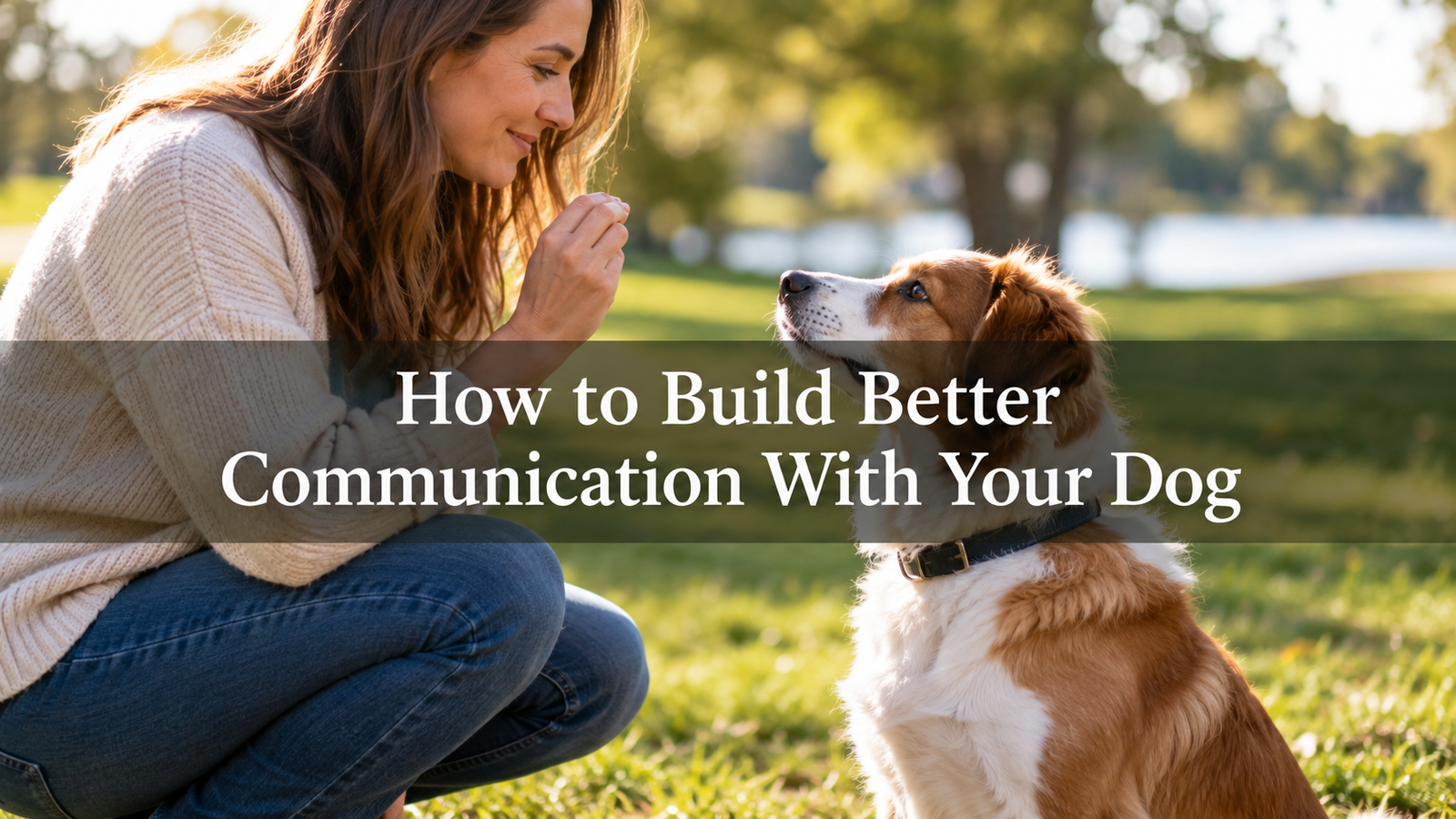

Leash training a puppy is one of the most useful skills you can teach during the early stages of your dog’s life. A puppy that learns to walk calmly on a leash becomes easier to manage, safer outdoors, and more enjoyable to take on daily walks. After reading different dog training books and learning about puppy behavior, one thing becomes very clear. Good leash training is not about forcing a puppy to walk perfectly from the first day. It is about helping the puppy understand what the leash means and gradually building positive walking habits.
Many new puppy owners expect their puppy to naturally understand how to walk beside them. In reality, wearing a collar, feeling a leash, following a person, and ignoring outdoor distractions are all new experiences for a young dog. This is why puppy leash training should be introduced slowly and patiently.
Start With the Right Collar or Harness
Before beginning leash training a puppy, choose comfortable equipment. A lightweight collar or properly fitted harness is usually suitable for a young puppy. It should fit securely without being too tight.
You should be able to place about two fingers between the collar and the puppy’s neck. A harness should also fit properly without rubbing the puppy’s skin or restricting natural movement.
The leash should be lightweight because a heavy leash may feel uncomfortable to a small puppy. A standard leash is usually easier to control during training than a very long leash.
At this stage, comfort is more important than style. If the puppy feels uncomfortable wearing the equipment, training may become more difficult.
Introduce the Collar or Harness First
Before attaching a leash, allow your puppy to become familiar with wearing the collar or harness.
Put it on for a few minutes while the puppy is playing, eating, or receiving treats. This helps create a positive connection between wearing the equipment and enjoyable activities.
Some puppies may scratch at the collar or try to bite the harness when they first wear it. This is normal. Avoid immediately removing it every time the puppy reacts because the puppy may learn that scratching causes the equipment to disappear.
Instead, distract the puppy with a toy, treat, or short training activity.
Gradually increase the amount of time your puppy wears the collar or harness until it becomes a normal part of the daily routine.
Let Your Puppy Get Used to the Leash
The next step in leash training a puppy is introducing the leash itself.
Attach a lightweight leash to the puppy’s collar or harness while you are inside the house. Allow the puppy to walk around for a short period while you supervise.
At first, do not try to control the puppy with the leash. The purpose is simply to help the puppy become comfortable with the feeling of something attached to the collar or harness.
You can encourage your puppy to follow you around the room while offering small treats.
Always supervise this activity. Never leave a puppy alone with a leash attached because it could become caught around furniture or other objects.
Teach Your Puppy to Follow You
A puppy should learn that staying close to you is rewarding.
Begin in a quiet room with very few distractions. Hold a treat near your leg and encourage the puppy to follow you for a few steps.
When the puppy walks beside you, praise the behavior and give a small reward.
You do not need to walk around the entire house. A few steps at a time can be enough during the first training sessions.
The goal is to make following you enjoyable.
If the puppy runs away or becomes distracted, avoid pulling the leash immediately. Instead, use your voice, a treat, or a toy to regain attention.
Short and successful training sessions are usually better than long sessions that make the puppy tired or frustrated.
Practice Walking Indoors
Once your puppy is comfortable wearing the leash, begin practicing actual leash walking inside your home.
Hold the leash loosely and start walking slowly. Encourage the puppy to stay close to you.
Whenever the puppy walks calmly without pulling, offer praise or a small treat.
This teaches an important lesson. A loose leash allows the walk to continue and may bring rewards.
Indoor leash training is useful because there are fewer distractions. Outdoors, your puppy may notice people, vehicles, birds, other dogs, unusual smells, and many other interesting things.
By practicing indoors first, the puppy has an opportunity to understand the basic behavior before facing these distractions.

Teach the Meaning of a Loose Leash
Loose leash walking is one of the main goals of puppy leash training.
The leash should normally remain relaxed rather than constantly tight.
If your puppy begins pulling forward, avoid pulling the puppy back repeatedly. Constant pulling from both sides can turn the walk into a competition.
Instead, stop walking when the leash becomes tight.
Wait for the puppy to look back, move toward you, or create some looseness in the leash. Once the leash becomes relaxed again, continue walking.
Over time, the puppy begins to understand that pulling does not help reach the destination faster.
Walking calmly keeps the journey moving.
Consistency is especially important here. If you sometimes allow strong pulling and sometimes stop it, your puppy may find it difficult to understand what you expect.
Move Training to a Quiet Outdoor Area
After successful indoor practice, move outside to a calm location.
Your backyard, garden, driveway, or another quiet area can work well.
Outdoor leash training can feel completely different to a puppy because new smells and sounds can quickly attract attention.
Do not expect perfect behavior during the first outdoor session.
Allow your puppy some time to observe the environment. Then begin practicing short walks using the same methods you used indoors.
Reward calm walking and encourage the puppy to stay near you.
The first few outdoor training sessions can be very short. Even five or ten minutes of focused practice may be enough for a young puppy.
Use Positive Reinforcement
Positive reinforcement can make leash training easier and more enjoyable.
Whenever your puppy performs the behavior you want, provide something rewarding. This may include praise, small treats, toys, or permission to explore an interesting area.
Food rewards are especially useful during the early stages because they make it easier to communicate which behavior is correct.
Treats should be small because you may use several during one training session.
As your puppy improves, you can gradually reduce how often food rewards are given. Praise and access to interesting parts of the walk can also become rewards.
The purpose is not to depend on treats forever. The purpose is to use rewards while the puppy is learning the correct behavior.
Handle Pulling Calmly
Pulling is one of the most common problems owners experience when learning how to leash train a puppy.
Puppies usually pull because they are excited to reach something interesting. They may want to meet a person, smell grass, approach another dog, or simply move faster.
When pulling happens, remain calm.
Stop moving forward and wait for the leash to relax. You can also change direction and encourage your puppy to follow you.
Reward the puppy when it returns to the correct position.
Avoid becoming angry or jerking the leash aggressively. Harsh corrections may make some puppies nervous about walking or may create negative feelings about the leash.
Patience usually produces better long term results.
Teach a Simple Walking Cue
You can introduce a simple word that tells your puppy it is time to walk with you.
Words such as “walk,” “come,” or “let’s go” can work.
Choose one command and use it consistently.
Say the cue before you begin walking. When your puppy follows, praise and reward the behavior.
Eventually, the puppy begins connecting the command with moving alongside you.
Avoid repeating the command continuously. Say it clearly and give your puppy an opportunity to respond.
Gradually Add More Distractions
Once your puppy can walk calmly in a quiet area, gradually introduce more challenging environments.
You may walk along a quiet street before moving to areas where more people or dogs are present.
Adding distractions slowly gives the puppy time to develop self control.
If your puppy suddenly starts pulling or ignoring you in a busy location, the environment may simply be too difficult at that stage.
Move farther away from the distraction and practice where your puppy can focus again.
Training becomes easier when difficulty increases gradually.
Allow Time for Sniffing
A good puppy walk does not need to involve perfect walking every second.
Sniffing is an important way dogs explore their environment. Allowing your puppy time to smell grass, trees, and safe objects can make walks more mentally stimulating.
You can create a simple routine where the puppy walks calmly for a while and then receives permission to explore.
This can actually help with leash training because sniffing becomes a natural reward for good walking behavior.
The puppy learns that staying under control does not mean losing the opportunity to enjoy the environment.
Keep Training Sessions Short
Young puppies have limited attention spans.
Trying to practice leash walking for long periods may result in frustration for both the puppy and the owner.
Several short training sessions throughout the day can be more effective than one long lesson.
For example, you can practice indoors for a few minutes in the morning and complete another short session outdoors later.
End training when your puppy is still interested rather than waiting until the puppy becomes exhausted.
This helps maintain a positive attitude toward future sessions.
Be Consistent With Your Rules
Consistency plays a major role in successful leash training.
Everyone who walks the puppy should follow similar rules.
If one person allows the puppy to pull toward everything while another person expects loose leash walking, learning can take longer.
Decide what behavior you want and respond consistently.
This does not mean every walk must be a strict training session. Puppies should still have opportunities to explore and enjoy themselves.
However, the basic rule that pulling should not be the fastest way to reach something should remain consistent.
Understand That Progress Takes Time
Every puppy learns at a different speed.
Some puppies understand loose leash walking quickly while others need several weeks of regular practice.
Breed, age, personality, previous experiences, and the surrounding environment can all affect progress.
You may also notice that your puppy walks beautifully at home but begins pulling again in a new location. This does not necessarily mean the training has failed.
Dogs often need to practice the same skill in several different environments before they fully understand that the same rule applies everywhere.
Continue practicing calmly and increase difficulty gradually.
Common Leash Training Mistakes to Avoid
One common mistake is expecting too much too soon. A young puppy is still learning about the world and can easily become distracted.
Another mistake is allowing pulling sometimes while correcting it at other times. This creates confusion.
Long training sessions can also reduce progress because puppies may lose focus.
Using the leash mainly for correction is another problem. The leash should represent safety, communication, and enjoyable walks rather than fear or punishment.
Owners should also avoid taking an unprepared puppy directly into an extremely busy environment. Gradual exposure usually creates better behavior and greater confidence.
Final Thoughts
Learning how to leash train a puppy requires patience, consistency, and realistic expectations. Start by helping your puppy become comfortable with the collar or harness. Introduce the leash inside the home and reward the puppy for following you. Practice loose leash walking in quiet environments before gradually adding outdoor distractions.
When the puppy pulls, stop or change direction rather than turning the walk into a pulling competition. Reward calm behavior and give your puppy opportunities to sniff and explore.
Most importantly, remember that leash training a puppy is a learning process rather than a single lesson. Every short walk gives your puppy another opportunity to practice.
With regular positive training, your puppy can gradually develop into a confident dog that understands how to walk calmly on a leash. The time spent teaching these habits during puppyhood can make daily walks safer, easier, and much more enjoyable throughout your dog’s life.