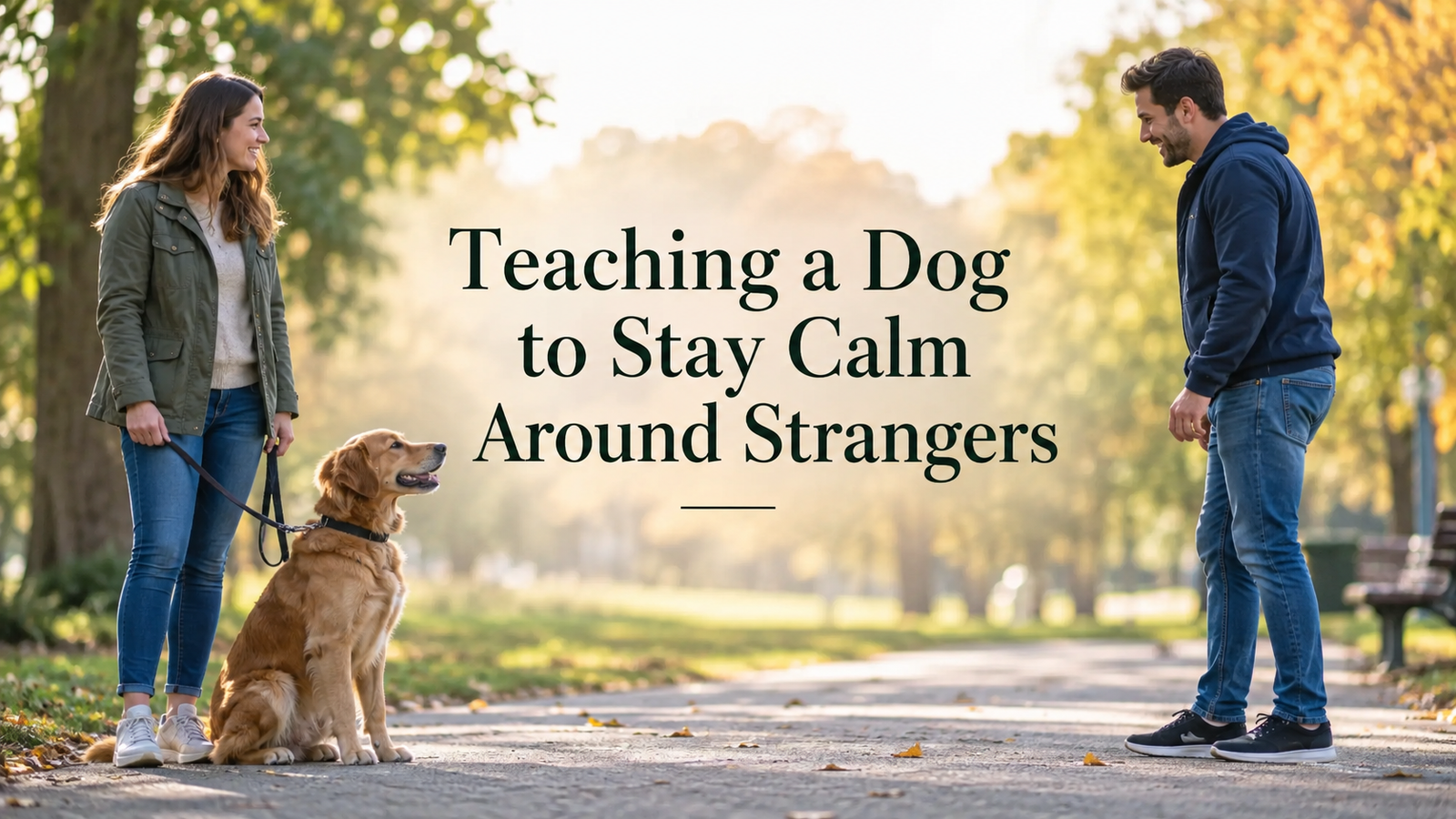
Teaching a dog to stay calm around strangers is one of the most useful skills a dog owner can develop. A dog that can remain relaxed when meeting new people is easier to manage at home, during walks, at the veterinarian, and in public places. More importantly, calm behavior helps the dog feel safer and more confident in situations that might otherwise cause excitement, fear, barking, or jumping.
Many dogs become overly excited when someone unfamiliar appears. Some rush toward visitors, jump on them, bark continuously, or pull hard on the leash. Other dogs react in the opposite way. They may hide, growl, freeze, or try to escape. These behaviors can look very different, but they often come from the same basic problem. The dog does not yet know how to handle the presence of unfamiliar people.
When I started learning more about dog behavior, one thing became clear to me. Calm behavior cannot simply be demanded from a dog. It has to be taught gradually. Dogs learn best when they understand what behavior is expected and when that behavior brings a positive result.
Understand Why Your Dog Reacts to Strangers
Before trying to change your dog’s behavior, it helps to understand why the reaction is happening.
Some dogs love people so much that they become extremely excited whenever someone approaches. They may jump because they want attention. They may bark because they are eager to interact.
Other dogs are naturally cautious. A stranger walking directly toward them, reaching over their head, or trying to touch them can feel threatening.
Past experiences can also influence behavior. A dog that has not met many different people during its early life may find strangers confusing or frightening. Dogs that have experienced rough handling may also become suspicious around unfamiliar people.
Understanding the reason behind the behavior allows you to choose a training method that actually helps your dog instead of simply trying to stop the visible reaction.
Start Training in a Calm Environment
Training should begin in a place where your dog feels comfortable. Your home or a quiet garden can be a good starting point.
Trying to teach calm behavior for the first time in a crowded park is usually difficult because there are too many distractions. Your dog may see people, other dogs, bicycles, cars, and children at the same time.
Begin with simple obedience skills such as sit, stay, and look at me.
These commands give your dog something productive to do when a stranger appears.
Practice for a few minutes each day. Ask your dog to sit, wait for a few seconds, and then reward calm behavior.
Once your dog responds reliably in a quiet environment, you can slowly introduce more distractions.
Teach Your Dog to Focus on You
One of the most valuable skills for teaching a dog to stay calm around strangers is attention training.
Your dog should learn that looking at you is more rewarding than reacting to everything happening nearby.
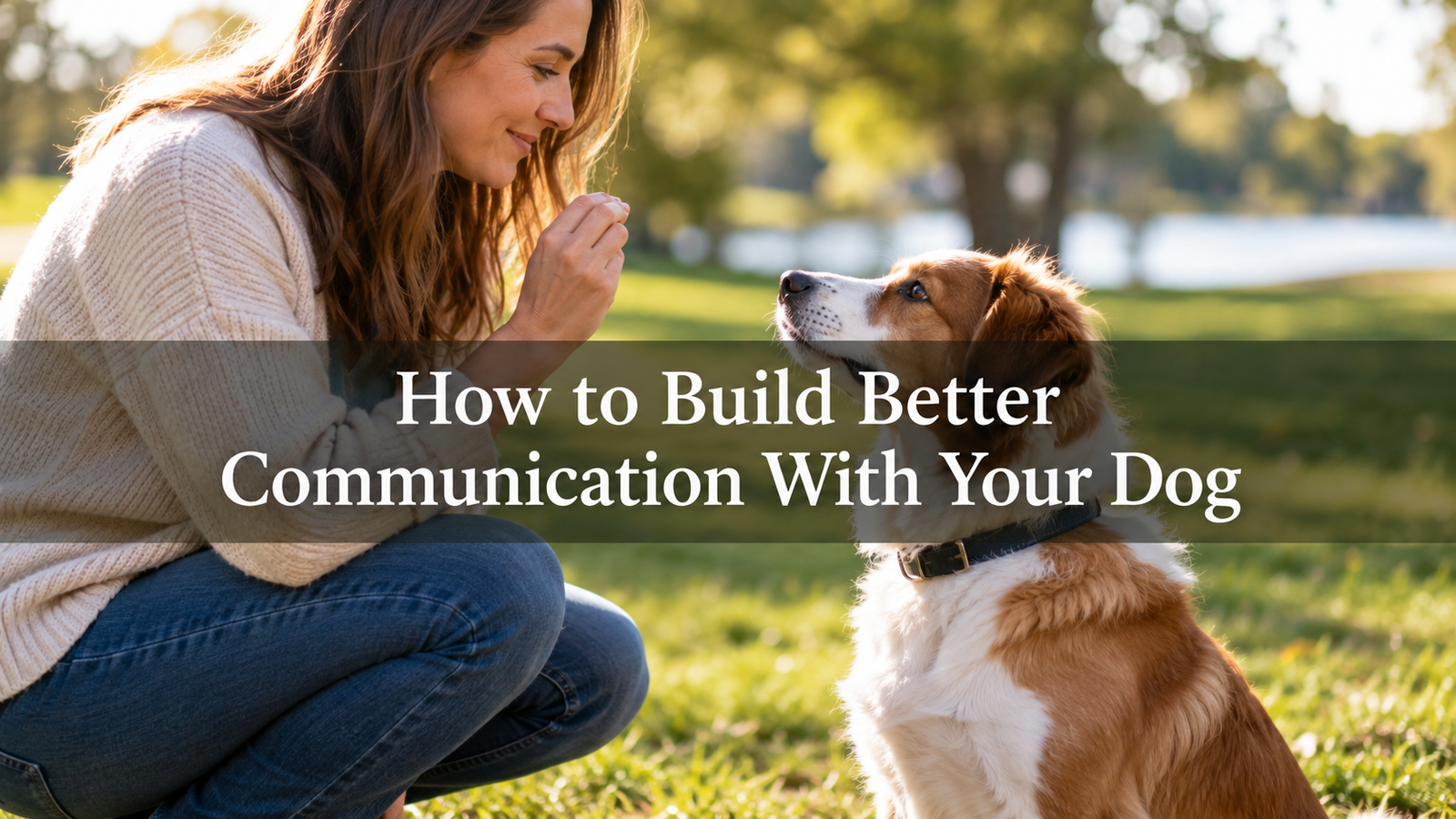
Start by holding a small treat near your face. When your dog looks at you, say a simple cue such as “look” or “watch me.” Immediately give the reward.
Repeat this exercise several times.
Eventually, move the treat away from your face and give the command. When your dog makes eye contact, reward the behavior.
This exercise becomes very useful when someone unfamiliar approaches. Instead of allowing your dog to stare at the stranger and become increasingly excited, you can redirect the dog’s attention toward you.
Use Distance to Your Advantage
Distance is extremely important when training around strangers.
If your dog starts barking when a person is five feet away, do not begin training at that distance. Move farther away until your dog notices the person but can still remain calm.
This distance is sometimes called the dog’s comfort zone.
Imagine you are standing across the street from another person. Your dog sees them but does not bark or pull. This is a perfect opportunity for training.
Ask your dog to look at you or sit. Reward the calm response.
Over several training sessions, you can gradually decrease the distance between your dog and unfamiliar people.
Do not rush this process.
The goal is not to see how quickly you can get close to someone. The goal is to teach your dog that strangers can be present without causing excitement or fear.
Reward Calm Behavior
Dogs repeat behaviors that produce good results.
If your dog remains relaxed while a stranger walks nearby, reward that behavior.
You can use small treats, gentle praise, or a favorite toy depending on what motivates your dog.
Timing is important.
Give the reward while your dog is calm. Do not wait until your dog begins jumping or barking.
For example, imagine a visitor enters your home. Your dog looks at the visitor but keeps all four paws on the floor. That is the moment to reward.
By doing this consistently, the dog begins to understand that calm behavior around strangers leads to something positive.
Stop Rewarding Jumping
Jumping is one of the most common problems dogs develop around unfamiliar people.
The behavior often continues because people accidentally reward it.
A dog jumps up and the visitor immediately talks to the dog, touches it, pushes it away, or laughs. From the dog’s point of view, jumping successfully created attention.
Instead, teach visitors to ignore the dog while it is jumping.
Attention should begin only when all four paws are on the floor.
If your dog knows the sit command, ask for a sit before allowing anyone to pet the dog.
With repetition, sitting can replace jumping as the dog’s normal greeting behavior.
Introduce Strangers Gradually
You do not need to expose your dog to dozens of people at once.
Controlled introductions are much more effective.
Ask a friend or family member your dog does not see very often to help with training.
Keep your dog on a comfortable leash and allow the person to enter the area without immediately approaching your dog.
Reward your dog for staying calm.
The person can gradually move closer while avoiding direct staring or sudden movements.
If your dog becomes nervous or overly excited, increase the distance again.
This teaches the dog that people can approach without anything frightening happening.

Ask Visitors to Ignore Your Dog at First
Many people naturally want to greet a dog as soon as they enter a house. They may bend down, call the dog’s name, or reach forward for a pat.
For an excited or nervous dog, this attention can make the situation harder.
Ask visitors to ignore your dog for the first few minutes.
They should avoid direct eye contact and allow the dog to observe them.
Once your dog relaxes, the visitor can calmly offer attention.
This approach gives your dog time to understand that the new person is not a threat and that there is no need to become overly excited.
Keep Greetings Calm
Human energy can influence dog behavior more than many owners realize.
If everyone becomes excited when someone arrives, the dog may also become excited.
Try to keep greetings quiet and controlled.
Avoid shouting at your dog or repeatedly saying commands in a loud voice.
Use a calm tone and simple instructions.
If your dog sits quietly when a visitor enters, reward that behavior before allowing interaction.
The calmer the environment becomes, the easier it is for the dog to make good choices.
Practice Calm Walking Around People
Teaching a dog to stay calm around strangers should not be limited to the home.
Walks provide excellent training opportunities.
Choose a quiet area where people occasionally pass by.
Keep enough distance so your dog can observe them without reacting strongly.
Whenever someone approaches, encourage your dog to focus on you. Reward calm walking and loose leash behavior.
If your dog begins pulling toward the person, stop moving or change direction.
The dog should learn that pulling does not lead to meeting people.
Calm walking, however, may be rewarded.
Over time, strangers can become a normal part of the environment instead of an exciting event.
Avoid Punishing Fear
If your dog is afraid of strangers, punishment can make the problem worse.
A frightened dog that growls is communicating discomfort. Shouting or physically correcting the dog may increase its fear.
Instead, create more distance and help the dog feel safe.
Reward small signs of improvement.
Perhaps your dog normally barks when someone is twenty feet away. One day, the dog watches quietly for several seconds. That is progress worth rewarding.
Confidence develops through positive experiences.
It rarely develops through force.
Teach a Place Command
A place command can be very helpful when visitors come to your home.
Choose a dog bed or mat and teach your dog to go there on command.
Start when there are no visitors.
Guide your dog onto the mat and reward them. Add a simple command such as “place.”
Practice until your dog can remain on the mat for increasing periods of time.
Later, when someone knocks on the door, you can ask your dog to go to the designated place instead of rushing toward the entrance.
This gives your dog a clear job and helps prevent chaotic greetings.
Keep Training Sessions Short
Long training sessions are not necessary.
Five to ten minutes of focused practice can be more effective than thirty minutes of frustrated training.
Dogs can become mentally tired, especially when learning to control strong emotions.
Finish the session while your dog is still successful.
Several short sessions throughout the week can gradually produce lasting improvements.
Be Consistent With the Rules
Consistency is essential when teaching a dog to stay calm around strangers.
If jumping is not allowed, everyone should follow the same rule.
If one family member allows the dog to jump while another person discourages it, the dog may become confused.
The same principle applies to visitors.
Explain the rules before they interact with your dog.
For example, tell them to wait until your dog sits before offering attention.
Clear rules make learning much faster.
Learn to Read Your Dog’s Body Language
Pay attention to how your dog communicates during interactions with strangers.
A relaxed dog usually has a loose body and natural movements.
A worried dog may show signs such as stiff posture, repeated lip licking, turning the head away, lowering the body, hiding, or trying to increase distance.
Recognizing these early signals allows you to respond before the situation becomes more difficult.
If your dog appears uncomfortable, do not force an interaction.
Allow more space and continue training at a level your dog can handle.
Do Not Force People to Pet Your Dog
Not every dog needs to be greeted by every stranger.
Some dogs enjoy meeting new people. Others prefer simply being near people without physical interaction.
Both can be perfectly acceptable.
The goal of training should be calm and safe behavior, not turning every dog into an extremely social animal.
Allow your dog to choose whether to approach someone whenever the situation is safe.
A dog that calmly walks past strangers without interacting with them has already learned a valuable skill.
Be Patient With Progress
Teaching a dog to stay calm around strangers takes time.
Some dogs improve within a few weeks, while others need several months of consistent practice.
Progress may not always happen in a straight line.
Your dog may behave perfectly one day and struggle the next because the environment is different or the stranger behaves differently.
Focus on the overall improvement rather than expecting perfection during every interaction.
Small successes gradually build dependable behavior.
Know When Professional Help Is Needed
Most excitement related problems can improve with consistent home training, but serious fear or aggressive behavior should be handled carefully.
If your dog repeatedly lunges, snaps, attempts to bite, or becomes extremely frightened around people, consider working with a qualified dog trainer or veterinary behavior professional.
Professional guidance can help identify triggers and create a safe training plan.
The sooner serious behavioral problems are addressed, the easier they are usually to manage.
Final Thoughts
Teaching a dog to stay calm around strangers is about building confidence, communication, and self control. Instead of expecting your dog to suddenly understand how to behave, show them what calm behavior looks like and reward it consistently.
Begin in a quiet environment, teach basic commands, strengthen your dog’s focus on you, and introduce unfamiliar people gradually. Use enough distance to keep your dog comfortable and reward relaxed behavior whenever you see it.
Avoid forcing interactions or punishing fear. Give your dog the opportunity to learn at a comfortable pace.
Most importantly, stay consistent. Dogs learn through repetition. Every calm walk past a stranger, every polite sit before greeting a visitor, and every successful moment of self control strengthens the behavior you want.
With patience and regular practice, strangers can become a normal part of your dog’s world rather than a reason for fear or excessive excitement. The result is a calmer, more confident dog and a much more enjoyable experience for both the owner and everyone they meet.