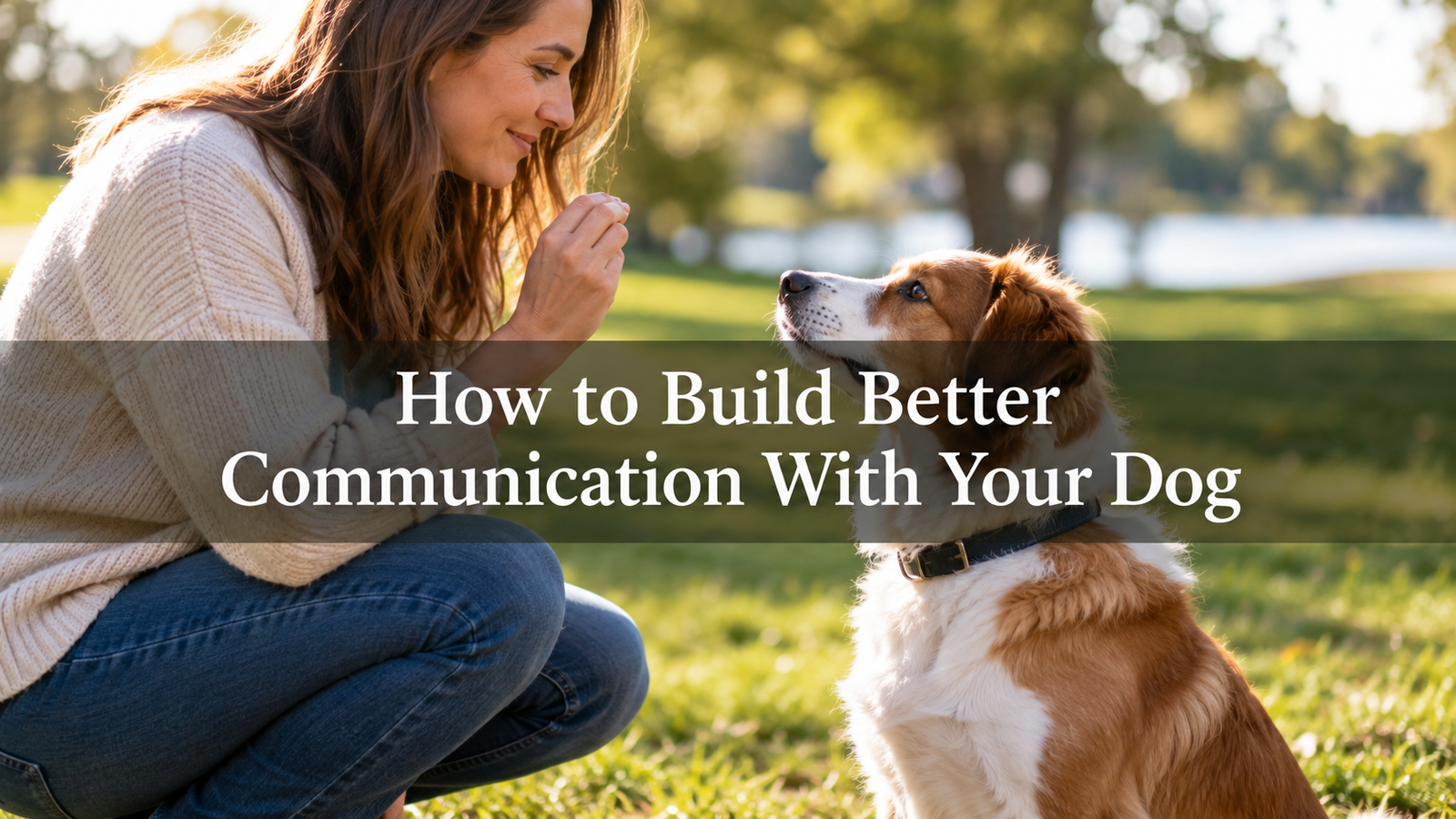
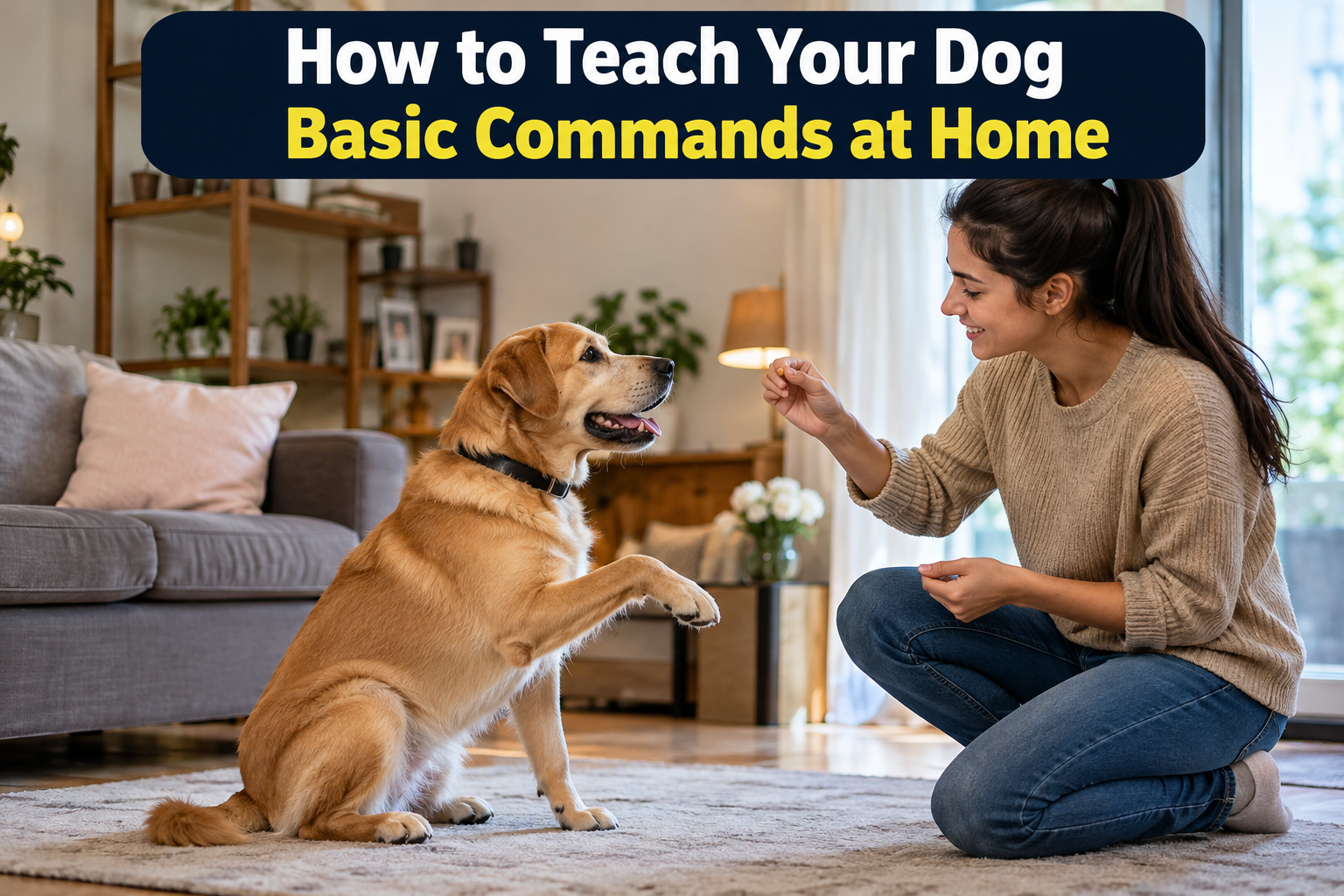
Teaching your dog basic commands at home is one of the most useful things you can do as a responsible pet owner. A well trained dog is easier to manage, safer around people, and usually more confident in everyday situations. Training also creates a stronger connection between you and your dog because it teaches both of you how to communicate with each other.
Many people think dog training requires a professional trainer or a special training center. In reality, most basic commands can be taught successfully at home. What matters most is patience, consistency, simple communication, and regular practice. Dogs learn through repetition and positive experiences, so even a few minutes of focused training each day can produce noticeable results.
If you are learning how to teach your dog basic commands at home, the first thing to understand is that every dog learns at a different speed. A young puppy may be easily distracted, while an adult dog may already have certain habits. Some dogs understand a command after a few sessions, while others need more time. The goal should not be to train your dog as quickly as possible. The goal is to help your dog understand what you want and feel comfortable doing it.
Before beginning a training session, choose a quiet area of your home. Turn off the television and remove toys or other objects that may distract your dog. At the beginning, it is easier for a dog to learn in a calm environment. Once your dog understands a command indoors, you can gradually practice it in areas with more distractions.
Training sessions should also be short. Dogs can lose concentration if a session continues for too long. About five to ten minutes at a time is enough for many dogs, especially puppies. You can have two or three short sessions during the day rather than one long session. Ending the training while your dog is still interested often makes the next session easier.
Positive reinforcement is one of the most effective methods of teaching basic dog commands at home. This simply means rewarding your dog when it performs the behavior you want. A reward can be a small treat, praise, gentle petting, or even a favorite toy. Food rewards are especially helpful during the early stages because most dogs are motivated by treats.
The timing of the reward is very important. Your dog should receive the reward immediately after performing the correct action. If too much time passes, your dog may not understand which behavior earned the reward. For example, if you ask your dog to sit and it sits, praise and reward it right away.
One of the first commands most owners teach is the sit command. It is simple, useful, and can become the foundation for many other behaviors. Start by standing or sitting in front of your dog with a small treat in your hand. Hold the treat near your dog’s nose so it knows the treat is there. Slowly move your hand upward and slightly over the dog’s head.
As the dog’s nose follows the treat, its bottom will usually lower naturally toward the floor. The moment your dog sits, clearly say “sit” and give the reward. Praise your dog in a calm and happy voice.
Repeat this process several times, but do not overdo it in one session. After your dog begins to understand the movement, try giving the verbal command before moving the treat. Over time, your dog should learn to sit when it hears the word without needing to follow food with its nose.
The stay command is another important skill because it teaches self control. It can also help protect your dog in situations where moving forward could be dangerous.
Begin by asking your dog to sit. Once it is sitting calmly, hold your open hand in front of you and say “stay.” Wait for one or two seconds. If your dog remains in place, reward it immediately.
At first, keep the waiting period very short. Once your dog becomes successful, gradually increase the amount of time before giving the reward. You can then begin taking one step backward while asking the dog to stay. Return quickly and reward it if it remains in position.
Distance should be increased slowly. Moving too far away too soon can confuse the dog and make training more difficult. Build both distance and duration gradually.
Teaching your dog to come when called is one of the most important parts of dog training. A reliable recall can prevent your dog from running into traffic, approaching another animal, or getting lost.
Start inside the house where distractions are limited. Move a short distance away from your dog and call its name followed by the word “come.” Use a friendly and excited tone. When your dog walks or runs toward you, reward it generously.
Your dog should learn that coming to you is always a positive experience. Avoid calling your dog toward you only when something unpleasant is about to happen. For example, if the dog believes that hearing “come” always means playtime is ending, it may eventually hesitate to respond.
Never punish your dog after it comes to you, even if it took longer than expected. You want your dog to associate coming when called with safety, praise, and positive attention.
The down command is useful when you want your dog to settle calmly. It can also help during visits from guests, meal times, or quiet periods inside the home.
Ask your dog to sit and hold a treat close to its nose. Slowly lower the treat toward the floor. When the dog follows the treat downward, move your hand slightly forward along the floor. The dog will usually lower its front legs and body into a lying position.
As soon as your dog lies down, say “down,” praise it, and provide the reward. With repeated practice, reduce your reliance on the treat movement until the dog responds mainly to your voice or hand signal.
Another valuable command is leave it. Dogs naturally explore objects with their mouths, so this command can help prevent them from eating unsafe food or picking up harmful objects.
Place a treat in your closed hand and allow your dog to smell it. Your dog may lick, sniff, or paw at your hand. Do not open your hand. When the dog finally stops trying to get the treat and moves its attention away, say “leave it” and reward the dog with a different treat from your other hand.
The dog gradually learns that ignoring one object can lead to a better reward. Once this lesson becomes clear, you can practice with an object placed on the floor while keeping it safely covered if necessary.
The drop it command is slightly different from leave it. Leave it means the dog should not pick something up, while drop it tells the dog to release something already in its mouth.
To teach this command, start with a safe toy. Allow your dog to hold the toy for a few seconds. Show the dog a treat and say “drop it.” When the dog releases the toy to take the treat, praise it immediately.
Sometimes give the toy back after rewarding the dog. This helps the dog understand that releasing an item does not always mean losing it permanently. It can reduce possessive behavior and make the dog more willing to cooperate.
The wait command can also be extremely useful around doors and food. It teaches your dog to pause before moving forward.
For example, before opening a door completely, ask your dog to wait. Open the door slightly. If the dog tries to move forward, gently close it. Once your dog remains still, open the door again. After a short pause, give a release word such as “okay” and allow the dog to move.
The same idea can be used before placing the food bowl on the floor. Asking the dog to wait for a few seconds before eating encourages patience and improves overall self control.
Consistency is one of the biggest secrets of successful home dog training. Everyone in the household should ideally use the same words for each command. If one person says “down” when asking the dog to lie down while another person uses the same word to tell the dog to get off furniture, the dog may become confused.
Choose one clear word for each behavior and continue using it. Hand signals should also remain consistent whenever possible.
Your tone of voice matters as well. Commands should be clear and confident without sounding angry. Dogs are sensitive to body language and emotional energy. If you become frustrated during a training session, your dog may become nervous or lose interest.
Mistakes are a normal part of learning. If your dog does not perform a command correctly, simply reset the situation and try again. Avoid shouting or physical punishment. Fear may stop a behavior temporarily, but it does not create the trust needed for reliable training.
It is also important to avoid repeating a command many times. If you constantly say “sit, sit, sit, sit,” your dog may learn that the first word does not matter. Give the command clearly once, allow the dog a moment to respond, and then guide it if necessary.
As your dog improves, gradually reduce the number of food rewards. This does not mean you should stop rewarding good behavior completely. Instead, replace some treats with praise, affection, play, or other forms of attention. Eventually, your dog should respond because it understands the command rather than because it expects food every single time.
Real life practice is just as important as formal training sessions. Ask your dog to sit before receiving its meal. Practice stay before opening the front door. Use come when moving between rooms. Ask your dog to wait before getting out of the car. These small daily exercises help commands become part of normal life.
Training should also remain enjoyable. Dogs are more likely to participate when learning feels like a game rather than a punishment. Celebrate small improvements. A dog that stays for three seconds today may stay for ten seconds after more practice. Progress is often gradual, and that is completely normal.
One common mistake is comparing one dog with another. Breed, age, personality, previous experiences, and environment can all affect how quickly a dog learns. An energetic young dog may need extra exercise before training so it can concentrate. A nervous dog may require a quieter environment and slower introduction to new tasks.
Learning how to teach your dog basic commands at home is not only about having an obedient pet. It is about creating communication between you and your dog. Commands such as sit, stay, come, down, leave it, drop it, and wait can make everyday life safer and easier while helping your dog understand what is expected.
The most successful training comes from patience, repetition, positive reinforcement, and trust. You do not need complicated equipment or hours of daily practice. A quiet space, a few small rewards, and several minutes of consistent training can make a meaningful difference.
Over time, the lessons you practice at home become habits your dog can use everywhere. Continue practicing even after your dog has learned the basic commands. Regular reinforcement keeps the skills strong and gives you another opportunity to spend positive time together.
A trained dog does not become perfect overnight. Training is an ongoing process that grows with the relationship between owner and pet. When you remain patient and make learning rewarding, your dog is much more likely to listen, cooperate, and enjoy the process. That is what makes home dog training valuable, not only for better behavior but also for building a stronger and more trusting bond with your dog.