
Bringing a young pet into your home is exciting, but not every puppy or kitten arrives feeling brave and curious. Some young pets are naturally shy, cautious, or easily frightened by new people, sounds, places, and experiences. In many cases, this behavior is completely normal. A young animal is still learning how the world works, and confidence develops gradually through safe and positive experiences.
Building confidence in shy young pets requires patience, consistency, and understanding. Trying to force a nervous puppy or kitten into uncomfortable situations can sometimes make fear stronger. A better approach is to create an environment where the pet feels secure enough to explore at its own pace.
When I started learning more about animal behavior, one thing became clear to me. Confidence is not something that can be demanded from a pet. It grows when the animal repeatedly discovers that new experiences are safe. Small positive moments slowly build trust, and trust eventually becomes confidence.
Understand Why Young Pets Become Shy
Before trying to improve a pet’s confidence, it helps to understand why the pet may be shy.
Some puppies and kittens are naturally more cautious than others. Personality can play an important role. Just like people, some animals quickly investigate new situations while others prefer to watch from a distance first.
Early experiences also influence behavior. Young pets that had limited contact with different people, sounds, surfaces, or environments during their early development may feel uncertain when they encounter something unfamiliar.
A frightening experience can also cause nervous behavior. Loud noises, rough handling, aggressive animals, or stressful travel can leave a strong impression on a young pet.
Sometimes a pet simply needs more time to adjust to a new home. Everything is different, including smells, sounds, people, furniture, and routines. What feels normal to us may feel overwhelming to a puppy or kitten.
Understanding the reason behind the fear helps us respond with patience instead of frustration.
Create a Safe Space at Home
One of the first steps in building confidence in shy young pets is giving them a place where they feel completely safe.
A quiet room, comfortable bed, covered crate, or cozy corner can become a secure retreat. The area should be away from constant noise and heavy household activity.
For kittens, a small room with food, water, a litter box, toys, and a hiding place can work very well during the first few days.
For puppies, a crate or quiet sleeping area can provide security when introduced positively.
The important thing is that the pet should be allowed to enter and leave the safe space without being disturbed unnecessarily.
Children and visitors should also understand that the pet’s resting area is not a place for chasing, touching, or playing.
When a shy pet learns that it always has somewhere safe to go, its overall stress level often decreases.
Let Your Pet Approach You
People naturally want to comfort a nervous puppy or kitten by picking it up or holding it. However, physical contact can sometimes make a frightened animal feel trapped.
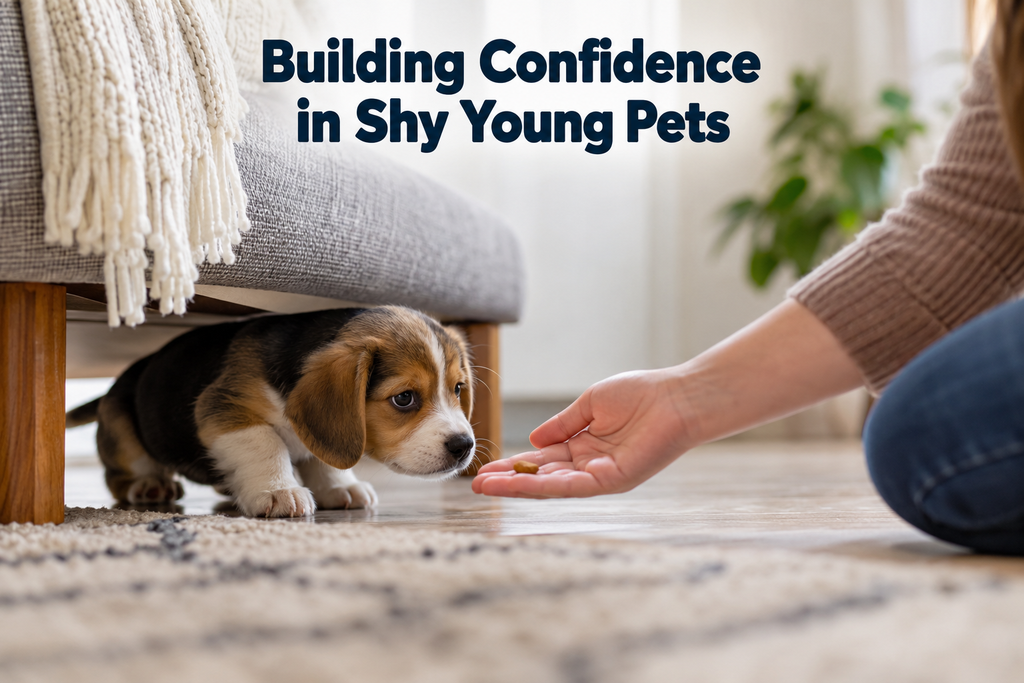
Instead, allow the pet to approach you voluntarily.
Sit quietly nearby and avoid staring directly at the animal. Speak gently and let the pet observe you.
You can place a small treat nearby or use a favorite toy to create positive associations.
When the pet moves closer, avoid immediately grabbing or touching it. Allow it to sniff your hand and decide whether it wants more interaction.
This simple habit teaches the animal that it has some control over social contact. That sense of control can be extremely important for confidence.
Use Positive Reinforcement
Positive reinforcement is one of the most effective methods for helping shy pets become more confident.
Whenever your puppy or kitten shows brave behavior, reward it.
The reward can be food, gentle praise, affection, or play depending on what your pet enjoys.
For example, imagine your puppy is nervous about walking into a new room. If it takes one small step toward the room, calmly praise it.
If your kitten usually hides when someone enters but decides to remain visible, reward that calm behavior.
These small moments matter.
Over time, the animal begins to associate new experiences with pleasant results.
Training should always feel relaxed. Confidence grows faster when learning is enjoyable rather than stressful.
Introduce New Experiences Slowly
Young pets need exposure to different situations, but the process should happen gradually.
Introducing too many new things at once can overwhelm a shy animal.
Start with simple experiences.
Allow your pet to explore one new room before introducing the entire house.
Let a puppy hear traffic from a comfortable distance before walking beside a busy road.
Introduce a kitten to one calm visitor instead of inviting several unfamiliar people at the same time.
Watch your pet’s body language carefully.
If the animal looks curious and relaxed, you can slowly move forward.
If it begins hiding, trembling, freezing, or trying to escape, reduce the difficulty of the situation.
Successful confidence building happens through small steps.
Keep a Predictable Daily Routine
Routine can make nervous pets feel safer.
Young animals feel more secure when important parts of their day happen at familiar times.
Try to maintain a regular schedule for feeding, toilet breaks, play, training, and sleep.
The routine does not need to be exact every minute, but general consistency helps the pet understand what to expect.
When life becomes predictable, uncertainty decreases.
For a shy animal, this can make a big difference.
A predictable environment provides a strong foundation for exploring new experiences with greater confidence.
Encourage Gentle Play
Play is another powerful way to build confidence in young pets.
Puppies and kittens often express natural behaviors through play. Chasing toys, exploring objects, solving simple puzzles, and interacting with their owners can help them feel capable and secure.
Choose games that allow the pet to succeed.
For kittens, wand toys, lightweight balls, and cardboard boxes can encourage exploration.
For puppies, soft tug toys, food puzzles, and simple fetch games can provide mental stimulation.
Avoid games that frighten the pet or involve sudden aggressive movements.
Play should increase curiosity, not anxiety.
When a shy pet successfully explores and interacts with its environment, confidence begins to grow naturally.
Practice Simple Training Exercises
Training gives young pets useful skills, but it also helps build confidence.
Start with very easy tasks.
A puppy can learn commands such as sit, come, touch, or stay for a few seconds.
A kitten can learn to follow a target, enter a carrier, or respond to its name.
Keep training sessions short.
Five minutes of successful training is usually more helpful than a long session that causes frustration.
Reward every correct response.
The goal is not perfect obedience. The goal is helping the animal experience repeated success.
Every successful training session teaches the pet that it can understand challenges and earn positive outcomes.
Introduce New People Carefully
Shy young pets sometimes feel nervous around unfamiliar people.
Instead of asking visitors to immediately pet the animal, allow the pet to observe from a comfortable distance.
Visitors should avoid leaning over the pet or staring directly into its eyes.
They can sit quietly and gently toss treats nearby.
If the pet chooses to approach, the visitor can offer a treat from an open hand.
Physical contact should only happen when the animal appears relaxed and interested.
This method teaches the pet that unfamiliar people can bring positive experiences.
With repeated safe introductions, social confidence often improves.
Use Calm Body Language
Animals pay close attention to human movement and tone of voice.
Fast movements, loud voices, and sudden gestures can make a shy pet more nervous.
Try to move calmly around the animal.
Speak in a relaxed tone.
Avoid bending directly over a frightened puppy or kitten.
Instead, sit or kneel nearby so your body appears less threatening.
Your own emotional state also matters. If you become frustrated or impatient, the animal may notice the tension.
Confidence building works best when interactions remain calm and predictable.
Avoid Punishment
Punishment can seriously damage confidence in shy pets.
Scolding a nervous puppy for hiding or forcing a frightened kitten out from under furniture does not teach bravery.
Instead, it may teach the animal that stressful situations become even more unpleasant.
Fear based behavior should be handled through patience and positive associations.
If a pet refuses to approach something, reduce the difficulty and try again later.
The goal should always be helping the animal feel safe enough to choose brave behavior voluntarily.
Provide Safe Exploration Opportunities
Young animals naturally learn through exploration.
You can help build confidence by creating small challenges that are safe and interesting.
Place toys in different locations.
Allow the pet to walk across different surfaces such as carpet, tile, grass, or soft mats.
Use cardboard boxes or tunnels for kittens.
Create simple obstacle courses for puppies using cushions or low objects.
Never force the animal through the activity.
Allow curiosity to guide the experience.
Every successful exploration teaches the pet that new environments can be interesting rather than frightening.
Celebrate Small Improvements
Confidence does not usually appear overnight.
A very shy pet may show progress through tiny changes.
A kitten that normally hides for an hour after hearing the doorbell may begin returning after ten minutes.
A puppy that refuses to approach strangers may eventually walk past someone without trying to escape.
These improvements may seem small, but they are important.
Notice them and continue encouraging your pet.
Comparing your animal with another puppy or kitten is rarely helpful. Every pet develops at a different pace.
Focus on progress rather than speed.
Protect Your Pet From Overwhelming Situations
Socialization is important, but too much exposure can have the opposite effect.
A shy puppy does not need to meet dozens of strangers in one day.
A nervous kitten does not need to be carried around during a noisy family gathering.
Confidence develops when challenges are manageable.
Before introducing a new experience, ask yourself whether the pet is likely to feel curious or terrified.
If the situation seems too intense, make it easier.
Distance, shorter sessions, quieter environments, and familiar people can all help reduce stress.
Support Healthy Sleep and Nutrition
Physical health and emotional confidence are closely connected.
Young pets need plenty of sleep because their bodies and brains are developing rapidly.
A tired puppy or kitten may become more irritable, fearful, or overwhelmed.
Provide a comfortable sleeping area and allow your pet to rest without interruption.
Nutrition is equally important.
Feed your pet a balanced diet suitable for its age and species. Regular veterinary care can also help identify health problems that may affect behavior.
Sometimes pain or illness can cause an animal to become unusually withdrawn or fearful.
If your pet’s behavior changes suddenly, speaking with a veterinarian is always a sensible step.
Be Patient With the Process
Patience may be the most important part of building confidence in shy young pets.
Some animals improve quickly while others require weeks or months.
There may also be good days and difficult days.
A puppy might confidently explore a park one day and become nervous about a new sound the next.
A kitten may approach visitors comfortably but still hide during household noises.
This does not mean training has failed.
Confidence develops gradually through repeated positive experiences.
Continue providing security, encouragement, and opportunities to succeed.
When Professional Help May Be Needed
Mild shyness is common in young pets, but severe fear should not be ignored.
If your puppy or kitten constantly hides, refuses food around people, shows extreme panic, becomes aggressive from fear, or cannot relax in normal situations, professional guidance may be helpful.
A veterinarian can first rule out medical problems.
An experienced animal behavior professional or qualified trainer can then create a structured confidence building plan.
Getting help early can prevent fear related behavior from becoming stronger as the animal grows.
Final Thoughts
Building confidence in shy young pets is not about forcing them to become fearless. It is about helping them feel safe enough to explore the world at their own pace.
A secure home, gentle training, positive reinforcement, predictable routines, careful socialization, and patient handling can gradually transform a nervous puppy or kitten into a more confident companion.
The most important lesson is to respect the animal’s comfort level.
Every time a young pet faces something new and discovers that nothing bad happens, confidence grows a little more.
Those small positive experiences eventually create trust.
With enough patience and consistency, even a very shy young pet can learn to approach new people, places, and situations with greater curiosity and confidence.