
Training a dog is often associated with carrying a pocket full of treats and rewarding every correct behavior with food. Treat based training can certainly be effective, but it is not the only way to teach a dog. In fact, many dogs can learn excellent manners and reliable commands without depending on food rewards at all. Understanding how to train a dog without using treats can help you build a stronger relationship with your pet while encouraging your dog to listen because training itself is enjoyable and rewarding.
Dogs are social animals. They naturally pay attention to the people they trust, especially when those people provide affection, play, freedom, attention, and interesting activities. These everyday experiences can become powerful rewards during training. The key is discovering what motivates your dog and using those things consistently.
Understand What Motivates Your Dog
Every dog is different. One dog may love chasing a ball, while another would rather receive a gentle scratch behind the ears. Some dogs become excited when they hear praise, and others are happiest when they are allowed to explore the garden.
Before beginning dog training without treats, spend some time observing your dog’s natural preferences. Notice what makes your dog excited and what activities hold its attention.
Useful non food rewards can include praise, petting, toys, games, outdoor exploration, access to favorite places, and interaction with family members.
Once you know what your dog enjoys, you can use those things as rewards for good behavior.
For example, if your dog loves going outside, ask for a calm sit before opening the door. When your dog sits, open the door and allow the walk to begin. The opportunity to go outside becomes the reward.
This type of training teaches dogs that good behavior gives them access to the things they already want.
Use Verbal Praise Effectively
Your voice can become one of the strongest tools in dog training.
Dogs learn to recognize emotional tone very quickly. A cheerful voice can tell your dog that something has been done correctly.
Choose a simple praise word such as “good,” “yes,” or “well done.” Use the same word whenever your dog performs the desired behavior.
Suppose you are teaching your dog to sit. Give the command calmly. As soon as your dog sits, immediately say “yes” in a warm and enthusiastic voice.
Timing is extremely important. Praise should happen immediately after the correct behavior so the dog understands exactly what earned the reward.
Over time, your praise becomes meaningful because your dog connects it with success and positive interaction.
Avoid constantly repeating praise without a reason. If every action receives excited attention, praise may become less valuable. Save your strongest praise for moments when your dog follows an important command or makes noticeable progress.
Turn Play Into a Training Reward
Play is one of the best alternatives to treats, especially for energetic dogs.
If your dog loves a particular toy, use it during training sessions. Ask your dog to perform a command before starting a short game.
For example, you can ask your dog to sit and then throw a ball. After the ball is returned, ask for another behavior before throwing it again.
The dog begins to understand a simple pattern.
Listening makes the fun continue.
You can use fetch, tug games, favorite toys, or gentle chasing games depending on your dog’s personality.
Keep play rewards short during training. A few seconds of play is often enough. After the reward, calmly return to the next exercise.
This keeps the dog interested without allowing the training session to become completely distracted by play.
Reward Your Dog With Affection
Some dogs value physical affection more than food.
A gentle chest rub, ear scratch, or calm petting session can be a meaningful reward for these dogs.
If your dog enjoys affection, use it after successful commands.
Ask your dog to stay. Take a few steps away and then return. If your dog remains in position, offer warm praise and gentle affection.
However, pay attention to your dog’s body language. Not every dog enjoys being hugged or touched in the same way.
A relaxed body, soft eyes, and a gently moving tail usually suggest comfort. Moving away, stiffening, or avoiding contact may indicate that the dog would prefer another type of reward.
Good training always respects the dog’s individual personality.
Use Real Life Rewards
One of the most practical ways to train a dog without using treats is to use everyday activities as rewards.
Dogs want many things throughout the day.
They want doors opened.
They want walks.
They want toys.
They want attention.
They want to sniff interesting areas.
They may want to jump into the car or greet another person.
Instead of giving these things automatically, occasionally ask your dog for a simple behavior first.
Ask for a sit before attaching the leash.
Ask for calm behavior before opening the front door.
Ask your dog to wait before being allowed into the garden.
Ask for eye contact before beginning a game.
These short exercises turn normal daily life into continuous training opportunities.
The dog gradually learns that calm and cooperative behavior makes enjoyable things happen.
Keep Commands Simple and Consistent
Dogs learn faster when instructions are clear.
If one family member says “down,” another says “lie down,” and someone else says “get down,” the dog may become confused.
Choose one word for each behavior and encourage everyone in the household to use the same command.
Keep commands short.
Words such as sit, stay, come, down, wait, leave, and heel are easy for dogs to recognize.
Avoid repeating commands again and again.
If you say “sit” five times before your dog responds, your dog may learn that the first four commands are not important.
Say the command once and give your dog a moment to respond.
If necessary, calmly guide your dog back into the training situation and try again.
Consistency makes communication easier for both you and your dog.
Use Your Body Language
Dogs pay close attention to human movement.
Your posture, hand movements, facial expressions, and direction of movement can help communicate what you want.
Hand signals can be especially useful.
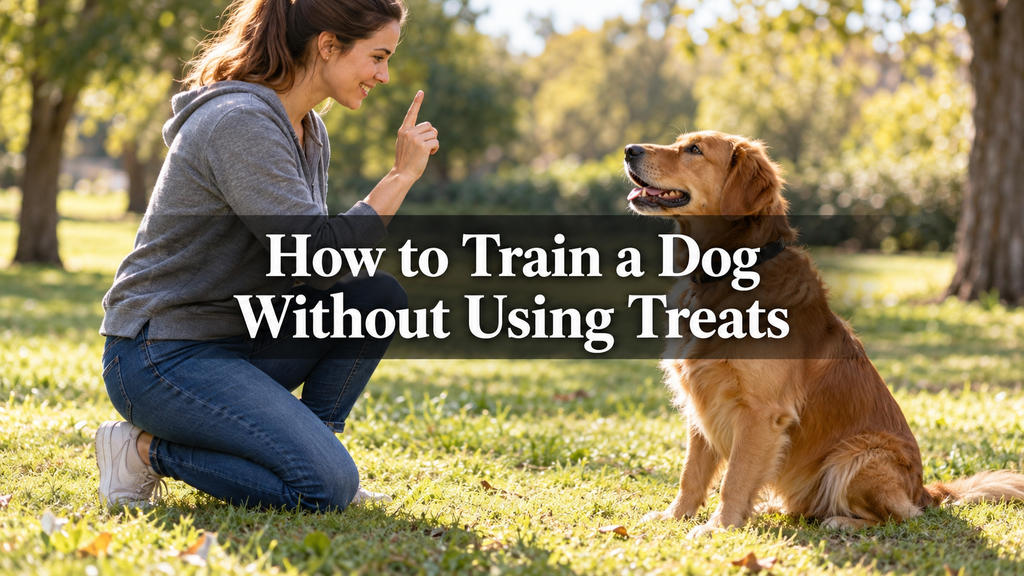
For example, many owners use an open palm for stay or move their hand downward when teaching down.
Combine the hand signal with the verbal command at first.
After enough repetition, many dogs begin responding to the hand signal alone.
Body language is also useful when teaching recall. Crouching slightly, opening your arms, and moving backward can encourage your dog to approach you.
Avoid threatening postures such as leaning heavily over a nervous dog or making sudden movements during training.
A calm and relaxed trainer usually creates a calmer learner.
Make Training Sessions Short
Long training sessions often become boring for dogs.
You may achieve better results with several short sessions instead of one long lesson.
Five to ten minutes can be enough for many dogs.
Work on one or two skills during each session.
Stop while your dog is still interested.
Ending successfully is important because it leaves your dog with a positive feeling about training.
Training can also happen naturally during the day.
Practice sit before walks.
Practice wait at doors.
Practice come while playing in the garden.
Practice stay while preparing for an activity.
These small lessons quickly become part of everyday life.
Use Freedom as a Reward
Freedom can be extremely valuable to dogs.
Imagine walking your dog in a safe area on a long training lead. Your dog wants to explore and sniff.
You call your dog toward you.
When the dog returns, offer enthusiastic praise and then allow it to continue exploring.
The dog learns something important.
Coming when called does not always mean the fun ends.
Instead, responding correctly may actually provide more freedom.
This approach can improve recall because the dog stops viewing commands as something that always removes enjoyable activities.
Build a Strong Relationship
Successful dog training is not only about commands. It is also about trust.
Spend quality time with your dog outside formal training sessions.
Walk together, play together, explore new environments, practice gentle handling, and provide opportunities for mental stimulation.
A dog that enjoys interacting with its owner is usually more willing to participate in training.
Try to become interesting and predictable.
Your dog should learn that listening to you often leads to something positive.
That positive experience does not have to be food. It can simply be attention, movement, play, affection, or an opportunity to do something enjoyable.
Avoid Punishment Based Training
Training without treats should not mean replacing food rewards with punishment.
Shouting, frightening, hitting, or intimidating a dog can damage trust and may create fear or defensive behavior.
Instead, focus on showing your dog what you want.
If your dog makes a mistake, calmly interrupt the behavior and provide another opportunity to succeed.
For example, if your dog jumps when greeting people, avoid giving attention during the jumping. Wait for all four paws to return to the floor. Then provide praise and attention.
The dog learns that jumping does not produce the desired reaction, but calm behavior does.
Teaching the correct alternative is usually more effective than simply punishing the unwanted behavior.
Practice in Different Environments
A dog that performs perfectly in your living room may suddenly appear to forget everything outside.
This is normal.
Dogs can find it difficult to apply learned behaviors in completely different environments.
Begin training in a quiet area with few distractions.
Once your dog understands the command, gradually practice in other rooms, the garden, quiet outdoor areas, and eventually places with more distractions.
Do not move too quickly.
If your dog struggles, return to an easier environment and practice again.
Gradually increasing difficulty helps create reliable behavior.
Be Patient With Progress
Learning takes time.
Some dogs understand new commands after only a few sessions, while others require much more repetition.
Age, breed, personality, previous experiences, and environment can all influence how quickly a dog learns.
Avoid comparing your dog with another dog.
Instead, pay attention to individual progress.
Maybe your dog stayed calm for five seconds yesterday and eight seconds today. That small improvement matters.
Reliable behavior develops through repetition.
Your dog needs many successful experiences before a command becomes a habit.
Gradually Increase Expectations
When teaching a new behavior, begin with an easy version.
If you are teaching stay, do not immediately expect your dog to remain still while you walk across the garden.
Start with one second.
Praise your dog.
Then try two seconds.
Gradually increase time and distance.
The same principle applies to almost every command.
For recall, begin at a short distance.
For loose leash walking, start in a quiet environment.
For waiting at doors, begin with only a brief pause.
Small successful steps prevent frustration and help your dog understand exactly what is expected.
Make Yourself Worth Listening To
One of the biggest secrets of how to train a dog without using treats is becoming valuable to your dog.
Your attention should matter.
Your games should be enjoyable.
Your praise should feel meaningful.
Your walks should provide interesting experiences.
When your dog sees you as the source of positive activities, training becomes easier.
You do not need to entertain your dog every second. Instead, create a balanced relationship where cooperation regularly leads to enjoyable experiences.
Final Thoughts
Learning how to train a dog without using treats can make training feel more natural and connected to everyday life. Food is only one possible reward. Dogs can also be motivated by praise, affection, toys, play, freedom, exploration, attention, and access to activities they enjoy.
Start by discovering what your dog values most. Use those things as rewards for calm and cooperative behavior. Keep commands simple, reward at the right moment, practice regularly, and gradually increase difficulty.
Most importantly, focus on communication and trust rather than forcing obedience.
A well trained dog does not have to work only because food is available. With patience and consistency, your dog can learn that listening to you leads to positive experiences throughout the day. That understanding can create reliable behavior while also building a stronger and more enjoyable relationship between you and your dog.