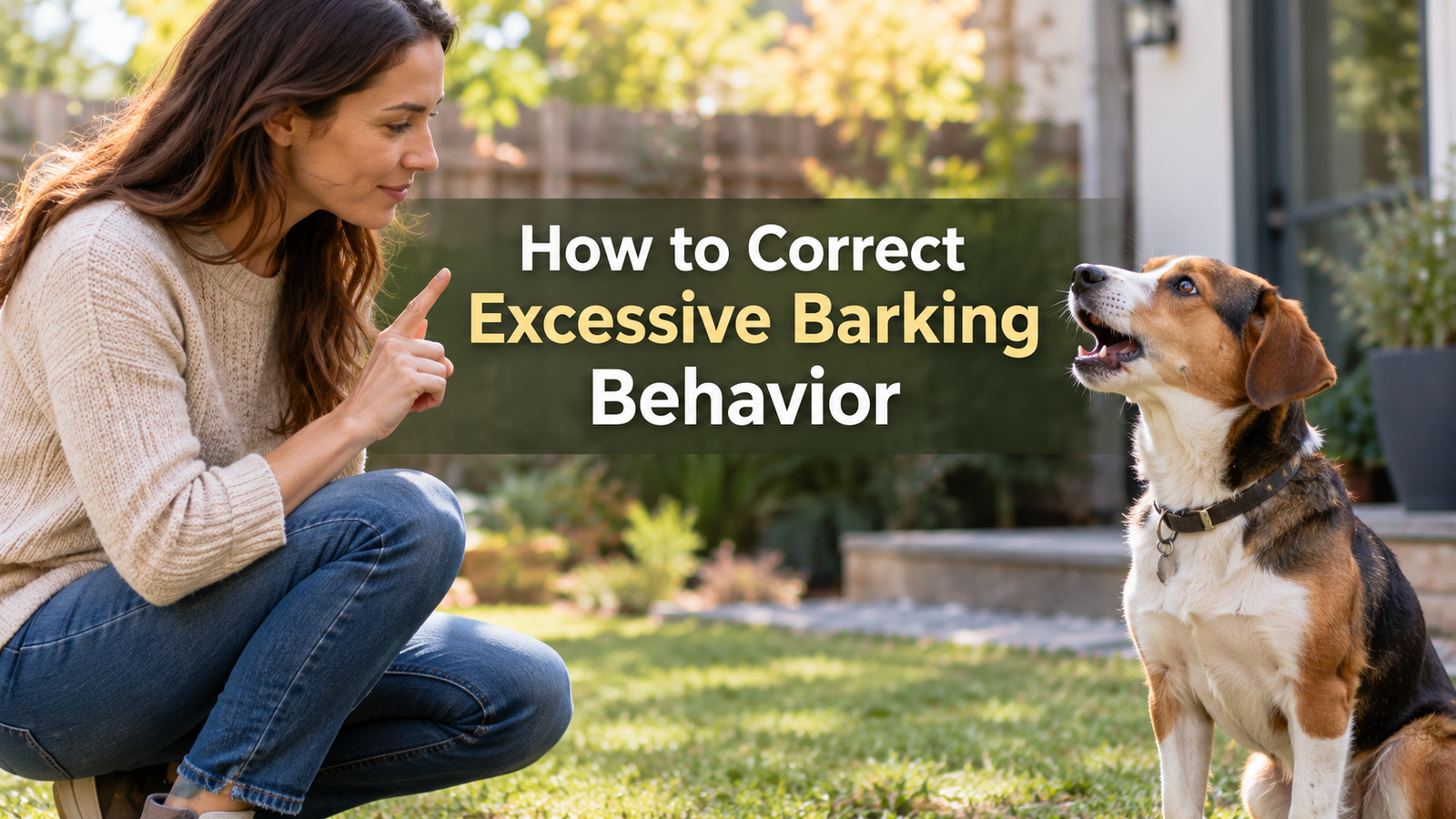
Barking is one of the natural ways dogs communicate with people and other animals. A dog may bark when someone arrives at the door, when it becomes excited, when it feels nervous, or simply when it wants attention. A small amount of barking is completely normal. The problem begins when barking becomes frequent, difficult to control, or disruptive to everyday life.
Learning how to correct excessive barking behavior is not about stopping your dog from making any sound. Instead, the goal is to understand why your dog is barking and teach it when being quiet is more appropriate. From what I have learned about dog behavior, barking problems are usually easier to solve when we focus on the cause rather than only reacting to the noise.
With patience, consistency, and the right training approach, most dogs can learn better barking habits.
Understand Why Your Dog Is Barking
Before trying to stop excessive barking, you need to understand what causes it. Dogs bark for many different reasons, and the correct solution depends heavily on the reason behind the behavior.
Some dogs bark because they are excited. Others bark because they are afraid, bored, protective, lonely, or frustrated. A dog staring through a window and barking at people outside may be responding to movement in its territory. A dog barking when left alone may be experiencing stress or simply struggling with being separated from its family.
Pay attention to what happens immediately before the barking starts.
Ask yourself a few simple questions. Is someone approaching the house? Is another dog nearby? Has your dog been alone for several hours? Is it asking for food or attention? Does barking happen mostly at night?
Once you identify common triggers, correcting excessive barking becomes much easier.
Make Sure Your Dog Gets Enough Exercise
One of the most overlooked causes of excessive barking is unused energy.
Dogs that spend most of their day indoors without enough physical activity often become restless. Barking may then become a way of releasing that energy.
Regular walks are one of the simplest ways to reduce this problem. The amount of exercise your dog needs depends on its age, breed, health, and personality. Some dogs may be satisfied after a relaxed walk, while highly active dogs may need longer walks and additional play sessions.
Exercise does more than make a dog tired. It also gives the dog an opportunity to explore smells, experience new environments, and use its brain.
A dog that receives healthy physical activity is often calmer at home.
Try combining walks with activities such as fetching a ball, gentle running, exploring new walking routes, or supervised play. The goal is not to exhaust your dog completely. It is simply to provide enough activity to keep its body and mind satisfied.
Provide More Mental Stimulation
Physical exercise alone may not solve every barking problem.
Dogs also need mental activity.
A bored dog can quickly develop unwanted habits such as barking, chewing, digging, or constantly following family members around the house.
Simple training sessions can provide excellent mental stimulation. Spend a few minutes practicing commands such as sit, stay, come, or place.
You can also encourage your dog to search for toys or food around the house. Puzzle toys and safe interactive activities can keep dogs occupied for longer periods.
Mental stimulation is especially useful for intelligent and energetic dogs that quickly become bored with the same routine.
Even ten minutes of focused training can sometimes leave a dog more relaxed than a long period of unstructured activity.
Avoid Shouting When Your Dog Barks
When a dog starts barking loudly, the natural reaction is often to shout, “Stop!”
Unfortunately, shouting can sometimes make the situation worse.
Your dog may not understand that you are asking for silence. From the dog’s perspective, it may sound as though you are joining the excitement.
Instead of raising your voice, remain calm.
Wait for a brief pause in the barking and reward the quiet behavior. Over time, your dog begins to understand that silence receives attention while unnecessary barking does not.
Dogs learn best when instructions are simple and consistent.
If one family member allows barking while another constantly tries to stop it, the dog may become confused. Everyone in the home should follow similar rules.
Teach Your Dog the Quiet Command
Teaching a quiet command can be extremely helpful for controlling excessive barking behavior.
Start training in a situation where your dog normally barks but is not extremely excited.
Allow the dog to bark briefly. Then calmly say a word such as “quiet.”
Wait for the barking to stop.
The moment your dog becomes silent, offer praise, affection, a toy, or another reward that your dog enjoys.
At first, even one or two seconds of silence can be rewarded.
Gradually increase the amount of quiet time before offering the reward.
The most important part is timing. Rewarding the dog while it is still barking may accidentally teach it that barking produces rewards.
Always wait for silence first.
With regular practice, your dog can begin connecting the quiet command with stopping its barking.
Do Not Reward Attention Barking
Some dogs quickly discover that barking gets people to react.
Imagine your dog standing beside you and barking because it wants you to play. You immediately pick up a toy and start playing.
From your perspective, you were simply responding to your dog.
From your dog’s perspective, barking worked perfectly.
The dog may think, “When I bark, my owner gives me what I want.”
This is how attention barking can become a strong habit.
When you are confident your dog’s needs have already been met, avoid immediately rewarding demanding barking.
Wait until your dog becomes calm and quiet.
Then provide attention.
This teaches an important lesson. Calm behavior brings rewards, while unnecessary barking does not.
Consistency is essential because giving in occasionally can make the habit difficult to change.
Control What Your Dog Can See
Dogs often bark because they are constantly watching activity outside.
A person walking past the window, a bicycle, another dog, a delivery vehicle, or even a bird can become a barking trigger.
If your dog spends hours standing near a window and reacting to everything outside, consider changing the environment.
Closing curtains or limiting access to certain windows can reduce visual triggers.
You can also move your dog’s resting place away from busy entrances or windows.
This does not mean hiding your dog from the world permanently. The purpose is to prevent repeated barking while you gradually work on calmer reactions through training.
Every time a dog practices excessive barking, the behavior can become more familiar. Reducing unnecessary opportunities to practice the habit can therefore make training easier.
Teach Calm Behavior Around Visitors
Doorbells and visitors are common barking triggers.
Dogs naturally become excited when someone arrives at the house.
Instead of expecting your dog to remain completely silent immediately, teach an alternative behavior.
For example, you can train your dog to go to a specific bed or resting area when the doorbell rings.
Practice when no real visitor is present.
Ask someone in your family to ring the doorbell. Guide your dog toward its designated place and reward calm behavior.
Repeat the exercise regularly.
Eventually, the sound of the doorbell can become a signal to go to the resting area instead of running toward the door and barking continuously.
Training alternative behaviors is often more effective than repeatedly telling a dog what not to do.
Avoid Punishing Fear Based Barking
A frightened dog may bark at unfamiliar people, dogs, sounds, or objects because it feels unsafe.
Punishing a fearful dog can increase its anxiety.
Instead, gradually help the dog feel more comfortable around the trigger.
For example, if your dog barks whenever it sees another dog, begin training from a distance where your dog can notice the other dog without immediately losing control.
Reward calm behavior.
Over time, and only when your dog remains relaxed, the distance can gradually be reduced.
Progress should be slow.
Forcing a nervous dog too close to something it fears can make the problem stronger rather than solving it.
Building confidence is usually more effective than using harsh corrections.
Create a Predictable Daily Routine
Dogs often feel more relaxed when they know what to expect.
A regular daily routine can reduce frustration and anxiety related barking.
Try to keep important activities such as feeding, walking, playtime, training, and bedtime reasonably consistent.
Dogs do not require every activity to happen at exactly the same minute each day. However, having a predictable general routine can help them settle more easily.
This is especially useful for dogs that frequently bark because they are waiting for food, walks, or attention.
A balanced routine also makes it easier to recognize unusual barking patterns.
Be Careful With Barking at Night
Nighttime barking can have several causes.
Your dog may hear animals outside, need to use the bathroom, feel uncomfortable, or react to unfamiliar sounds.
Before treating nighttime barking as bad behavior, make sure your dog’s basic needs have been addressed.
Provide an appropriate bathroom break before bedtime and create a comfortable sleeping area.
If outside sounds regularly trigger barking, moving the dog’s bed to a quieter location may help.
Avoid immediately giving exciting attention every time the dog barks at night unless there is a genuine need.
Otherwise, the dog may learn that barking is an effective way to start interaction.
Never Expect Instant Results
Excessive barking usually develops over time, so it may also take time to correct.
You might notice improvement within several days, but established habits often require weeks of consistent training.
Progress may not always happen in a straight line.
Your dog might remain quiet for several days and then suddenly bark more again after encountering an exciting trigger.
This does not mean the training has failed.
Continue rewarding calm behavior and managing situations that encourage unnecessary barking.
Short and regular training sessions usually work better than occasional long sessions.
Check for Possible Health Problems
A sudden increase in barking should not always be treated as a training issue.
Dogs sometimes become more vocal when they are uncomfortable, confused, or experiencing physical problems.
Older dogs may also develop changes in behavior as they age.
If your normally quiet dog suddenly begins barking excessively without an obvious reason, consider discussing the change with a veterinarian.
This is especially important when barking appears together with changes in appetite, movement, sleeping habits, bathroom habits, or general behavior.
Training works best when physical discomfort has been ruled out.
Consider Professional Help for Serious Barking Problems
Some barking problems are more complicated than others.
If your dog becomes extremely anxious, aggressive, destructive, or difficult to control, professional guidance can be valuable.
A qualified dog trainer or behavior professional can observe your dog’s behavior directly and help identify triggers you may have missed.
Professional help can be particularly useful when barking is connected with serious fear, separation related problems, or aggressive reactions.
Seeking guidance does not mean you have failed at training your dog. Sometimes an experienced outside perspective simply makes the problem easier to understand.
Stay Patient and Consistent
The most important part of correcting excessive barking behavior is consistency.
Dogs learn through repeated experiences.
If calm behavior receives positive attention every day while unnecessary barking does not produce the desired result, the dog gradually begins choosing calmer behavior more often.
Avoid expecting perfection.
Dogs are naturally vocal animals, and occasional barking is completely normal.
Your goal should be reasonable control rather than total silence.
Pay attention to your dog’s physical exercise, mental stimulation, environment, emotional state, and daily routine. Teach the quiet command patiently and reward moments of calm behavior.
Most importantly, try to understand what your dog is communicating before correcting it.
When owners respond with patience instead of frustration, training becomes much clearer for the dog. Over time, consistent practice can transform excessive barking into manageable communication and create a quieter, more comfortable home for both the dog and the family.