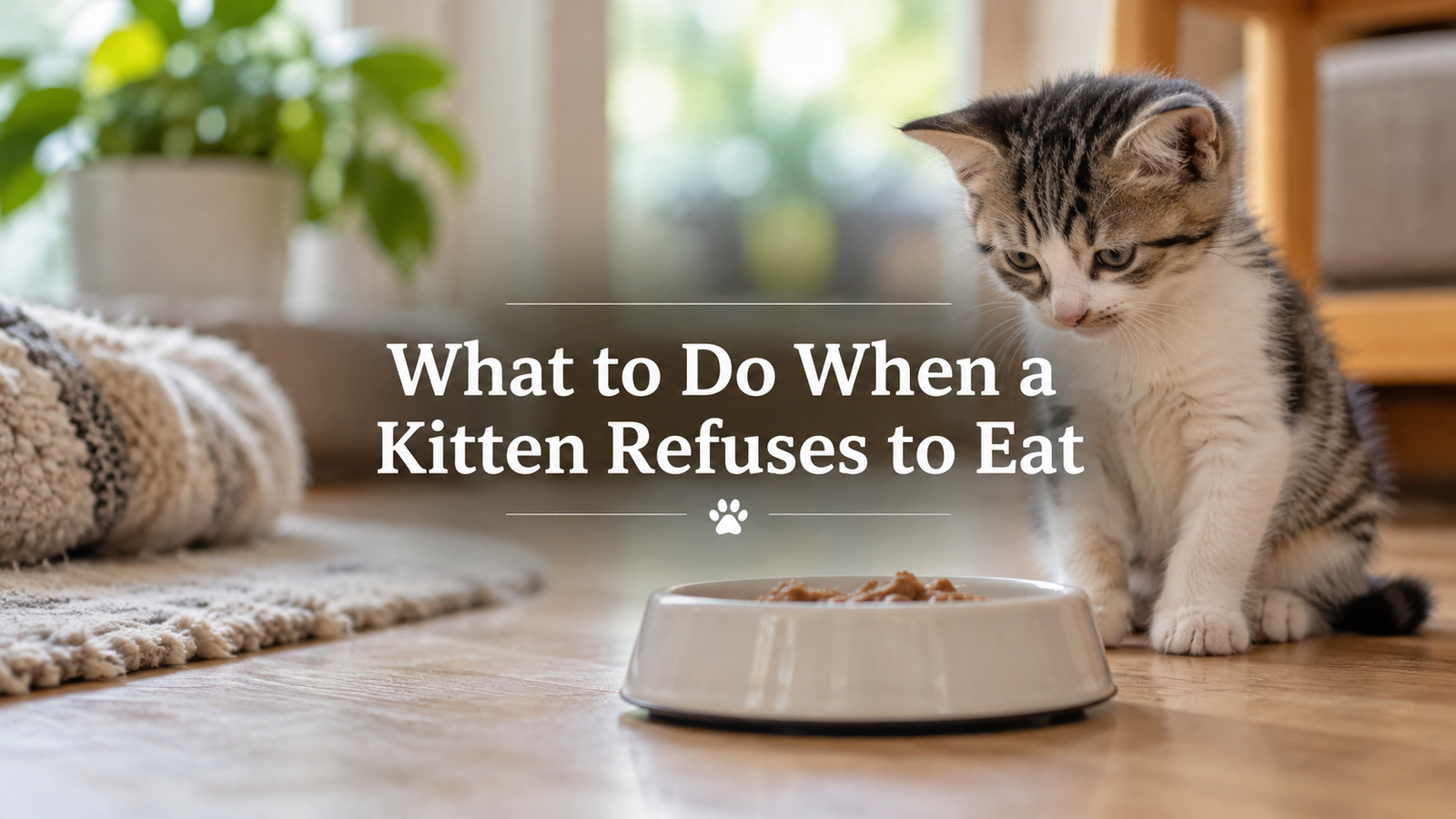
Bringing a kitten into your home is usually an exciting experience. Kittens are playful, curious, and full of energy, so it can be worrying when a kitten suddenly refuses to eat. Since young cats need regular nutrition to support their rapid growth, a loss of appetite should never be ignored.
A kitten refusing food does not always mean there is a serious medical problem. Sometimes the cause is as simple as stress, a change in food, an unfamiliar environment, or a feeding bowl the kitten does not like. However, kittens are small and can become weak much faster than healthy adult cats. This is why understanding the possible reasons behind poor appetite and knowing how to respond is important for every kitten owner.
If your kitten is not eating, the first goal is to stay calm, observe carefully, and determine whether the problem is temporary or needs veterinary attention.
Understand Why Your Kitten Is Not Eating
Before trying different foods, think about what may have changed recently.
A kitten that has just arrived in a new home may feel nervous. Everything is unfamiliar, including the people, smells, sounds, furniture, and feeding area. Some kittens begin eating almost immediately, while others need time to feel safe enough to approach their food.
Food itself can also be responsible. If a kitten was eating one type of food before coming to your home and you suddenly offer something completely different, the kitten may hesitate to eat it.
Health problems are another possible cause. Dental discomfort, stomach problems, infections, parasites, respiratory illness, or other conditions may reduce appetite.
The important thing is to look at the kitten’s complete behavior instead of focusing only on the food bowl.
Give a New Kitten Time to Settle
Stress is one of the most common reasons a newly adopted kitten may temporarily lose interest in food.
Instead of allowing the kitten to explore the entire house immediately, consider providing a comfortable room where it can gradually become familiar with its surroundings.
Place the kitten’s bed, food, water, litter tray, and toys in this area. Keep the food and water away from the litter box.
The room should be peaceful and free from unnecessary activity. Loud televisions, excited children, barking dogs, and frequent visitors can make a nervous kitten even more uncomfortable.
Sit quietly nearby without forcing interaction. Once the kitten begins feeling secure, curiosity usually encourages it to explore, play, and eat.
Offer Familiar Food
If possible, find out what food the kitten was eating before you brought it home.
Continuing with familiar food for the first several days can make the transition much easier. Even if you eventually want to change the kitten’s diet, making the change gradually is usually better.
Start by mixing a small amount of the new food with the familiar food. Slowly increase the amount of new food over several days.
A gradual change allows the kitten to become familiar with the new smell and taste while also giving its digestive system time to adjust.
Sudden changes in diet may cause digestive discomfort in some kittens, which can make them even less interested in eating.
Try Wet Kitten Food
Some kittens find wet food more appealing than dry food because it has a stronger smell and softer texture.
Choose food specifically designed for kittens. Growing kittens have different nutritional requirements from adult cats, so kitten food is formulated to provide the energy and nutrients needed during development.
Place a small amount of wet food in a clean dish and allow the kitten to investigate it.
You do not need to fill the bowl completely. Small servings are often better because the food remains fresh.
Wet food should not be left sitting at room temperature for long periods. Remove uneaten food and offer a fresh portion later.
Warm the Food Slightly
Cats depend heavily on their sense of smell when deciding whether food is appealing.
Cold food straight from the refrigerator may not smell very strong. Slightly warming wet food can release more aroma and make it more interesting to a kitten.
The food should only be gently warmed. It should never be hot.
Always check the temperature before serving it.
Sometimes this simple change is enough to encourage a hesitant kitten to start eating.
Use a Shallow Feeding Dish
The feeding bowl may seem like a minor detail, but some kittens are surprisingly particular about where they eat.
Try using a shallow plate or wide bowl that allows easy access to the food.
The dish should also be cleaned regularly. Old food smells may discourage some cats from eating.
Stainless steel or ceramic dishes are commonly used because they are easy to clean.
Place the dish in a calm area where the kitten can eat without feeling watched, chased, or disturbed.
Feed Small Meals More Frequently
Young kittens have small stomachs and usually do better with several small meals instead of one or two very large meals.
Offering smaller portions can also make food seem more manageable to a kitten with a reduced appetite.
Develop a consistent feeding routine so the kitten begins to understand when meals are available.
For example, food can be offered at similar times each day.
A regular routine creates predictability, which can help nervous kittens feel more secure in their environment.
Keep Fresh Water Available
Food is important, but hydration is equally important.
Make sure clean drinking water is always available.
Some cats prefer their water bowl to be placed away from their food. You can try placing water in a separate quiet location and see whether your kitten drinks more comfortably.
Clean the bowl regularly and replace the water every day.
If your kitten refuses both food and water, the situation deserves more attention because dehydration can become serious quickly in young animals.
Check for Signs of Illness
Whenever a kitten refuses to eat, observe it for other symptoms.
A healthy kitten usually shows curiosity, responds to its environment, and has periods of active play. A kitten that stops eating and also becomes unusually quiet may be feeling unwell.
Watch for vomiting, diarrhea, sneezing, coughing, discharge from the eyes or nose, unusual breathing, weakness, excessive sleeping, or difficulty walking.
Also pay attention to whether the kitten appears interested in food but seems unable to eat it.
For example, a kitten may approach the bowl, smell the food, attempt to eat, and then move away. This behavior could suggest discomfort in the mouth or another problem that needs professional evaluation.
Look at the Kitten’s Nose and Breathing
Cats rely greatly on smell when choosing food.
A kitten with nasal congestion may have difficulty smelling its meal. When food has little smell, it becomes much less interesting.
If your kitten is sneezing frequently or has discharge around the nose or eyes, contact a veterinarian for guidance, particularly if appetite has also decreased.
Respiratory illnesses can affect young kittens, and veterinary advice can help determine the appropriate treatment.
Do Not Force Feed Without Professional Guidance
It can be frightening to see a kitten refusing food, and owners may naturally want to make the kitten eat.
However, forcing food into a kitten’s mouth without proper instruction can be dangerous. Food or liquid may accidentally enter the airway.
If assisted feeding becomes necessary, a veterinarian can explain the safest method and recommend suitable food.
The goal should be to encourage natural eating whenever possible while identifying and treating the underlying reason for appetite loss.
Avoid Giving Human Foods
When a kitten refuses normal cat food, it may be tempting to offer whatever is available in the kitchen.
This is not a good long term solution.
Kittens require a carefully balanced diet containing protein, fats, vitamins, minerals, and other nutrients necessary for healthy growth.
Some human foods are also unsafe for cats.
Foods containing onion, garlic, chocolate, caffeine, alcohol, or certain artificial sweeteners should never be given to kittens.
Instead of experimenting with human food, focus on nutritionally complete kitten food and ask your veterinarian for recommendations if appetite remains poor.
Reduce Competition With Other Pets
If other cats or dogs live in the home, your kitten may feel uncomfortable eating near them.
Even when another animal is friendly, its presence may make a small kitten nervous.
Give the kitten a separate feeding area where it can eat peacefully.
If you have multiple cats, separate bowls can also help you understand exactly how much each cat is eating.
This becomes especially helpful when monitoring a kitten with appetite problems.
Make Mealtime Calm and Positive
Avoid turning feeding time into a stressful experience.
Constantly picking up the kitten, placing it in front of the food, or repeatedly moving the bowl toward its face may create more anxiety.
Instead, prepare the food, place it in a quiet location, and give the kitten some space.
You can remain nearby if your presence makes the kitten feel secure, but allow it to approach the dish voluntarily.
Some kittens also respond well to a short play session before eating. Natural feline behavior often follows a pattern of activity followed by feeding and rest.
A few minutes of gentle play may increase interest in food.
Monitor How Much Your Kitten Eats
When appetite becomes a concern, keeping simple notes can be extremely useful.
Record what food you offered, approximately how much the kitten ate, whether it drank water, and whether you noticed vomiting, diarrhea, or unusual behavior.
Also monitor litter box use.
These observations can help you recognize whether the situation is improving.
If veterinary care becomes necessary, the information may also help the veterinarian understand what has been happening at home.
Consider Parasites
Intestinal parasites are relatively common in young kittens.
Depending on the parasite and severity of infection, symptoms may include poor appetite, diarrhea, vomiting, a swollen belly, poor growth, or changes in energy.
Do not attempt to treat suspected parasites with random medications.
Different parasites require different treatments, and medication doses for kittens must be carefully selected according to factors such as age and weight.
A veterinarian can examine the kitten and recommend appropriate testing and treatment.
Be Careful With Very Young Kittens
Very young kittens need special attention because they have limited energy reserves.
A kitten that is only a few weeks old may become weak more quickly than an older kitten if it stops eating properly.
Kittens that have not yet been weaned may also need appropriate kitten milk replacement rather than ordinary cat food.
Cow’s milk should not be used as a normal replacement because many cats have difficulty digesting lactose and may develop digestive problems.
If you are caring for an orphaned or very young kitten and are uncertain about feeding, professional veterinary advice is especially important.
Know When to Contact a Veterinarian
Because kittens are growing rapidly, prolonged appetite loss should not be treated casually.
Contact a veterinarian promptly if your kitten refuses food for a significant period, especially if the kitten is very young.
You should also seek veterinary advice sooner if the loss of appetite is accompanied by weakness, repeated vomiting, severe diarrhea, breathing difficulties, dehydration, unusual behavior, pain, or other concerning symptoms.
A veterinarian can perform a physical examination and determine whether tests or treatment are necessary.
Waiting too long can make some health problems harder to manage.
Help Prevent Future Appetite Problems
Once your kitten is eating normally again, a few habits can make feeding easier in the future.
Provide a nutritionally complete kitten diet, keep feeding dishes clean, offer food in a quiet area, maintain a regular routine, and avoid making sudden changes to the diet.
Routine veterinary examinations are also important during kittenhood.
These visits help monitor growth and allow your veterinarian to discuss vaccinations, parasite control, nutrition, dental development, and general health.
You will also become more familiar with your kitten’s normal eating habits.
Some kittens eat slowly while others finish meals quickly. Knowing what is normal for your own kitten makes it easier to recognize changes early.
Final Thoughts
Knowing what to do when a kitten refuses to eat can help you respond calmly and responsibly. Start by considering simple causes such as stress, unfamiliar food, feeding location, or a sudden change in routine. Offer fresh kitten food in small portions, try slightly warming wet food, provide clean water, and create a quiet environment where the kitten feels safe.
At the same time, remember that appetite is an important indicator of a kitten’s health. Young kittens can become weak faster than adult cats, so persistent food refusal should never be ignored.
Observe your kitten’s energy, drinking habits, litter box activity, breathing, and general behavior. If you notice additional symptoms or your kitten continues refusing food, contact a veterinarian.
With patience, careful observation, proper nutrition, and timely veterinary care when necessary, most appetite problems can be handled safely while giving your kitten the healthy start it needs.