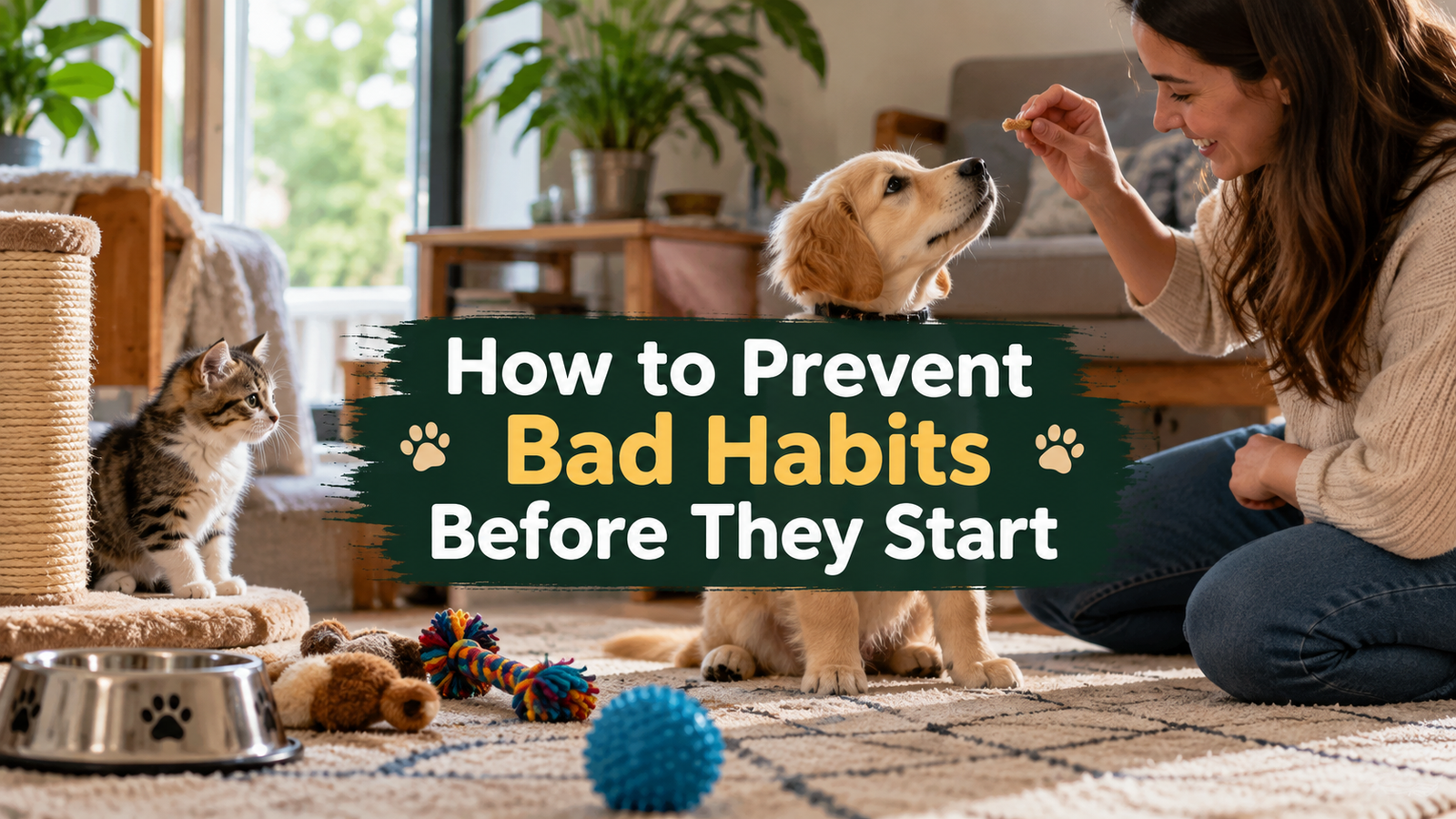

Bringing a young pet into your home is an exciting experience, but it also comes with an important responsibility. Puppies and kittens quickly become attached to the people who feed them, play with them, and provide comfort. This close bond is healthy, but young pets also need to learn that being alone for short periods is safe and normal. Teaching young pets to feel safe when left alone can help them grow into confident adults and make everyday life easier for both the pet and the owner.
A young animal does not automatically understand that you will return after leaving the room or going outside. From the pet’s point of view, your disappearance can sometimes feel confusing. This is why alone time should be introduced slowly and positively. Instead of waiting until you need to leave your pet for several hours, it is better to begin training during the first weeks at home.
Understand Why Young Pets Dislike Being Alone
Young puppies and kittens naturally depend on others for security. Before coming into your home, they may have spent most of their time with their mother and littermates. Suddenly, they find themselves in a completely different environment filled with unfamiliar smells, sounds, rooms, and people.
It is normal for a young pet to seek company during this adjustment period. Following you from room to room, sleeping near you, or crying when you disappear does not necessarily mean that something is seriously wrong. Your pet is still learning how the new environment works.
The goal is not to make your pet completely independent overnight. Instead, you want to gradually show the animal that being alone does not mean being abandoned or unsafe.
Start With Very Short Periods of Separation
One of the best ways to teach young pets to feel safe when left alone is to begin with extremely short periods.
You can start while you are still at home. Allow your puppy or kitten to relax in a comfortable area, then leave the room for a few seconds. Return calmly before your pet becomes extremely worried.
Over time, increase the length of your absence.
You might begin with ten seconds, then thirty seconds, one minute, three minutes, and eventually longer periods. There is no need to rush through these stages. Some pets become comfortable quickly, while others need more time.
Short successful experiences are usually more helpful than one long stressful experience.
Create a Comfortable Safe Area
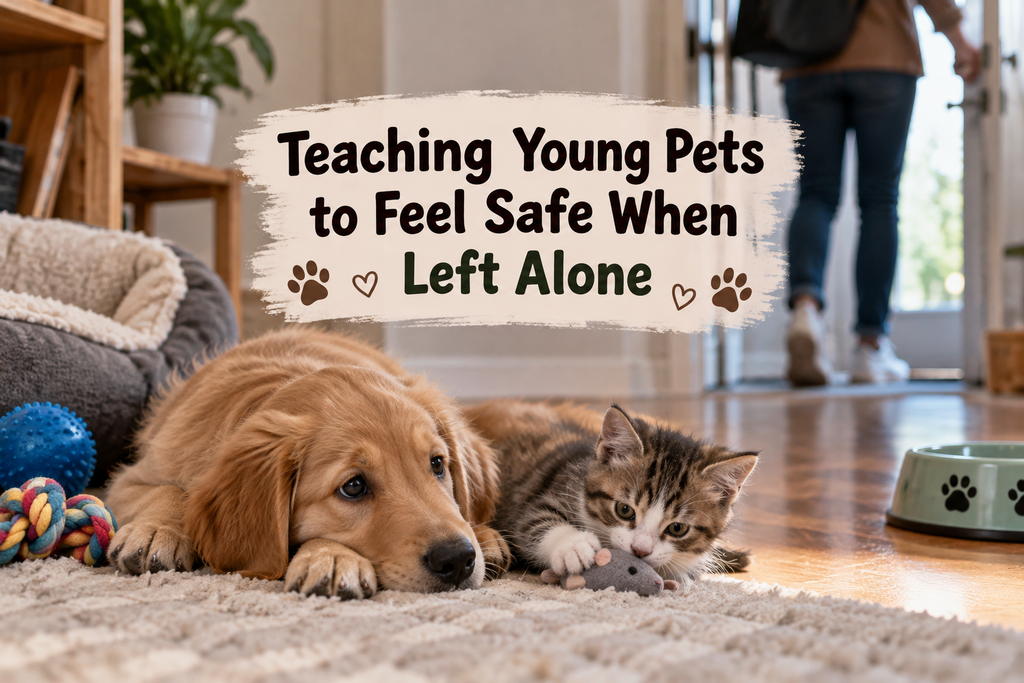
Young pets often feel more secure when they have their own comfortable resting place. This area could be a quiet room, puppy pen, suitable crate, or cozy corner depending on the animal and your home.
The area should feel peaceful rather than like a punishment.
Provide comfortable bedding, access to fresh water when appropriate, and a few safe toys. Kittens may also appreciate a hiding place or raised resting area because cats often feel secure when they have somewhere private to retreat.
A puppy may prefer a soft bed with familiar scents nearby.
When choosing a safe space, think about temperature, noise, lighting, and possible hazards. Remove electrical cables, toxic plants, small objects, cleaning products, and anything the young pet could swallow or damage.
A properly prepared environment allows you to leave your pet alone with greater confidence.
Build Positive Associations With Alone Time
Young pets learn through repeated experiences. If every separation leads to fear, boredom, or frustration, they may begin to dislike being alone. On the other hand, if alone time is associated with relaxation and enjoyable activities, they are more likely to accept it.
You can provide a favorite safe toy shortly before leaving the room. Food puzzles may also help suitable pets stay occupied.
The activity should be something the pet enjoys but can use safely without supervision.
You can occasionally save a favorite toy specifically for quiet alone time. Over time, your pet may begin to associate your temporary absence with an opportunity to relax or enjoy something interesting.
Encourage Independent Play
It is tempting to entertain a new puppy or kitten constantly. Young animals are adorable, curious, and often eager for interaction. However, constant attention can make independence more difficult to learn.
Allow your pet to spend some time exploring toys or resting without direct interaction from you.
You can remain nearby at first without actively playing. For example, sit in the same room while your puppy plays with a toy. Gradually increase the distance between you.
With kittens, provide safe objects that encourage independent exploration, such as scratching surfaces, small cat toys, tunnels, or climbing areas.
Learning to enjoy activities without constant human attention is an important part of building confidence.
Keep Departures Calm
Many owners unintentionally make leaving the house feel like a major event. They may repeatedly hug the pet, use an emotional voice, or spend several minutes saying goodbye.
Although this behavior comes from affection, it can sometimes make the difference between your presence and absence seem more dramatic.
Try to keep departures calm and natural.
Before leaving, make sure your pet’s basic needs have been met. Allow your puppy to use the toilet and give young pets suitable exercise or playtime.
When it is time to leave, simply leave without creating unnecessary excitement.
Your calm behavior can help communicate that temporary separation is a normal part of everyday life.
Return Home Calmly
Your return is also part of the learning process.
If you immediately create a huge celebration every time you come home, your pet may begin to view your absence as something that must be endured until the exciting reunion happens.
You do not have to ignore your pet completely. Simply keep your greeting calm.
Put down your belongings, settle yourself, and greet your pet gently. Once the animal is relaxed, you can provide affection or playtime.
Calm arrivals and departures help make separation less emotionally intense.
Develop a Predictable Daily Routine
Young animals usually feel more secure when their daily lives are predictable. A regular routine helps them understand when meals, exercise, play, rest, toilet breaks, and quiet time normally happen.
For example, a puppy may wake up, go outside, eat breakfast, play briefly, and then rest.
A kitten might eat, explore, play, groom, and sleep.
When your pet regularly experiences quiet periods during the day, being alone becomes part of normal life rather than something unusual.
You do not need to follow an exact schedule every minute. The goal is simply to create general consistency.
Give Your Pet Enough Physical Activity
A young pet with too much unused energy may find it difficult to relax when left alone.
Age appropriate physical activity can help.
Puppies benefit from suitable play, gentle exploration, and short training sessions. Exercise should match the puppy’s age, breed, health, and physical development.
Kittens often enjoy several short periods of active play throughout the day. Toys that imitate chasing and hunting behavior can be especially engaging.
After healthy activity, many young pets naturally become tired and ready to rest.
This can make practicing alone time easier.
Do Not Forget Mental Stimulation
Physical exercise is only part of a young pet’s daily needs. Mental activity is also important.
Simple training exercises can help puppies use their minds. Teaching basic behaviors such as sit, come, touch, or waiting briefly can provide healthy mental stimulation.
Kittens can benefit from exploring new safe objects, finding small amounts of food in appropriate toys, or interacting with changing play environments.
A mentally satisfied pet is often more capable of settling quietly than one that is bored.
Avoid Punishing Fearful Behavior
If a young pet cries, scratches, barks, or becomes restless when left alone, punishment is rarely helpful.
The animal may already feel uncertain. Adding fear or frustration can make the experience more stressful.
Instead, consider whether the training progressed too quickly.
Perhaps the pet was comfortable alone for three minutes but struggled when the period suddenly increased to twenty minutes. In that situation, return to an easier stage and increase the duration more gradually.
Training should focus on creating confidence rather than forcing the animal to tolerate fear.
Practice Separation Even When You Are Home
One common mistake is allowing a new pet to stay beside you every moment when you are home and then suddenly leaving for several hours.
Instead, practice small separations throughout the day.
Close the bathroom door briefly. Work in another room while your pet rests in a safe area. Prepare food in the kitchen while your pet spends a few minutes elsewhere.
These ordinary moments teach an important lesson.
You can disappear and still return.
Repeated calm experiences gradually strengthen the young pet’s sense of security.
Learn Your Pet’s Stress Signals
Every animal communicates differently, so watch your pet carefully.
Mild uncertainty may appear as brief whining, walking toward the door, or looking around. More serious distress may involve continuous crying, heavy panting, frantic scratching, repeated escape attempts, excessive drooling, destructive behavior, or an inability to settle.
Cats may hide, vocalize repeatedly, refuse food, or show changes in normal behavior.
If your young pet appears highly distressed, shorten the separation period and rebuild confidence slowly.
Persistent or severe problems should be discussed with a veterinarian or qualified animal behavior professional. Medical conditions and behavioral problems can sometimes produce similar signs, so professional guidance may be useful.
Avoid Increasing Alone Time Too Quickly
Progress is rarely perfectly straight.
Your puppy might manage fifteen minutes comfortably one day but struggle the next. A kitten may appear independent for several days and then suddenly want more attention.
Changes in routine, unfamiliar noises, visitors, illness, or developmental stages can affect behavior.
Training should remain flexible.
Instead of thinking that your pet must reach a specific duration by a certain date, focus on comfortable progress.
A young animal that develops confidence gradually is more likely to maintain that confidence later.
Make Sure Basic Needs Are Met Before Leaving
A pet is less likely to settle if it is hungry, thirsty, uncomfortable, full of energy, or needs to use the toilet.
Before practicing alone time, check the basics.
Puppies should generally have an appropriate toilet opportunity before being left. Very young animals may need frequent bathroom breaks and should not be expected to hold their bladder for long periods.
Make sure meals follow an appropriate routine and that the environment is comfortable.
For kittens, ensure that litter trays are clean and easily accessible.
Meeting these simple needs can remove many reasons for restlessness.
Use Technology Carefully
Some owners use pet cameras to observe animals when they are away. This can be helpful because you can see what actually happens after you leave.
A pet may cry for thirty seconds and then sleep peacefully, or it may remain distressed for a long period. Without observing the animal, these situations can be difficult to distinguish.
Cameras should be used as information tools rather than a reason to watch your pet constantly.
The main goal is to understand whether your training approach is working.
Be Patient With Individual Personality
Every young pet has a different personality.
Some puppies naturally explore new environments with confidence. Others prefer staying close to their owners. Some kittens quickly sleep alone in another room, while others seek company frequently.
Breed tendencies, previous experiences, early social development, and individual temperament can all influence how quickly an animal becomes comfortable alone.
Avoid comparing your pet with someone else’s animal.
A slow learner is not necessarily a difficult pet. Your animal may simply need smaller training steps and more repetition.
Patience creates better long term results than rushing.
Build Confidence in Everyday Life
Helping a pet feel safe alone is connected to building confidence in general.
Allow young pets to explore safe environments, meet suitable people, experience normal household sounds, and learn simple skills.
Positive experiences teach them that new situations can be manageable.
When an animal becomes confident in everyday life, temporary separation may also become easier.
Your relationship plays an important role. Consistent feeding, gentle handling, appropriate training, and predictable care help your pet learn that the home is a secure place.
Final Thoughts
Teaching young pets to feel safe when left alone is an important part of responsible pet care. Puppies and kittens need affection and companionship, but they also benefit from learning that temporary separation is normal.
Start with very short periods, create a comfortable environment, encourage independent activities, and increase alone time gradually. Keep departures and arrivals calm, provide suitable physical and mental activity, and avoid punishing fearful behavior.
Most importantly, pay attention to your individual pet.
Confidence develops through many small successful experiences. When young animals repeatedly discover that they can relax safely and that their trusted person always returns, being alone becomes less frightening.
With patience, consistency, and a gentle approach, you can help your puppy or kitten develop healthy independence while maintaining a strong and trusting relationship. The result is a pet that feels secure not only when you are nearby, but also during the quiet moments when it needs to rest comfortably on its own.