
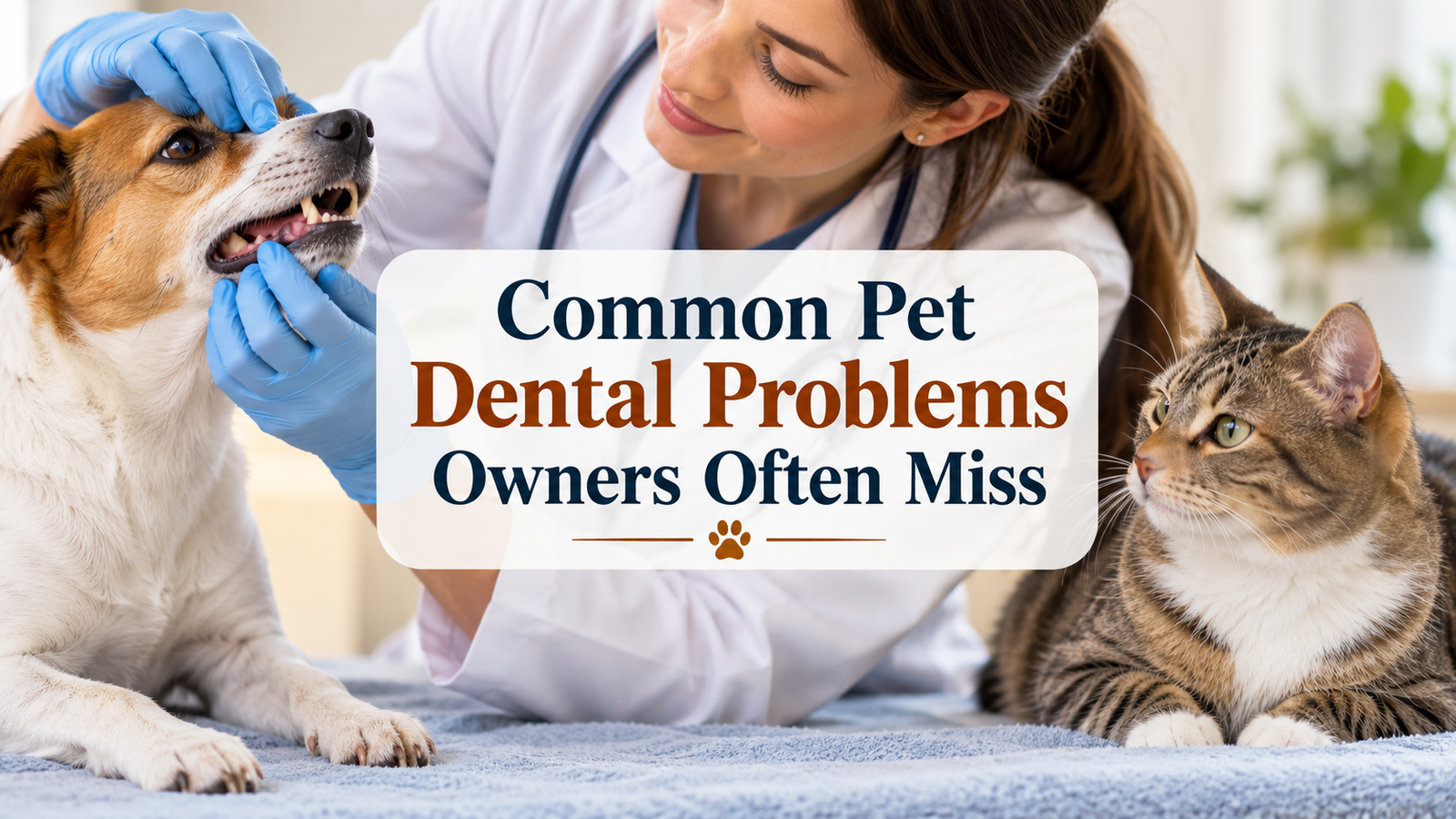
Taking care of a pet involves much more than providing good food, clean water, exercise, and affection. Dental health is another important part of daily pet care, yet it is surprisingly easy to overlook. Dogs and cats cannot tell us when a tooth hurts, when their gums feel sore, or when chewing has become uncomfortable. Many pets also continue eating even when they have significant dental problems.
This is why common pet dental problems can remain unnoticed for months. By the time an owner realizes something is wrong, the condition may already be causing pain or infection.
Understanding the early signs of pet dental disease can help owners protect their pets from unnecessary discomfort. Regular observation, home dental care, and veterinary examinations can make a major difference in maintaining healthy teeth and gums throughout a pet’s life.
Why Pet Dental Health Is Easy to Overlook
Dental disease often develops slowly. Small changes may not seem serious at first. Slightly unpleasant breath, mild gum redness, or a small amount of discoloration on the teeth can easily be ignored.
Pets also tend to hide discomfort naturally. A dog with a painful tooth may still run toward the food bowl. A cat with inflamed gums may continue eating while simply chewing on one side of the mouth.
Because the changes are gradual, owners may adjust to them without realizing that a dental problem is developing.
Healthy pet dental care should therefore focus on prevention rather than waiting for obvious symptoms.
Plaque Buildup on the Teeth
Plaque is one of the earliest dental problems that pet owners often miss.
It forms when bacteria, food particles, and saliva create a thin film over the surface of the teeth. Fresh plaque can be difficult to notice because it may be almost invisible.
If plaque is not removed regularly, it can eventually harden into tartar.
Daily or frequent tooth brushing is one of the most effective ways to remove plaque before it becomes a more serious problem.
Owners should use dental products specifically designed for pets. Human toothpaste should not be used because some ingredients may not be safe for animals when swallowed.
Tartar Around the Gum Line
Tartar is hardened plaque that usually appears as yellow, brown, or dark material attached to the teeth.
It commonly develops near the gum line and may eventually cover a large part of the tooth.
Many owners assume that tartar is simply a cosmetic problem. In reality, heavy tartar provides a rough surface where bacteria can continue accumulating.
The bacteria around the gum line may contribute to inflammation and periodontal disease.
Once tartar becomes firmly attached to the teeth, brushing alone usually cannot remove it. Professional veterinary dental cleaning may be necessary.
Bad Breath That Is Not Normal
Some owners believe that bad breath is simply part of living with a dog or cat.
Mild temporary odor after eating may occur, but persistent strong breath should not automatically be considered normal.
Bad breath can sometimes be one of the first noticeable signs of dental disease.
Bacteria around the gums, infected teeth, trapped food, and advanced periodontal problems may all contribute to unpleasant mouth odor.
If a pet suddenly develops very strong breath or the smell becomes progressively worse, a veterinary dental examination is a sensible step.
Early Gum Inflammation
Healthy gums are generally firm and should not appear extremely red, swollen, or irritated.
Gingivitis occurs when the gums become inflamed, often because plaque and bacteria are accumulating along the gum line.
Early gingivitis may appear as a narrow red area where the tooth meets the gum.
Because this change can be subtle, many owners do not notice it until the inflammation becomes more severe.
Gums may eventually become swollen or begin bleeding during brushing or chewing.
Finding gingivitis early is important because early dental disease is usually easier to manage than advanced periodontal problems.
Periodontal Disease
Periodontal disease is one of the most important dental conditions affecting dogs and cats.
It develops when inflammation and infection affect the tissues that support the teeth.
In the early stages, an owner may notice little more than bad breath or red gums. As the condition progresses, pockets may form around the teeth and supporting structures can become damaged.
Teeth may eventually become loose.
Advanced periodontal disease can be uncomfortable and may interfere with normal eating.
Regular veterinary dental examinations are especially important because some damage develops below the visible gum line and cannot be identified simply by looking inside the mouth at home.
Cracked or Broken Teeth
Dogs frequently chew objects that place strong pressure on their teeth. Hard bones, stones, very firm toys, and other solid objects may increase the risk of tooth fractures.
Cats can also damage teeth through accidents or trauma.
A broken tooth is not always obvious.
Sometimes only a small piece of enamel is missing. In other situations, the inner part of the tooth may become exposed.
Pets with fractured teeth may show sensitivity when eating or chewing. Some may suddenly stop playing with their favorite chew toys.
Others show no obvious behavioral change.
Owners should occasionally look for teeth that appear shorter, chipped, darker, or different from the surrounding teeth.
Loose Teeth in Adult Pets
Puppies and kittens naturally lose their baby teeth as their adult teeth develop.
Loose teeth in adult animals are different.
An adult tooth that moves easily can indicate damage to the supporting tissues, significant periodontal disease, or trauma.
Owners may not notice loose teeth because pets rarely allow detailed inspection of every tooth.
Sometimes the first clue is difficulty chewing hard food or finding a tooth around the house.
Loose adult teeth should be examined by a veterinarian rather than ignored.
Retained Baby Teeth
Young pets normally lose their temporary teeth as permanent teeth emerge.
Occasionally, a baby tooth remains in place while the adult tooth appears beside it.
This condition is known as a retained deciduous tooth.
It is commonly noticed around the canine teeth, especially in some smaller dog breeds.
When two teeth occupy an area designed for one, food and plaque may become trapped between them. Crowding can also affect the position of permanent teeth.
Checking a puppy or kitten’s mouth during the transition to adult teeth can help owners identify retained teeth early.
Tooth Resorption in Cats
Cats can develop a painful dental condition in which the structure of a tooth gradually breaks down.
This condition is commonly referred to as tooth resorption.
It may be extremely difficult for owners to identify because much of the affected area can be hidden near or below the gum line.
Some cats develop redness around the affected tooth. Others may drool, chew differently, drop food, or become sensitive when the mouth is touched.
Many cats show very few visible signs.
Regular veterinary examinations are particularly valuable for detecting feline dental problems that owners cannot easily see at home.
Changes in Eating Behavior
Dental pain does not always cause a pet to stop eating completely.
Instead, owners may notice much smaller behavioral changes.
A pet may begin chewing food on one side of the mouth. Hard kibble may be dropped from the mouth. A dog might suddenly prefer softer treats. A cat may approach the food bowl enthusiastically but then eat more slowly.
Some animals swallow food with less chewing.
These changes are sometimes mistaken for picky eating, especially in older pets.
Any unexplained change in chewing or eating habits deserves attention because dental discomfort may be one possible cause.
Pawing at the Mouth
Repeatedly rubbing the face or pawing at the mouth can sometimes indicate oral discomfort.
A pet may behave this way because something is stuck between the teeth, a tooth is damaged, the gums are irritated, or another mouth problem is present.
Occasional face rubbing is normal grooming behavior.
Frequent or sudden pawing at the mouth should be taken more seriously, particularly when accompanied by drooling, unusual breath, reduced appetite, or difficulty chewing.
Excessive Drooling
Some pets naturally drool more than others, especially certain dog breeds.
However, a sudden increase in drooling may sometimes be associated with mouth discomfort.
Dental infection, damaged teeth, oral injuries, or objects trapped inside the mouth can make swallowing uncomfortable.
Blood appearing in the saliva is another reason to arrange veterinary evaluation.
Knowing what is normal for an individual pet makes it easier to recognize changes.
Pets Hiding Dental Pain
One of the biggest challenges with pet dental health is that animals may hide pain extremely well.
A pet does not need to cry or completely stop eating to have a painful dental condition.
Subtle personality changes can sometimes provide clues.
A normally playful dog may lose interest in tug games. A friendly cat may suddenly dislike having its face touched. Another pet may become quieter or slightly irritable.
Owners who know their pet’s normal behavior are often the first people capable of noticing these small changes.
Dental Problems in Older Pets
Dental care becomes increasingly important as pets grow older.
Years of plaque accumulation can lead to significant dental disease if preventive care has been limited.
Older pets may have missing teeth, worn teeth, periodontal problems, or previous dental injuries.
Owners sometimes assume that poor breath and damaged teeth are unavoidable parts of aging.
Age itself does not mean dental discomfort should be accepted.
Senior pets should continue receiving regular oral examinations so problems can be identified and managed appropriately.
How Owners Can Check a Pet’s Mouth
A simple home dental check can help owners notice developing problems.
When the pet is relaxed, gently lift the lips and look at the visible teeth and gums.
Look for tartar, redness, swelling, damaged teeth, unusual growths, bleeding, or anything that appears different from previous checks.
Never force a pet’s mouth open if the animal appears frightened or uncomfortable.
Home observation is useful, but it cannot replace professional dental examinations because many important dental structures are located below the gum line.
Brushing Your Pet’s Teeth
Regular brushing can greatly improve pet dental hygiene.
Introducing brushing slowly usually makes the process easier.
Begin by allowing the pet to become comfortable with gentle handling around the mouth. Pet toothpaste can then be introduced gradually before using a soft pet toothbrush or another veterinarian recommended dental tool.
Short sessions are often better than trying to brush every tooth perfectly on the first attempt.
Consistency matters more than perfection.
Starting dental care while a pet is young may make brushing easier, but older pets can also learn to accept it with patience.
Choosing Safer Dental Products
Pet stores offer many products marketed for dental health, including chews, toys, gels, wipes, and special foods.
Not every product is equally appropriate for every animal.
Extremely hard chewing objects can sometimes damage teeth rather than protect them.
Pet owners should choose products designed for the species, age, size, and chewing style of their animal.
A veterinarian can also recommend suitable dental care options when brushing is difficult.
Why Veterinary Dental Checks Matter
A professional dental examination can reveal problems that cannot be detected easily at home.
Veterinarians can examine gum condition, tooth stability, broken teeth, oral inflammation, and other abnormalities.
When necessary, a detailed dental procedure may include professional cleaning and further evaluation of structures below the gum line.
Dental care should not be viewed only as treatment for existing problems. It is also an important part of preventive pet healthcare.
When to Contact a Veterinarian
Owners should consider veterinary advice when they notice persistent bad breath, bleeding gums, facial swelling, loose teeth, broken teeth, difficulty eating, unusual drooling, mouth sensitivity, sudden chewing changes, or significant tartar buildup.
Pets experiencing severe pain, heavy bleeding, facial trauma, or inability to eat should receive prompt veterinary attention.
Waiting until a pet stops eating may allow a dental problem to become much worse.
Final Thoughts
Common pet dental problems are easy to miss because many begin quietly. Plaque, tartar, gingivitis, broken teeth, periodontal disease, retained baby teeth, and other oral conditions may develop before obvious symptoms appear.
The most valuable habit an owner can develop is paying attention to small changes.
Regularly checking the teeth and gums, noticing changes in breath or eating habits, providing appropriate home dental care, and arranging veterinary dental examinations can help protect a pet’s comfort and overall wellbeing.
Healthy teeth are not simply about giving a pet a cleaner smile. They allow dogs and cats to eat comfortably, play normally, and enjoy daily life without hidden oral pain.
Making dental care part of a regular pet care routine is one of the simplest ways owners can support their pets throughout every stage of life.