
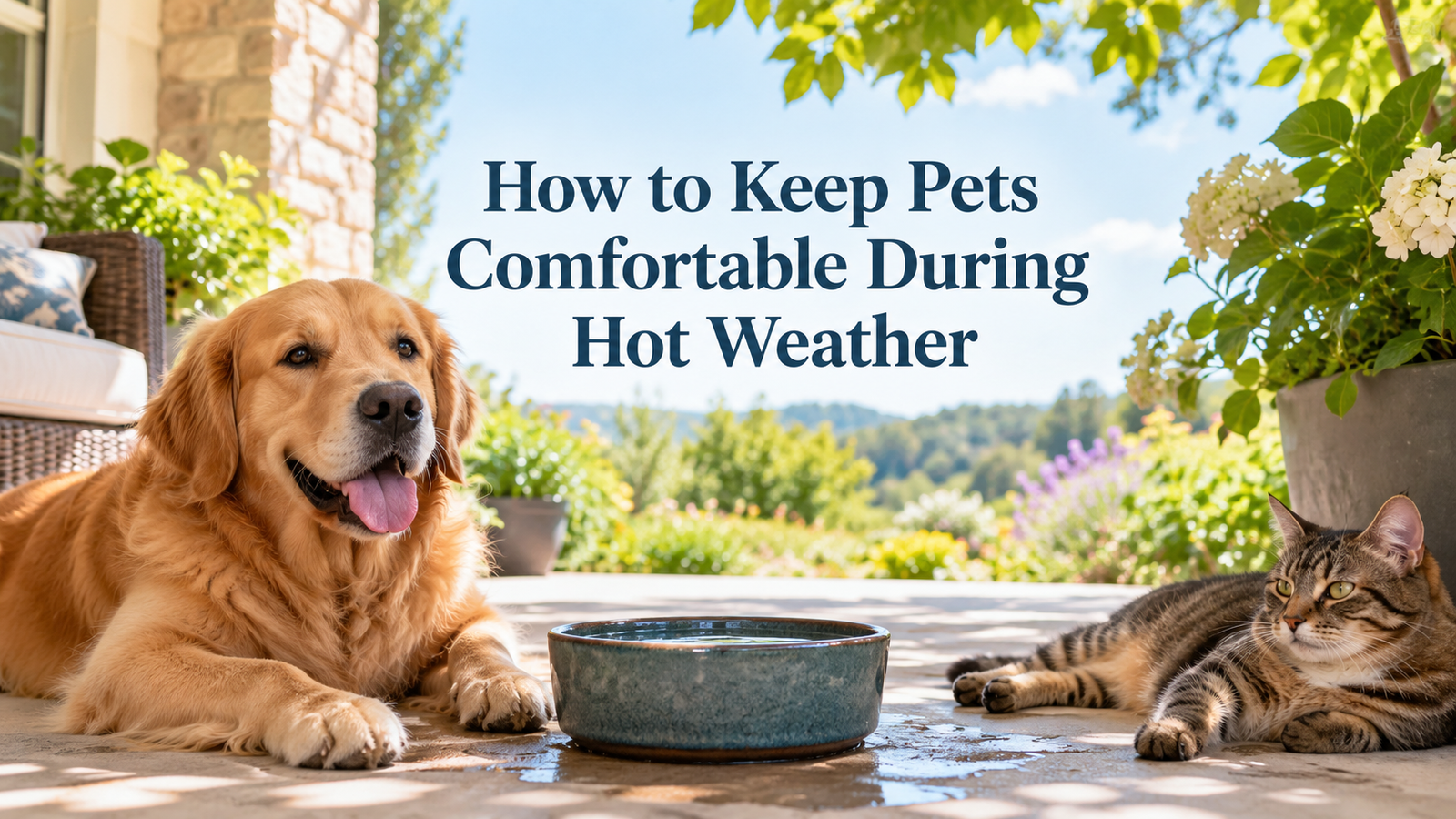
Hot weather can be enjoyable for people, but it can quickly become uncomfortable and even dangerous for pets. Dogs, cats, rabbits, birds, and other household animals do not always handle heat in the same way humans do. They depend on us to provide cool spaces, fresh water, shade, and sensible daily routines when temperatures begin to rise.
Learning how to keep pets comfortable during hot weather is an important part of responsible pet care. A few simple changes at home can make a major difference in how your pet feels throughout the warmer months. I have found that the best approach is to pay attention to the environment, understand how animals regulate their body temperature, and adjust everyday activities according to the weather.
Understand How Heat Affects Your Pet
Animals have different ways of controlling body temperature. Humans cool themselves mainly by sweating, but many pets cannot sweat efficiently over most of their bodies.
Dogs often cool themselves by panting. They also release a small amount of heat through their paw pads. Cats may pant when they become extremely hot, although frequent panting in a cat should never be ignored.
Pets with thick coats, flat faces, older animals, overweight pets, and very young animals may find hot weather especially difficult.
Breeds with short noses can sometimes struggle to breathe efficiently when temperatures rise. For this reason, owners should watch these pets carefully during warm weather.
Understanding your own pet is important. One animal may be comfortable at a temperature that makes another animal tired and restless.
Always Provide Fresh Drinking Water
Fresh water is one of the most important things you can provide during hot weather.
Pets can lose moisture more quickly when temperatures are high, especially if they are active. Their water bowl should always contain clean and cool water.
Check water bowls several times throughout the day. Some pets drink more during summer, so a bowl that normally lasts all day may become empty much sooner.
If you have several pets, consider placing multiple water bowls around the house. This gives each animal easy access to water.
Outdoor pets also need water placed in a shaded location. A bowl left directly in the sun can become surprisingly warm.
You can occasionally add a few ice cubes to your dog’s water if your dog enjoys them. However, ordinary cool drinking water is usually perfectly suitable.
Keeping your pet properly hydrated is one of the easiest ways to support comfort during hot weather.
Create a Cool Indoor Space
When outdoor temperatures become uncomfortable, the safest place for many pets is inside the home.
Choose a room that stays naturally cool and has good air circulation. Curtains or blinds can be closed during the hottest part of the day to reduce direct sunlight.
Fans can improve air movement, although they should not be the only method of cooling when temperatures become extremely high. Air conditioning can be very helpful in particularly warm climates.
Tile floors often remain cooler than carpets. You may notice your dog or cat choosing to lie on bathroom or kitchen tiles during summer. Allow them access to these areas when it is safe to do so.
Cooling mats designed for pets can also provide a comfortable resting surface.
The main goal is to give your pet a place where it can move away from heat whenever necessary.
Make Shade Available Outdoors
Pets spending time outside should always have access to reliable shade.
A tree, covered patio, canopy, or properly designed shelter can protect animals from direct sunlight. Remember that shade moves as the sun changes position.
A location that is shaded in the morning may become completely exposed in the afternoon.
Check outdoor resting areas at different times of the day to make sure your pet always has somewhere cool to sit.
Pet shelters should also have good ventilation. A small enclosed space can trap heat and become much hotter than the surrounding air.
Shade, airflow, and drinking water should always be available together.
Adjust Walking Times During Hot Weather
Daily exercise is important, but the timing of exercise matters greatly during summer.
Walking a dog around midday can expose the animal to intense sunlight and hot ground surfaces.
Early morning and evening are usually better times for walks because temperatures tend to be lower.
Shorter walks may also be appropriate on particularly hot days. Your dog does not need to complete the same exercise routine regardless of the weather.
Watch your pet carefully during walks. Heavy panting, slowing down, seeking shade, or refusing to continue can indicate that the animal is becoming uncomfortable.
Never force a tired dog to continue exercising in hot conditions.
Protect Your Pet’s Paws From Hot Surfaces
Concrete, pavement, sand, and asphalt can become extremely hot under direct sunlight.
A surface may feel comfortable in the morning and become painfully hot later in the day.
Before walking your dog, place the back of your hand against the pavement for several seconds. If the surface feels too hot for your hand, it is probably too hot for your pet’s paws.
Whenever possible, choose grassy or shaded walking areas.
Burned paw pads can be painful and may require veterinary treatment, so prevention is much easier than dealing with an injury afterward.
Never Leave a Pet Inside a Parked Car
One of the most important summer pet safety rules is never leaving an animal alone inside a parked vehicle during warm weather.
The temperature inside a car can rise quickly, even when the weather outside does not seem extremely hot.
Opening a window slightly does not make a parked vehicle safe.
Pets can become dangerously overheated in a very short period of time. If you cannot take your pet inside your destination, it is usually safer to leave the animal at home in a comfortable environment.
This simple rule can prevent serious emergencies.
Keep Exercise Gentle on Very Hot Days
Pets still need mental and physical activity during summer, but exercise does not always need to happen outdoors.
Indoor games can help keep pets entertained when outside temperatures are uncomfortable.
You can practice basic commands with your dog, play gentle games, use puzzle toys, or hide small treats around a room for your pet to find.
Cats can enjoy interactive toys, climbing areas, and short play sessions indoors.
These activities provide stimulation without exposing animals to excessive heat.
On cooler days, normal outdoor exercise can gradually return.
Pay Attention to Grooming
Regular grooming can improve comfort during warm weather.
Brushing removes loose fur and helps air move through the coat more easily. This is especially useful for pets that shed heavily during warmer months.
However, shaving a pet is not always recommended.
Some animal coats provide insulation and protection from sunlight. Removing too much fur may actually increase the risk of sun exposure or skin problems.
Before making a major change to your pet’s coat, speak with a professional groomer or veterinarian who understands the breed.
Routine brushing, clean fur, and good coat maintenance are usually the safest approach.
Offer Cooling Activities
Some pets enjoy simple cooling activities during hot weather.
Dogs that enjoy water may like a shallow pet pool placed in a shaded garden. Always supervise animals around water.
You can also provide a damp towel for your pet to lie near or use a pet cooling mat.
Frozen pet treats can provide both entertainment and refreshment. For example, suitable pet food can sometimes be frozen in small portions.
Make sure any ingredients used are safe for your specific animal.
Cooling activities should be pleasant rather than forced. If your pet dislikes water, there is no need to make it swim or sit in a pool.
Watch for Signs of Overheating
Knowing the warning signs of overheating is an essential part of hot weather pet care.
A dog that is becoming too hot may show excessive panting, heavy drooling, weakness, confusion, vomiting, or difficulty standing.
The gums may appear unusually red or pale.
Cats may become restless, begin panting, groom themselves excessively, or appear weak.
Any pet showing severe symptoms should receive veterinary attention immediately.
Move the animal to a cooler location while arranging professional help. Offer small amounts of cool water if the pet is alert and able to drink.
Avoid using extremely cold water or ice directly over the entire body because sudden cooling may create additional problems.
Heatstroke can become life threatening very quickly, so early action matters.
Give Extra Care to High Risk Pets
Some pets require additional attention in hot weather.
Older animals may have difficulty regulating their body temperature. Puppies and kittens can also become dehydrated more easily.
Overweight pets often struggle more during physical activity in warm conditions.
Flat faced dogs and cats can experience breathing difficulties because of the structure of their airways.
Pets with heart disease, breathing problems, or other medical conditions may also be more sensitive to heat.
For these animals, outdoor activity should be carefully managed.
When temperatures are especially high, keeping them inside a cool home may be the safest choice.
Keep Pet Bedding Cool and Clean
A thick winter bed may not feel comfortable during summer.
Consider providing lighter bedding during warmer months. Wash bedding regularly because heat and moisture can create unpleasant smells and encourage bacteria.
Place your pet’s bed away from direct sunlight.
Some animals may prefer sleeping directly on a cool floor during summer. As long as the location is clean and safe, allowing them to choose their preferred resting place can improve comfort.
Pets often have good instincts about where they feel comfortable.
Maintain a Comfortable Daily Routine
Consistency can help pets stay relaxed during seasonal changes.
Feed your pet at normal times while adjusting exercise and outdoor activities around the weather.
Morning walks can happen earlier, while evening walks may need to happen after temperatures begin to fall.
Keep indoor play sessions available during the hottest hours.
Check drinking water regularly and pay attention to where your pet chooses to rest.
Small daily adjustments can prevent discomfort before it becomes a problem.
Do Not Ignore Humidity
Temperature is not the only factor that affects pets during summer.
High humidity can make it more difficult for dogs to cool themselves through panting. Even a temperature that seems manageable may become uncomfortable when humidity is high.
This is another reason why owners should pay attention to their pet rather than relying only on the weather forecast.
If your pet appears uncomfortable, reduce activity and move it into a cooler environment.
Plan Ahead for Summer Travel
Traveling with pets during hot weather requires preparation.
Carry plenty of drinking water and a portable bowl. Plan regular breaks during long trips and avoid leaving animals inside the vehicle.
Make sure your destination has an appropriate cool space for your pet.
If you are visiting beaches, parks, or walking trails, consider whether shade will be available.
Planning these details before leaving home makes summer trips safer and more enjoyable.
Final Thoughts
Learning how to keep pets comfortable during hot weather mostly comes down to preparation and observation. Pets depend on their owners to provide clean water, cool resting areas, shade, safe exercise, and protection from excessive heat.
Every pet is different. Some animals tolerate warm weather fairly well, while others become uncomfortable quickly. Paying attention to your pet’s behaviour is often the best guide.
Simple habits such as walking early in the morning, keeping water bowls full, protecting paws from hot pavement, providing indoor cooling, and avoiding parked cars can greatly reduce summer risks.
Hot weather does not mean pets have to spend the entire season feeling uncomfortable. With a few sensible adjustments, they can continue eating, sleeping, playing, and exercising safely.
The most important thing is to stay aware of changing temperatures and never ignore unusual behaviour. A pet that suddenly becomes weak, confused, extremely tired, or unusually breathless may need immediate help.
By preparing your home and adjusting your daily routine, you can make warm days much safer and more comfortable for your pets. Good summer pet care is not complicated. It simply requires attention, preparation, and an understanding of what your animal needs when temperatures begin to rise.