Kittens are naturally playful, curious, and full of energy. Anyone who has spent time with a young kitten knows how quickly a quiet room can turn into a playground. A kitten may chase a moving shadow, pounce on a toy, climb furniture, or suddenly race from one side of the house to another. This playful behavior is not simply entertainment. Play is an important part of a kitten’s physical, emotional, and social development.
Learning how to encourage positive play behavior in kittens can help them grow into confident and well behaved adult cats. Healthy play allows kittens to practice hunting skills, improve coordination, use excess energy, and learn how to interact appropriately with people and other animals.
The goal is not to stop a kitten from being playful. Instead, owners should guide that natural energy toward safe and acceptable activities.
Understand Why Kittens Play
Before trying to shape a kitten’s behavior, it helps to understand why kittens are so interested in play.
Cats are natural hunters. Even a kitten living comfortably indoors still has instincts that encourage stalking, chasing, jumping, grabbing, and biting. During play, a kitten practices many of the same movements an adult cat might use when hunting.
Young kittens also learn important social lessons through play. When kittens grow up with their mother and littermates, they chase and wrestle with one another. If one kitten bites too hard, the other kitten may cry out or stop playing. Through these experiences, kittens gradually learn that overly rough behavior can end an enjoyable interaction.
When a kitten moves into a human home, people become an important part of this learning process. The way owners respond to playful behavior can influence the habits the kitten develops.
Provide Appropriate Toys
One of the easiest ways to encourage positive kitten play behavior is to provide suitable toys.
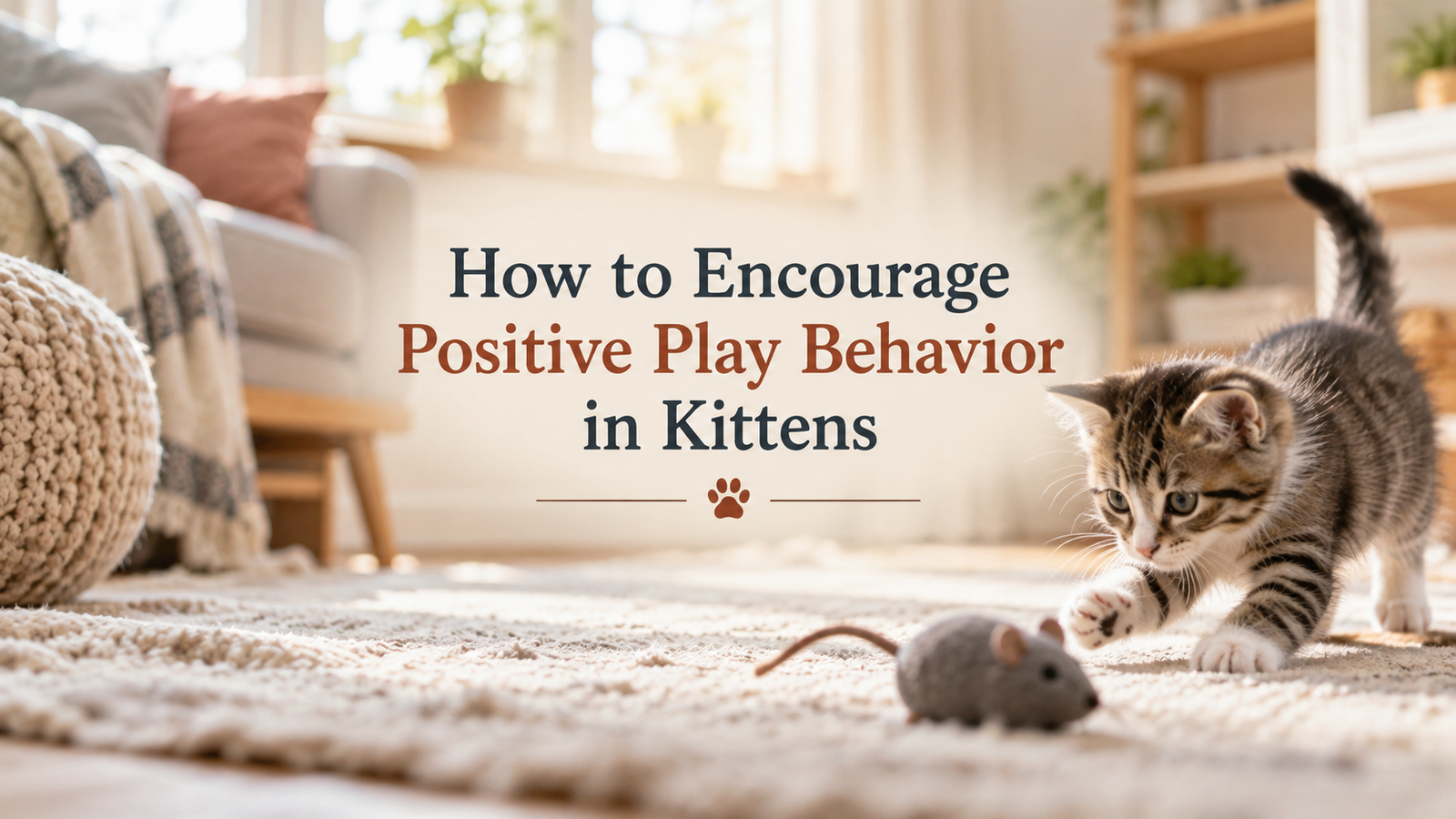
Kittens usually enjoy toys that move or allow them to chase something. Wand toys are excellent because they allow you to create movement while keeping your hands away from the kitten’s teeth and claws. You can move the toy across the floor, behind furniture, or through the air to imitate small prey.
Small lightweight balls can also be useful. Many kittens enjoy batting them across the floor and chasing after them. Soft toy mice and similar toys give kittens something safe to grab and kick.
The important point is variety. A kitten may become bored if the same toy is always available. Rotating toys every few days can make old toys feel interesting again.
Always choose toys that are suitable for the kitten’s size and supervise play with anything that contains strings, feathers, or small pieces.
Never Use Your Hands as Toys
One of the most important rules of kitten training is to avoid encouraging the kitten to attack your hands.
It can seem harmless when a tiny kitten grabs your fingers or gently bites your hand. The behavior may even look adorable when the kitten is very young. However, kittens grow quickly.
A playful bite from a small kitten may not hurt much, but the same habit can become uncomfortable when the kitten develops stronger teeth and claws.
Instead of moving your fingers around to encourage chasing, use toys that create some distance between your hands and the kitten. Wand toys are especially helpful.
The kitten should learn a simple rule. Hands are for gentle contact, petting, feeding, and care. Toys are for biting, chasing, grabbing, and kicking.
Establishing this difference early can prevent many unwanted behaviors later.
Redirect Rough Play
Kittens do not automatically understand what humans consider acceptable play. Sometimes a kitten may suddenly grab an ankle, bite a hand, or jump at someone’s feet.
Punishing the kitten is usually unnecessary. A better approach is redirection.
If the kitten attacks your hand, stop moving it and calmly end the interaction. Then offer an appropriate toy after a short moment. This teaches the kitten that attacking people does not continue the game, while playing with toys creates another opportunity for fun.
Avoid shouting or physically pushing the kitten. Strong reactions may frighten the kitten or accidentally make the interaction more exciting.
Consistency matters. Everyone in the household should follow similar rules. If one person allows hand biting while another person tries to stop it, the kitten may become confused.
Schedule Regular Play Sessions
Kittens often have impressive amounts of energy. Without enough activity, they may create their own entertainment by climbing curtains, chasing feet, knocking objects over, or attacking household items.
Regular interactive play can reduce this problem.
Several short play sessions during the day usually work better than one very long session. Even ten or fifteen minutes of focused play can provide valuable physical and mental exercise.
Try using a wand toy to imitate natural prey movement. Move it slowly at first, allow the kitten to stalk it, and then make it move faster. Let the kitten chase and occasionally catch the toy.
Allowing the kitten to catch its toy is important. A game that the kitten can never win may become frustrating.
Play sessions can be especially useful before periods when you want the kitten to be calmer, such as during the evening.
Encourage Independent Play
Interactive play with people is important, but kittens should also learn how to entertain themselves safely.
Provide toys that the kitten can use without constant human involvement. Balls, soft mice, activity toys, cardboard boxes, and safe tunnels can encourage independent exploration.
A cardboard box can become one of the most exciting objects in a kitten’s environment. Kittens may hide inside it, jump over it, or use it as part of an imaginary hunting game.
Cat tunnels are another useful option. They allow kittens to run, hide, and surprise toys from different directions.
Creating a rich environment helps prevent boredom and encourages the kitten to use its energy in acceptable ways.

Use Positive Reinforcement
Positive reinforcement can make kitten training easier and more enjoyable.
Whenever your kitten chooses an appropriate toy instead of attacking your hands or furniture, you can reinforce that behavior with attention, praise, gentle affection, or another enjoyable activity.
Food rewards can sometimes be useful, but they are not required for every training situation. For many kittens, continuing the game is already a strong reward.
Timing is important. The reward should happen soon after the positive behavior so the kitten can connect its action with the pleasant result.
Over time, the kitten learns which behaviors lead to good experiences.
Teach Gentle Interaction
Positive play behavior also includes learning how to control biting and scratching.
If a kitten bites too hard during interaction, stop playing immediately. Stay calm and remove your attention for a short period.
The kitten gradually learns that rough behavior makes the enjoyable interaction disappear.
Avoid pulling your hand away very quickly when the kitten grabs it. Rapid movement may trigger the kitten’s hunting instinct and make the kitten want to chase your hand even more.
Instead, remain calm and slowly disengage when possible.
With repetition, many kittens learn to use softer bites and more controlled movements.
Create Opportunities for Climbing
Kittens love vertical spaces. Climbing is a natural feline behavior that provides both exercise and confidence.
A sturdy cat tree can give a kitten a safe place to climb, scratch, rest, and observe the room. Window perches can also provide entertainment because kittens can watch birds, people, and outdoor movement.
If suitable climbing areas are available, kittens may be less interested in climbing curtains, shelves, or furniture that you would prefer them to avoid.
Make sure climbing structures are stable. Young kittens can be enthusiastic and may jump without carefully judging the distance.
Provide Scratching Areas
Scratching and play are often connected. A kitten may run across a room, jump onto a scratching post, climb it, and then continue playing.
Scratching is a normal cat behavior. It helps cats stretch their bodies, maintain their claws, and leave natural scent signals.
Provide scratching posts or pads in areas where the kitten spends a lot of time.
Different cats prefer different surfaces, so you may need to experiment with vertical posts, horizontal scratchers, cardboard, or other cat safe materials.
Rewarding the kitten with attention when it uses the scratching area can help establish good habits.
Watch for Signs of Overstimulation
Sometimes play can become too intense. A kitten that becomes highly excited may start biting harder or using its claws more aggressively.
Learning to recognize early signs of overstimulation can help you end the game before the kitten becomes too rough.
Signs may include rapid tail movement, very wide pupils, repeated intense pouncing, flattened ears, or increasingly forceful biting.
If you notice these signals, calmly reduce the intensity of the game or allow the kitten some quiet time.
Kittens need rest as much as they need activity. Young kittens may sleep for much of the day because their bodies are growing rapidly.
Avoid Physical Punishment
Physical punishment should never be part of kitten play training.
Hitting, pushing, or frightening a kitten can damage trust and may increase defensive behavior. A kitten may not understand why punishment is happening. Instead of learning the desired behavior, the kitten may simply learn to fear the person delivering the punishment.
Positive guidance is usually much more effective.
Remove attention from unwanted behavior, redirect the kitten toward a toy, and reward acceptable behavior whenever possible.
Patience is especially important because kittens are still learning about their environment.
Make the Home Safe for Play
Kittens explore with incredible curiosity, which means normal household objects can sometimes become dangerous playthings.
Secure electrical cords when possible and keep small objects that could be swallowed out of reach. Strings, ribbons, sewing materials, rubber bands, and similar objects should not be left where a kitten can play with them unsupervised.
Check furniture for spaces where a kitten might become trapped.
Houseplants also deserve attention because some plants can be harmful to cats.
Creating a safe environment allows the kitten to explore more freely while reducing unnecessary risks.
Consider Play With Other Kittens
When appropriate, another compatible kitten can provide valuable opportunities for social play.
Kittens can chase, wrestle, and communicate with each other in ways that people cannot completely imitate. Playing with another kitten can help them practice social boundaries and use their energy.
However, kittens still need supervision, especially during introductions. Their sizes, personalities, and activity levels should be compatible.
If one kitten constantly hides or tries to escape while the other continues chasing, the interaction may no longer be enjoyable for both animals.
Healthy play usually involves some balance, with both kittens taking turns chasing and being chased.
Keep Play Interesting
Kittens are intelligent and curious animals. Mental stimulation is just as important as physical exercise.
You can make familiar toys more interesting by changing how they are used. Instead of simply moving a toy back and forth, hide it behind a box and allow the kitten to stalk it.
Move toys around furniture, under safe objects, or through tunnels.
Simple changes can make play feel like a new experience.
You can also create small exploration areas using boxes, paper bags without handles, tunnels, and safe household items.
A kitten that has interesting activities available is less likely to search for inappropriate ways to entertain itself.
Build a Healthy Routine
A predictable daily routine can help kittens feel secure.
Try to include regular periods for meals, play, rest, and interaction. A kitten that knows there will be several opportunities to play throughout the day may be less likely to constantly demand attention.
Interactive play before feeding can be particularly satisfying because it resembles a natural sequence of hunting followed by eating.
After a good play session and meal, many kittens naturally settle down for grooming or sleep.
This simple routine can help create a calmer household while still meeting the kitten’s natural needs.
Be Patient With the Learning Process
Every kitten develops at a different pace. Some quickly understand play boundaries, while others remain energetic and impulsive for longer.
Consistent responses are more effective than expecting instant results.
If the kitten grabs your hand today, respond the same way you did yesterday. End the rough interaction and redirect the kitten toward an appropriate toy.
Over time, repeated experiences teach the kitten what works and what does not.
Remember that playful behavior is usually a sign of a healthy, curious young cat. The goal is not to remove this natural enthusiasm but to guide it in a positive direction.
Final Thoughts
Learning how to encourage positive play behavior in kittens is an important part of responsible kitten care. Play supports physical development, strengthens coordination, provides mental stimulation, and helps kittens learn social boundaries.
The best approach is to give your kitten plenty of appropriate opportunities to chase, jump, climb, explore, and interact. Use safe toys instead of hands, redirect rough behavior calmly, provide regular play sessions, and reward gentle interaction.
A stimulating home environment with scratching areas, climbing spaces, toys, and safe places to explore can make a major difference.
Most importantly, remain consistent and patient. Your kitten is learning about the world every day, and the habits formed during these early months can influence behavior throughout adulthood.
By guiding your kitten with kindness and giving natural instincts a safe outlet, you can develop a playful companion who understands how to interact appropriately with people and the environment. Positive play is not only about preventing unwanted behavior. It is also one of the best ways to build trust, strengthen your bond, and help your kitten grow into a happy and confident adult cat.