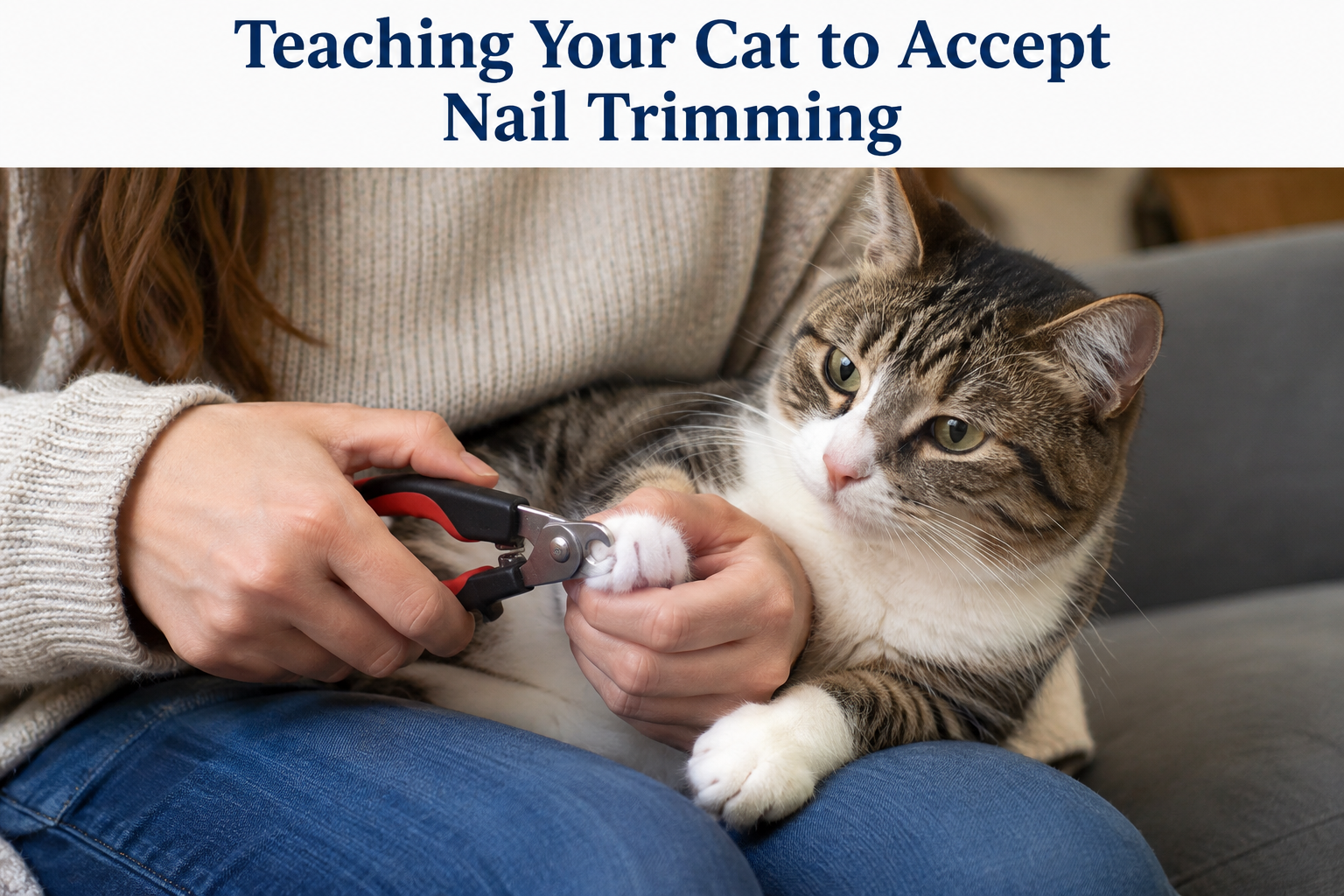
Teaching your cat to accept nail trimming can make grooming much easier and less stressful for both you and your pet. Many cats naturally dislike having their paws touched, especially when someone tries to hold their toes or trim their claws. This reaction does not mean that nail trimming is impossible. With patience, gentle handling, and positive experiences, most cats can learn to stay calm during the process.
Regular nail care is an important part of responsible cat ownership. Long claws can become uncomfortable, catch on carpets and furniture, or even grow into the paw pads in some cases. Keeping the nails at a healthy length can also reduce accidental scratches during play. The main goal is not simply to finish the trimming session. The real goal is to teach your cat that having the paws handled is safe and predictable.
Understand Why Cats Dislike Nail Trimming
Before teaching your cat to accept nail trimming, it helps to understand the reasons behind resistance. A cat’s paws are highly sensitive. They use them for climbing, hunting, walking, balancing, and protecting themselves. Because the paws are so important, many cats instinctively pull them away when someone holds them.
Another reason is unfamiliarity. If a cat has never experienced regular paw handling, suddenly holding a foot and bringing out clippers can feel strange or threatening. Some cats may also remember an uncomfortable experience from the past.
This is why forcing a cat to remain still usually creates more problems. Your cat may begin associating the sight of nail clippers with fear. A slower and calmer approach works much better.
Start With Simple Paw Handling
The first step in cat nail trimming training has nothing to do with clippers. Start by helping your cat become comfortable with having the paws touched.
Choose a time when your cat is relaxed. Sitting beside you after eating or resting on a comfortable blanket can be a good opportunity. Gently stroke your cat’s shoulders, legs, and paws. At first, touch each paw for only a second or two.
If your cat stays relaxed, offer praise, affection, or a favorite reward. Then stop.
Repeat this exercise regularly. Gradually increase the amount of time you touch the paws. Eventually, gently hold one paw in your hand without squeezing it.
Your cat should always have the option to move away. Allowing your cat to feel in control builds trust and makes future grooming much easier.
Introduce Gentle Toe Pressure
Once your cat accepts paw handling, you can begin practicing the movement needed to expose the claws.
Cats normally keep their claws retracted. To extend a claw, gently press the top of the toe while supporting the paw underneath. The claw should slide forward naturally.
Practice this without using clippers.
Press one toe gently, look at the claw, release the paw, and reward your cat. The entire exercise can take only a few seconds.
Over time, practice with different toes. This teaches your cat that gentle pressure on the paw is normal and does not lead to anything frightening.
Short sessions are usually much more effective than trying to handle every paw at once.
Let Your Cat Investigate the Nail Clippers
Cats often become suspicious of unfamiliar objects. Instead of suddenly bringing the nail clippers toward your cat’s paws, introduce the tool gradually.
Place the clippers somewhere near your cat during a calm moment. Let your cat look at them and smell them. Do not immediately attempt to trim a nail.
You can place a treat near the clippers so your cat begins connecting the object with something pleasant.
Later, hold the clippers while petting your cat. You can gently touch the closed clippers against a paw and immediately reward calm behavior.
This simple process can reduce anxiety because the clippers become a familiar object rather than a signal that something unpleasant is about to happen.
Choose the Right Time for Nail Trimming
Timing can make a major difference when teaching your cat to accept nail trimming.
Avoid attempting a grooming session when your cat is energetic, hungry, frightened, or interested in playing. Instead, choose a quiet moment when your cat is sleepy and comfortable.
Many cats are easier to handle after a meal or after a long play session. At these times, they are often more interested in resting.
The environment should also be calm. Avoid loud television, excited children, barking dogs, or other distractions.
A peaceful setting helps your cat remain relaxed and allows you to focus on careful trimming.
Use Proper Cat Nail Clippers
Using the correct grooming tool can make nail trimming safer and more comfortable.
Cat nail clippers are designed for small claws and allow better control than large household scissors. The blades should be clean and sharp. Dull clippers can crush the claw instead of creating a clean cut.
Before trimming, become familiar with how the clippers work. Practice opening and closing them away from your cat.
When you feel confident using the tool, you will naturally handle your cat more calmly. Cats are very sensitive to body language and may become nervous if you appear uncertain or tense.
Learn Where to Cut the Nail
Understanding cat nail anatomy is extremely important.
When you extend a claw, you may notice a clear or pale outer section and a pink area closer to the toe. The pink section contains nerves and blood vessels. This sensitive area is often called the quick.
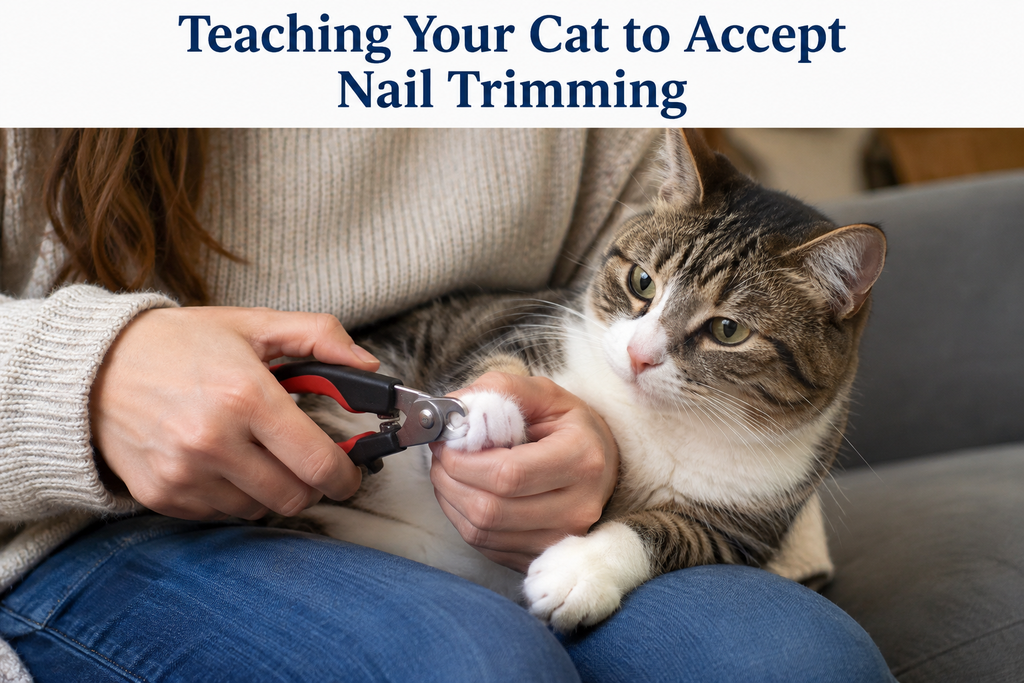
Only trim the sharp tip of the claw.
Never cut deeply toward the pink area. Cutting the quick can cause pain and bleeding, and it may make your cat fearful of future trimming sessions.
If your cat has dark nails and you cannot clearly see the sensitive area, remove only a tiny amount from the tip.
It is always better to trim too little than too much.
Trim One Nail at First
Many owners make the mistake of trying to trim every nail during the first session. For a cat that is still learning, this can quickly become overwhelming.
Instead, trim a single nail.
After trimming it, release the paw and give your cat a reward. You can then end the session.
This may seem slow, but it creates a positive learning experience. Your cat discovers that nail trimming is brief and manageable.
During future sessions, you may trim two nails, then three. Eventually, your cat may allow an entire paw or several paws to be trimmed comfortably.
Progress should depend on your cat’s confidence rather than your schedule.
Reward Calm Behavior
Positive reinforcement is one of the most effective ways to teach a cat new behavior.
Whenever your cat allows you to touch a paw, extend a claw, or trim a nail calmly, provide something enjoyable afterward. This could be a small treat, gentle praise, petting, or play with a favorite toy.
The reward should appear immediately after the desired behavior.
Over time, your cat may begin understanding that cooperating during nail trimming leads to something pleasant.
Some cats are motivated by food while others prefer affection or play. Learning what your own cat enjoys will make training more effective.
Watch Your Cat’s Body Language
Cats communicate stress through their body language. Learning to recognize these signals can prevent a grooming session from becoming frightening.
A relaxed cat usually has a soft body posture, normal breathing, and relaxed ears.
Signs of increasing stress can include a rapidly moving tail, flattened ears, tense muscles, growling, repeated attempts to pull the paw away, or trying to leave.
If these signals appear, stop the session.
Continuing while your cat is frightened can damage the trust you have been building. Allow your cat to relax and try again later.
Successful cat nail trimming training depends more on patience than speed.
Never Punish Your Cat for Resisting
Punishment should never be part of nail trimming.
Do not shout, hit, spray water, or aggressively restrain your cat. These actions can increase fear and may lead to scratching or biting.
Remember that resistance usually comes from fear, discomfort, or confusion.
If your cat pulls away, simply release the paw. Wait until another calm moment before trying again.
Your goal is to make grooming feel safe. A cat that trusts you is much easier to handle than a cat that expects to be forced into uncomfortable situations.
Keep Training Sessions Short
Short training sessions work particularly well with cats.
You do not need to spend twenty minutes practicing nail trimming. Even thirty seconds of successful paw handling can be useful.
You might touch the paws several times during the day without actually trimming anything. These small experiences gradually become part of your cat’s normal routine.
Consistency is more important than long sessions.
A few calm minutes spread across several days can produce better results than one stressful grooming session.
Create a Regular Nail Care Routine
Once your cat becomes comfortable with nail trimming, try to maintain a regular routine.
Check the claws every few weeks to see whether the sharp tips need trimming. The exact schedule can vary depending on your cat’s age, activity level, scratching habits, and lifestyle.
Indoor cats may sometimes need more frequent nail checks because they have fewer natural opportunities to wear their claws down.
Providing scratching posts and scratching boards is also helpful. Scratching allows cats to maintain healthy claws while stretching their muscles and marking their territory.
Nail trimming and scratching surfaces can work together as part of a complete grooming routine.
Be Extra Patient With Older or Nervous Cats
Some cats take longer to accept nail trimming than others.
A kitten that grows up having its paws handled may learn very quickly. An adult cat with little grooming experience may need several weeks of gradual practice.
Older cats may also have sensitive joints, so their paws and legs should be handled carefully.
Cats with a fearful personality may require especially slow training. For these cats, simply touching a paw without causing anxiety can be meaningful progress.
Never compare one cat with another. Each animal learns at a different pace.
Know When to Ask for Professional Help
Some cats remain extremely fearful or aggressive despite careful training.
If your cat becomes very distressed, a veterinarian or experienced professional groomer may be able to help. They can also check whether pain, injury, arthritis, or another physical problem is causing your cat to resist paw handling.
Professional advice is especially important if a claw has become damaged, infected, unusually thick, or grown toward the paw pad.
Trying to manage a painful claw at home without understanding the cause can make the problem worse.
Make Nail Trimming a Positive Experience
Teaching your cat to accept nail trimming is mainly about building trust. The actual cutting of the nails takes only a few moments. Helping your cat feel comfortable with the process is the part that requires patience.
Begin with gentle paw touching. Gradually introduce toe pressure and the nail clippers. Reward calm behavior and keep each session short. Trim only the sharp tip of the nail and always avoid the sensitive area inside the claw.
Most importantly, respect your cat’s limits.
Some cats may accept nail trimming within days, while others may need several weeks of practice. Slow progress is still progress.
When nail care becomes familiar and predictable, your cat is less likely to struggle or become frightened. What once seemed like a difficult grooming task can eventually become a simple part of your regular care routine.
A calm approach, gentle handling, and consistent positive experiences can teach your cat that nail trimming is nothing to fear. In the long term, this makes grooming safer, strengthens trust, and helps keep your cat comfortable and healthy.