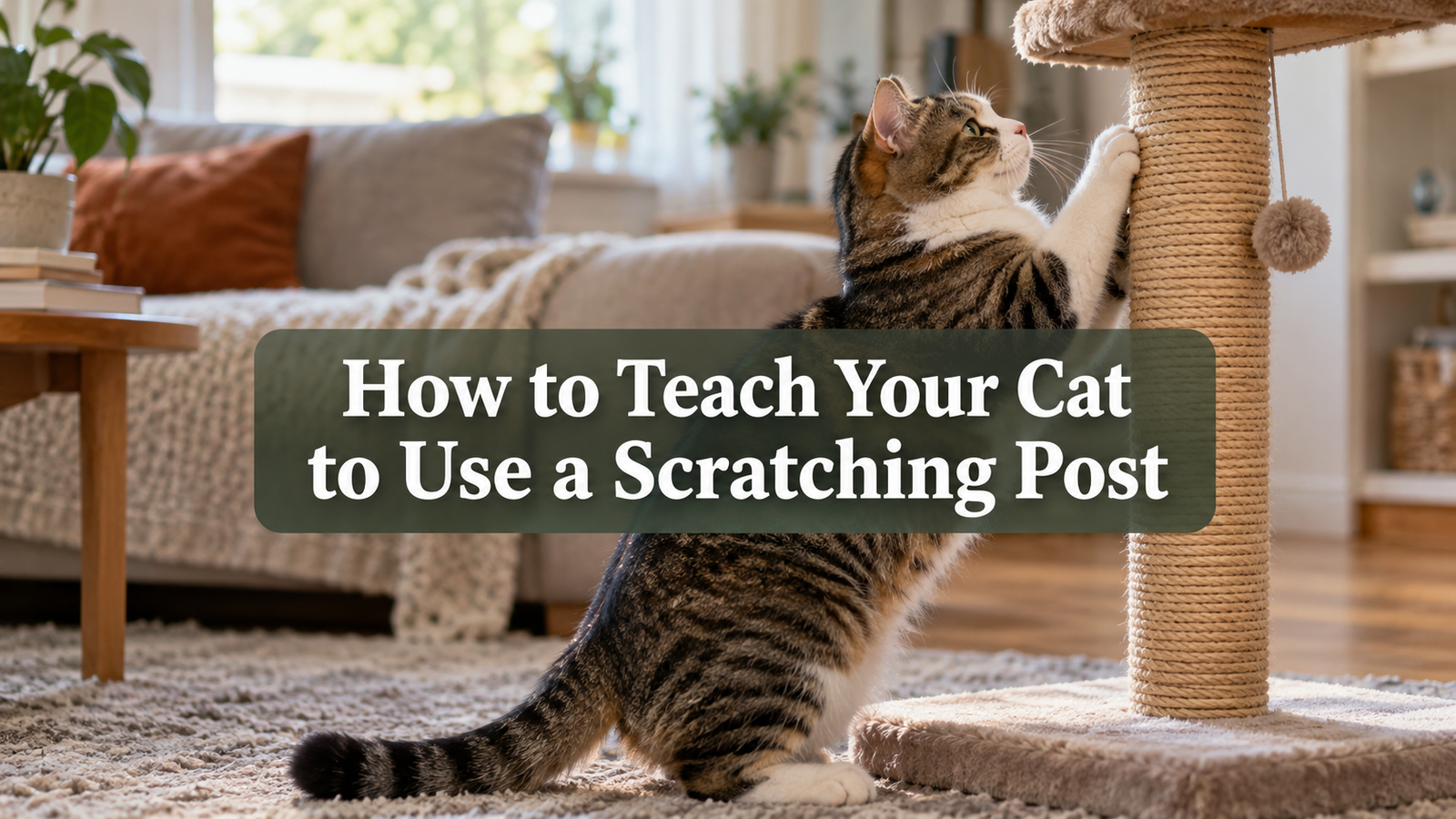
Teaching your cat to use a scratching post can make life much easier for both you and your pet. Scratching is a completely natural behavior for cats. They do not scratch furniture because they want to damage your home or upset you. They scratch because their body and instincts tell them to do it. Once you understand this simple fact, training becomes much easier.
When I started learning more about cat behavior, I realized that stopping a cat from scratching is not really the goal. The better solution is to give the cat an appropriate place to scratch. A good scratching post gives your cat exactly what it needs while protecting your sofa, curtains, carpets, and other household items.
If you want to learn how to teach your cat to use a scratching post, patience and proper setup are more important than punishment. Cats learn best when the right behavior feels comfortable and rewarding.
Understand Why Cats Scratch
Before training your cat, it helps to understand why scratching is so important.
Cats scratch to maintain their claws. The action helps remove old outer layers of the claws and keeps them in good condition. Scratching also stretches the muscles in the legs, shoulders, and back. You may notice that your cat often enjoys a long stretch while scratching.
Cats also use scratching as a form of communication. Their paws contain scent glands. When a cat scratches a surface, it leaves both visible marks and scent behind. This is one way cats mark an area as familiar territory.
Scratching may also help cats release energy or excitement. Some cats scratch immediately after waking up, while others do it when their owner comes home or during active play.
Understanding these reasons makes it clear that scratching is not bad behavior. Your job is simply to guide the behavior toward a suitable scratching post.
Choose the Right Scratching Post
One of the most important steps in scratching post training is choosing something your cat actually wants to use.
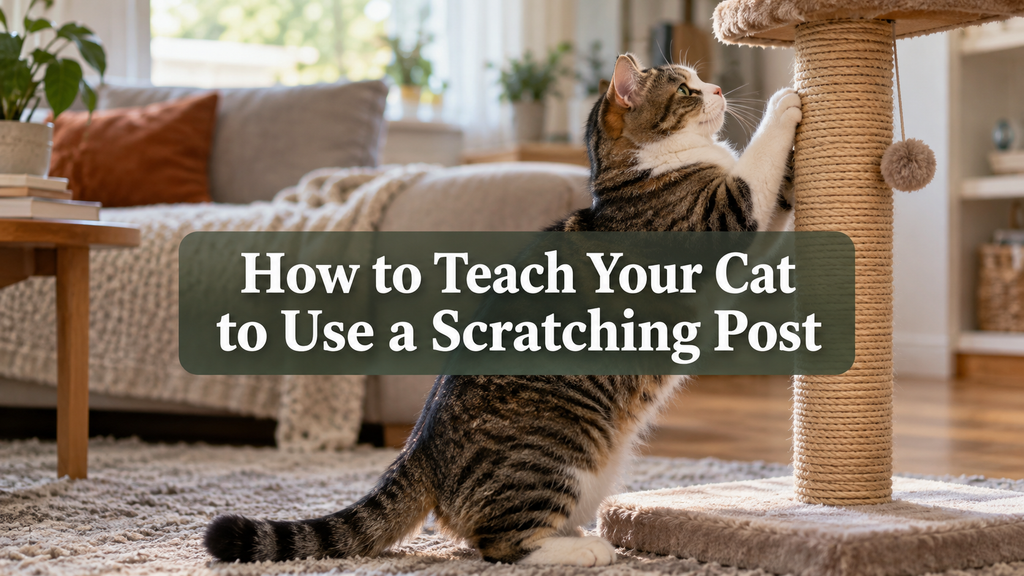
A scratching post should be tall enough for your cat to stretch its entire body. Many cats enjoy reaching upward when they scratch. If the post is too short, your cat may choose the side of a sofa because it provides a better stretch.
The post should also be stable. Cats often place a surprising amount of force against a scratching surface. If the post shakes, moves, or falls over, your cat may become uncomfortable and avoid using it.
Texture is another important factor. Many cats like sisal because it provides resistance and feels satisfying under their claws. Some cats prefer cardboard, carpet, wood, or other rough materials.
Instead of assuming what your cat will like, observe the surfaces it already scratches. If your cat scratches a carpet, it may prefer horizontal scratching. If it scratches the side of a sofa, a vertical post may be a better choice.
Put the Scratching Post in the Right Location
Location can determine whether your scratching post becomes popular or completely ignored.
A common mistake is placing the post in a hidden corner because it fits nicely with the room. Your cat may have other ideas.
Cats often scratch in important areas of their environment. They may choose places near sleeping areas, doors, windows, or spaces where family members spend time.
If your cat is already scratching a particular piece of furniture, place the scratching post close to that area. You are giving your cat an acceptable alternative without asking it to completely change its routine.
Another useful location is near your cat’s sleeping area. Cats often stretch and scratch soon after waking up.
Once your cat starts using the scratching post regularly, you can gradually move it to a more convenient place if necessary. Move it slowly so your cat continues to recognize it as part of its environment.
Make the Scratching Post Interesting
Your cat may not immediately understand why you brought a scratching post into the house. You can make it more interesting by connecting it with positive experiences.
Try playing near the post with your cat’s favorite toy. Move the toy around the base of the post and then upward so your cat naturally reaches toward the scratching surface.
If your cat likes catnip, you can place a small amount on or near the scratching post. Some cats become curious about the scent and begin exploring the post.
You can also spend time near the scratching area. Cats are naturally curious and may investigate when they see that you are interested in something.
The purpose is not to force your cat to scratch. You simply want the post to become an attractive and familiar object.
Reward Your Cat for Using the Post
Positive reinforcement is one of the most effective ways to teach a cat to use a scratching post.
Whenever you see your cat scratching the post, respond positively. You can offer gentle praise, affection, play, or a small treat.
Timing matters. Give the reward immediately after your cat uses the scratching post. This helps the cat connect the action with something pleasant.
You do not need to reward forever. Once scratching the post becomes a regular habit, the activity itself becomes satisfying for the cat. Rewards are mainly useful during the learning stage.
Every successful scratching session strengthens the new behavior.
Never Force Your Cat’s Paws Against the Post
Some owners try to teach scratching by holding the cat’s front paws and moving them against the scratching post.
This may seem logical, but it can have the opposite effect.
Cats usually prefer having control over their movement. If your cat feels trapped or uncomfortable near the scratching post, it may begin avoiding it.
Allow your cat to discover the surface naturally.
You can encourage stretching with toys or place the cat near the post, but let your cat decide when to scratch.
A relaxed cat is much more likely to learn successfully than a frightened or frustrated cat.
Protect Furniture During Training
While your cat is learning, you may need to make favorite furniture less attractive for scratching.
You can temporarily cover frequently scratched areas with a smooth protective material or another safe surface that your cat does not enjoy scratching.
At the same time, place an appealing scratching post directly beside the furniture.
This combination is useful because you are not simply saying no. You are showing your cat a better option.
If possible, avoid completely blocking access to the area before giving your cat an alternative. A cat with a strong need to scratch will simply search for another surface.
The scratching post should always be easier and more rewarding to use.
Offer More Than One Scratching Surface
One scratching post may not be enough, especially if you have a large home or several cats.
Cats may want to scratch in different places throughout the day. Having several scratching options can reduce the chance that furniture becomes the preferred choice.
Consider placing one scratching surface near a sleeping area, another in a living area, and one near a location your cat previously scratched.
You can also provide different styles.
A vertical sisal post may be perfect for stretching, while a cardboard scratching pad on the floor may satisfy your cat’s desire for horizontal scratching.
Giving your cat choices can make scratching post training much easier.
Pay Attention to Your Cat’s Preferences
Every cat has its own personality.
Some cats immediately use a scratching post. Others need several days or even weeks before developing the habit.
If your cat ignores the post, do not immediately assume that training has failed. Look at the post from the cat’s point of view.
Is it stable?
Is it tall enough?
Is it placed in a useful location?
Does your cat like the material?
Would your cat prefer a horizontal scratching pad?
Sometimes changing just one of these things can completely change your cat’s reaction.
Observation is one of the most valuable skills for any cat owner. Instead of trying to make your cat fit your plan, adjust your approach to suit the natural behavior you see.
Avoid Punishing Your Cat for Scratching
Punishment rarely solves scratching problems.
Shouting, hitting, or frightening a cat can create stress and damage trust. Your cat may stop scratching while you are present but continue when you leave the room.
The cat has not learned where it should scratch. It has only learned that scratching near you can be frightening.
Redirecting is far more effective.
If you notice your cat approaching the sofa to scratch, calmly attract its attention toward the scratching post with a toy or other positive activity. Reward the cat when it uses the correct surface.
Training should teach the cat what you want instead of simply creating fear around unwanted behavior.
Keep the Scratching Post in Good Condition
A well used scratching post may eventually look worn. Interestingly, your cat may actually prefer it that way.
A scratching post covered with claw marks and familiar scent can become an important part of your cat’s territory.
Do not replace it simply because it looks used.
Replace the scratching surface when it becomes unsafe, unstable, or too damaged to function properly.
If you need to introduce a new post, consider keeping the old and new posts together for a while. This allows your cat to become familiar with the replacement before the favorite old post disappears.
Be Consistent With Training
Consistency is essential when teaching a cat to use a scratching post.
If scratching the sofa is discouraged one day but ignored the next, your cat may have difficulty understanding what is expected.
Everyone in the household should follow a similar approach.
Keep the scratching post available, reward appropriate scratching, protect important furniture, and gently redirect unwanted scratching whenever possible.
Cats learn through repeated experiences. The more often your cat receives a positive result from using the scratching post, the stronger the habit becomes.
Consider the Needs of Multiple Cats
If you have more than one cat, provide enough scratching areas for everyone.
Cats can share scratching posts, but some may prefer having their own space. A confident cat may control access to a favorite post without obvious fighting.
Placing scratching surfaces in different rooms gives each cat more freedom.
This can also reduce tension because scratching has a territorial purpose. Providing several appropriate places for scent marking allows cats to express natural behavior without competing for a single location.
Give the Process Time
Learning how to teach your cat to use a scratching post is mostly about patience.
Some cats understand the idea immediately. Others need repeated encouragement before the scratching post becomes part of their daily routine.
Do not compare your cat with another pet.
Age, personality, past experiences, environment, and individual preferences can all influence how quickly a cat accepts something new.
Continue making the scratching post comfortable, accessible, and rewarding.
Small improvements are still progress.
Final Thoughts
Teaching your cat to use a scratching post is much easier when you work with your cat’s natural instincts rather than against them. Scratching is necessary for claw care, stretching, communication, exercise, and emotional comfort. Your goal is not to remove this instinct but to provide the right place for it.
Choose a stable scratching post with a texture your cat enjoys. Place it near important areas, especially places where your cat already likes to scratch. Encourage exploration with play, catnip, praise, or rewards. Protect furniture while your cat is learning and provide several scratching options if necessary.
Most importantly, avoid punishment and remain patient.
Once your cat discovers that the scratching post feels good and belongs in its environment, using it can become a natural habit. With observation, consistency, and positive encouragement, you can protect your furniture while giving your cat a healthy and satisfying way to express one of its most important natural behaviors.